Meta Faces Legal Battle Over Alleged Child Exploitation on Social Platforms
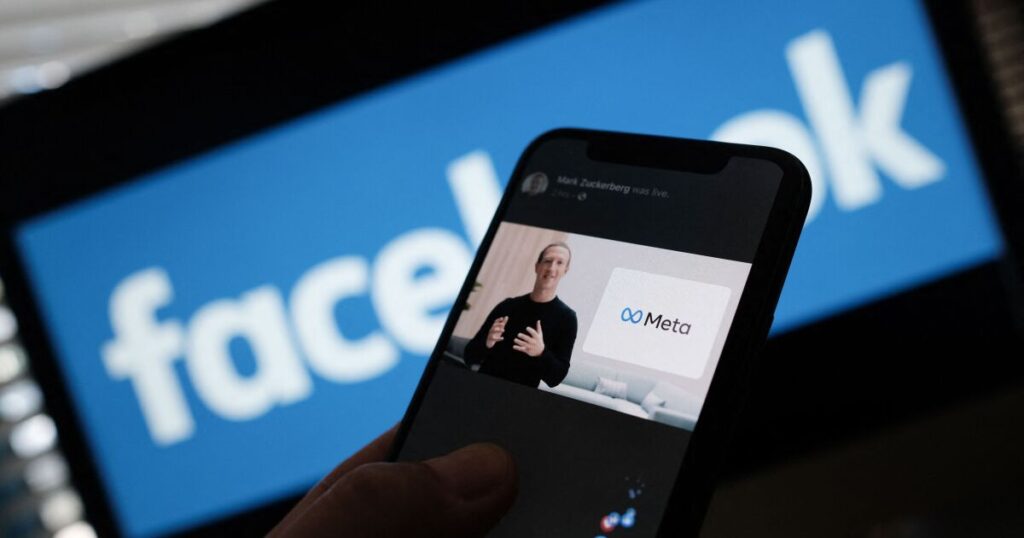
Meta is preparing to confront a legal challenge in federal court, facing accusations from several state attorneys general. The charges claim that Meta’s social media platforms, Facebook and Instagram, were intentionally designed to captivate children, potentially misleading the public about the risks and unlawfully collecting children’s data.
This lawsuit joins a growing trend of legal actions against social media giants, aiming to hold these companies accountable for their product designs. Experts liken this to historical lawsuits against tobacco and opioid companies, which significantly altered public discourse and company practices.
Attorneys general from California, Colorado, Kentucky, and New Jersey are pursuing penalties and changes to Meta’s products, potentially amounting to $1.4 trillion. They allege Meta violated consumer protection laws and the Children’s Online Privacy Protection Act (COPPA) by collecting data from children.
“We allege in our complaint, and what we’re prepared to prove at trial, is that they’re deceiving consumers about Facebook and Instagram’s dangers,” said New Jersey Attorney General Jennifer Davenport in an interview with NPR. “They’re putting the profits … over the health of a generation of young people.”
Central to the lawsuit is the claim that Meta’s platform features, such as the “like” button and infinite scroll, were designed to engage young users excessively. The suit argues that this engagement drove advertising revenue at the expense of young users’ safety.
The lawsuit contends that Meta’s products negatively impacted young users’ education and sleep and promoted harmful behaviors through visual filters. These claims counter Meta’s public assertions that their platforms support youth well-being.
Further accusations include Meta’s awareness of underaged users on its platforms, contrary to its policies, and gathering their personal information without parental consent, violating COPPA.
Meta has responded to the lawsuit, describing the claims as unfounded and the financial demands as “vastly disproportionate.”
“The AGs offer no proof anyone in their states was misled, claim benign features like having an additional Instagram account somehow harmed their residents, and attempt to penalize Meta for industry-wide challenges like age verification,” a Meta spokesperson stated in an email to NPR. “We stand by our record of creating strong protections for teens, and look forward to making our case in court.”
Historically, social media companies have been shielded from lawsuits by the First Amendment and Section 230 of the Communications Decency Act, which offers protection from liability for user-generated content.
Despite these protections, Meta has lost recent cases in state courts. In March, a Los Angeles jury held Meta and Google responsible for a young woman’s mental health issues linked to social media use, awarding her $6 million. In another instance, a New Mexico judge mandated Meta to pay $567 million and implement new safety measures following a jury’s finding of inadequate protection against child exploitation.
The federal case, part of a broader legal movement against social media firms, focuses on platform design rather than user-generated content, arguing these designs fostered addiction among minors.
Stuart Benjamin, from Duke University School of Law, notes the complexity of distinguishing claims related to product design from those concerning content addiction.
What did Meta know about the risks of its products?
Observers anticipate the case will reveal inconsistencies between Meta’s public and private statements about the effects of their platforms on minors. The lawsuit references over 100 instances of potentially misleading statements by Meta representatives.
Previous court decisions have highlighted internal Meta documents suggesting that time-restriction tools were not taken seriously, citing employees’ awareness of the adverse effects of prolonged social media use on teens.
“This litigation is shining a light on not just what Meta did, but also what Meta knew,” said Nora Freeman Engstrom, a law professor at Stanford University. She emphasized that the case’s impact extends beyond financial outcomes, potentially influencing public knowledge and legislative action.
Meta, which reported 3.6 billion daily platform users in July, is expected to appeal any negative ruling, possibly reaching the Supreme Court due to the significant implications.
Benjamin Zipursky, a Fordham University law professor, highlighted the challenge for Meta to simply settle the case, given the substantial financial demands and the extensive list of plaintiffs.
The trial is taking place in the U.S. District Court for the Northern District of California, under Judge Yvonne Gonzalez Rogers, who previously oversaw a high-profile case involving Elon Musk and OpenAI. The trial is anticipated to last six weeks.
Note: The Chan Zuckerberg Initiative is a financial supporter of NPR.
Copyright 2026 NPR
—
Read More Michigan News

![Botched Ad Mix-Up: Super PAC Error in Arizona Congressional Race[embed]https://www.youtube.com/watch?v=bEMgIlCkHz0[/embed]](https://www.kitchentablenews.org/wp-content/uploads/2026/10/Botched-Ad-Mix-Up-Super-PAC-Error-in-Arizona-Congressional-RaceembedhttpswwwyoutubecomwatchvbEMgIlCkHz0embed.com2F0e2F962Fe971102f49e7a4f2a64fd3cc60a22Fjonatha.png "Botched Ad Mix-Up: Super PAC Error in Arizona Congressional Race[embed]https://www.youtube.com/watch?v=bEMgIlCkHz0[/embed]")