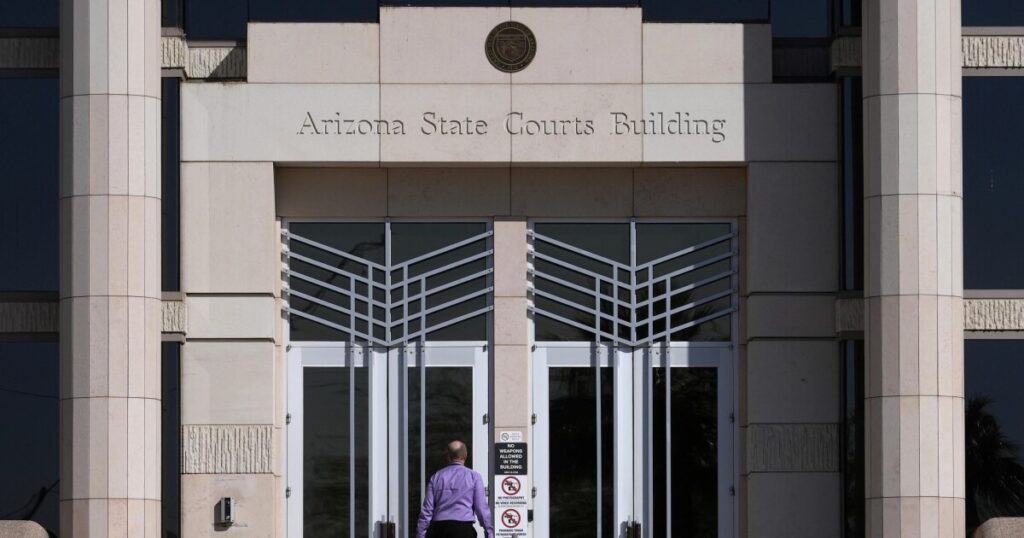
Arizona’s voters will not have a say in the reforms of the Empowerment Scholarship Account (ESA) program after the state Supreme Court’s recent decision indicated insufficient signatures for Proposition 212. Though the court refrained from declaring the final count, it provided a calculation method and returned the case to the trial court for validation of at least 255,949 signatures.
Both proponents and opponents of the proposition admitted that, based on the new calculation method preferred by the court, the measure falls short by about 12,000 signatures. This outcome eliminates the possibility for voters to influence changes in the $1 billion program concerning enrollment and spending regulations.
House Speaker Steve Montenegro and groups like the American Federation for Children supported the outcome, whereas educators and unions advocating for the measure expressed disappointment. “The lengths that the voucher lobby went to invalidate signatures with scorched-earth legal objections shows just how terrified they are of Arizona voters,” remarked Beth Lewis, director of Save Our Schools Arizona.
The committee, Protect Education Accountability Now, submitted 415,438 signatures. However, opposition claimed deficiencies in these signatures and petition circulators. As the Secretary of State, county recorders, and courts reviewed the submissions, the number of valid signatures continually decreased.
Ultimately, the Supreme Court had to determine the validity of signatures, particularly focusing on duplicates. Despite attorney James Barton’s request to include invalidated duplicates to ensure no valid signatures were overlooked, the court rejected this approach. Chief Justice Ann Scott Timmer stated, “We are not persuaded. The committee’s proposed adjustments would credit the petition with signatures the Legislature has directed be removed.”
The ruling now tasks Maricopa County Superior Court Judge David McDowell with the final decision on the petition’s validity. However, both sides recognize that if duplicates are dismissed and the county’s validity rate is applied, the signature count will fall short. Kory Langhofer, representing voucher advocates, estimated 243,834 valid signatures, missing the required number by 12,000.
The effort to reform the ESA program, originally designed for special needs students but now expanded to over 100,000 participants, continues. Critics argue the program’s expansion allows any student to access taxpayer-funded vouchers for private education. Proposition 212 aimed to impose stricter oversight and spending limits, especially after reports of inappropriate reimbursement requests.
Despite Proposition 212’s failure, the debate over the ESA program persists. Supporters of reform highlight the need for adjustments to ensure responsible taxpayer money use. “The status quo is supported by less than 10% of voters,” stated Tommy Schultz, CEO of the American Federation for Children, emphasizing the need for practical solutions to sustain the program.
Steve Montenegro echoed this sentiment, acknowledging that while Proposition 212 is off the ballot, the issue remains. “Arizona families dodged a bullet,” he said, warning of future advocacy efforts by unions.
Beth Lewis believes the ongoing battle could influence voter behavior, suggesting that legislative changes may be necessary to achieve the desired reforms. With plans to mobilize voter support, she emphasizes the need for candidates who prioritize public education.
The court’s decision also impacts Proposition 145, a legislative countermeasure to Proposition 212, which will not proceed to a vote.
Annual meteor showers like the Perseids can give lovely shooting star displays – but they don’t produce meteorites. That’s because the tiny particles involved are made of fluffy, low-density clay-like material which burn up before reaching the ground.
—
Read More Arizona News

![Botched Ad Mix-Up: Super PAC Error in Arizona Congressional Race[embed]https://www.youtube.com/watch?v=bEMgIlCkHz0[/embed]](https://www.kitchentablenews.org/wp-content/uploads/2026/10/Botched-Ad-Mix-Up-Super-PAC-Error-in-Arizona-Congressional-RaceembedhttpswwwyoutubecomwatchvbEMgIlCkHz0embed.com2F0e2F962Fe971102f49e7a4f2a64fd3cc60a22Fjonatha.png "Botched Ad Mix-Up: Super PAC Error in Arizona Congressional Race[embed]https://www.youtube.com/watch?v=bEMgIlCkHz0[/embed]")