The U.S. Faces an Intense Wildfire Season; Arizona Sees a Milder Impact
The United States is currently experiencing one of the most severe wildfire seasons in the past decade, with nearly 50,000 wildfires scorching over 7 million acres. Oregon and Washington have been the epicenters of this devastating activity.
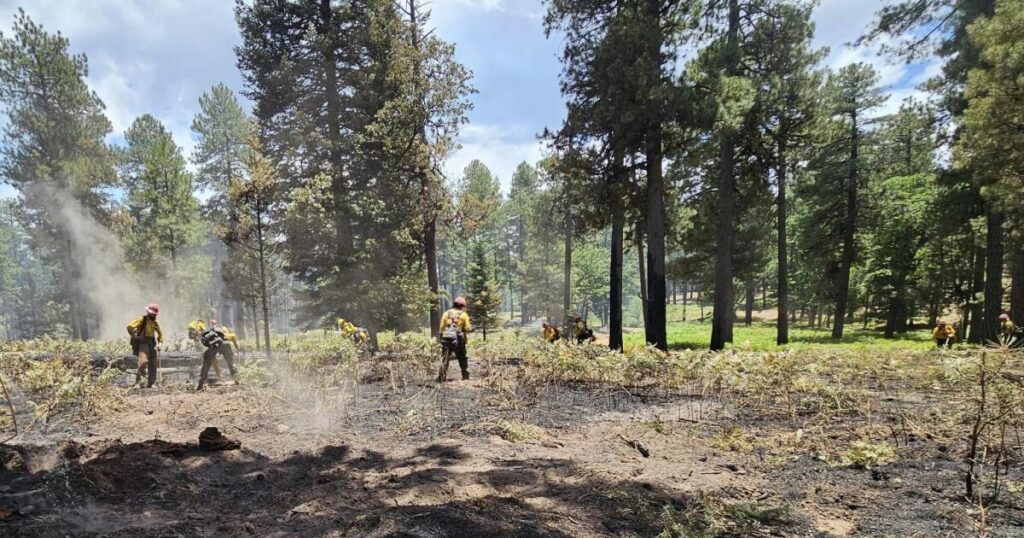
Arizona, despite forecasts predicting a highly active fire season in the Southwest, has seen a surprisingly mild year. The state has contributed to less than 1% of the total acreage burnt nationwide. Tiffany Davila from the Arizona Department of Forestry and Fire Management highlighted that 1,386 fires in Arizona have consumed 60,724 acres. While the number of fires is slightly higher than last year, it is a stark contrast to the 306,445 acres burned previously, primarily due to the Dragon Bravo Fire near the Grand Canyon.
However, Davila cautions that Arizona’s fire season spans the entire year, and the potential for significant fires remains as the fall approaches.
John Truett, Arizona’s state fire management officer, attributes the reduced fire acreage to a few key factors. Except for the Pocket Fire close to Sedona, the state has not experienced fire outbreaks in particularly challenging locations, allowing fire personnel to manage them before they escalate.
Truett credits proactive outreach and educational initiatives for minimizing fire starts in high-risk areas. “Our prevention program and the messaging may be finally catching on. You know folks not dragging chains as much and those kinds of things,” he noted.
Molly McCormick, from the Southwest Fire Science Consortium, echoed this sentiment in communication with KJZZ, emphasizing the importance of strategic forest closures to motorized vehicles in reducing human-caused fires, particularly around popular areas like the San Francisco Peaks.
Another crucial factor has been this year’s timely monsoon, which has significantly aided fire suppression efforts and mitigated risks. McCormick explained that the monsoon’s arrival and expected moisture rates have countered the fire threat, despite the usual increase in lightning-induced fires during this period.
Truett added that the monsoon allows Arizona to send personnel to assist with more severe fires in the Northwest, thanks to a nationwide coordination system that allocates resources where they are most needed during peak seasons.
Nonetheless, Truett expressed concern over resource availability due to an increase in unpredictable fire seasons and record-setting fire activity. “There’s not as many resources as there were, you know, 20, 25 years ago,” he stated. This lack of resources becomes particularly challenging when dealing with simultaneous large fires, requiring strategic readiness.
—
Read More Arizona News

![Botched Ad Mix-Up: Super PAC Error in Arizona Congressional Race[embed]https://www.youtube.com/watch?v=bEMgIlCkHz0[/embed]](https://www.kitchentablenews.org/wp-content/uploads/2026/10/Botched-Ad-Mix-Up-Super-PAC-Error-in-Arizona-Congressional-RaceembedhttpswwwyoutubecomwatchvbEMgIlCkHz0embed.com2F0e2F962Fe971102f49e7a4f2a64fd3cc60a22Fjonatha.png "Botched Ad Mix-Up: Super PAC Error in Arizona Congressional Race[embed]https://www.youtube.com/watch?v=bEMgIlCkHz0[/embed]")