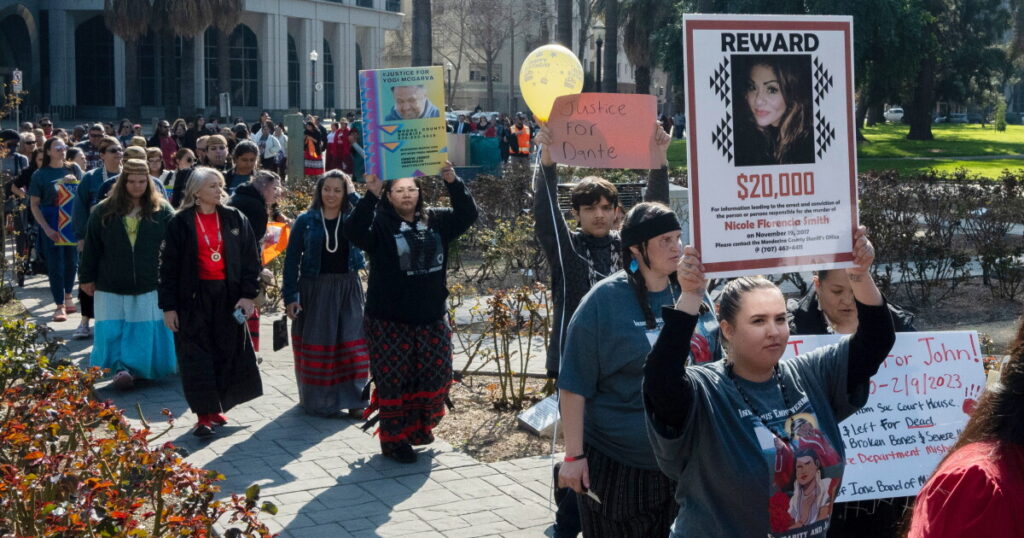
The disappearance of Peter Martin from the Fond Du Lac reservation in Minnesota remains unsolved, leaving his family in anguish. Their hopes for progress have dwindled as the investigation by the U.S. Bureau of Indian Affairs (BIA) has stalled following the departure of the agent handling his case in early 2025.
“They’ve never had a person take his space for this region and yeah, we haven’t heard from them since,” said Kayla Jackson, a friend of Martin’s family.
In 2021, the Missing and Murdered Unit was established to tackle the violence against Native Americans, but a federal audit by the Interior Department’s watchdog reveals persistent staffing issues have hampered its effectiveness. This has resulted in a backlog of cases and a lack of victim services for families.
Despite federal funding for the initiative increasing from $12 million to $17 million between 2021 and 2024, the audit found that 39% of the budget was reallocated to other Bureau of Indian Affairs law enforcement needs, such as vehicle upgrades. As of last year, nearly half of the unit’s positions were vacant, with overall staffing reduced by a third due to cuts under President Donald Trump’s administration.
The bureau has implemented several audit recommendations, such as improving case referral processes and training staff on victim services, but hiring inefficiencies persist, leaving families in the dark about their cases.
“It is nothing but heartbreaking just to see how inadequate the response has already been for so many of these situations,” commented David Adams, an attorney and member of the Sault Ste. Marie Tribe of Chippewa Indians.
Hundreds of Cases Languish
As of November 2024, the Missing and Murdered Unit had 83 open cases and nearly 400 pending referrals, with no set timeframe for referral assessment, according to the audit released by the Interior’s Office of Inspector General.
Agents faced overwhelming caseloads and administrative tasks, impacting their ability to focus on active investigations.
The case of Kaysera Stops Pretty Places remains unresolved despite the assignment of a BIA agent in 2022. Stops Pretty Places was found deceased in 2019 near the Crow Reservation. Her aunt, Grace Bulltail, expressed frustration over the agent’s limited updates and access to local investigative files before being reassigned.
The Associated Press reached out to bureau officials for comment.
Sarah Deer, a professor at the University of Kansas School of Law, noted that the delays and dysfunction among federal investigators exacerbate families’ suffering.
“These are families who have often experienced institutional failure already,” she said. “A system designed as a response to that history cannot ask families to keep waiting.”
Gaps in Support for Families
The inspector general’s review revealed that in eight out of 13 cases, agents failed to contact bureau staff dedicated to assisting victims’ families. With only two victim specialists nationwide, families were often referred to external programs.
Martin’s family describes him as an outgoing man who enjoyed sports and taking his nieces and nephews trick-or-treating. They receive sporadic updates from the Fond Du Lac Police Department but have not been linked with BIA victim specialists.
The BIA website lacks a case agent listing for Martin’s case, and the AP has contacted bureau officials for further information.
Addressing the Crisis
Efforts to combat violence against Native people have been a focus of the Trump administration. The FBI recently announced a minimum reward of $25,000 for information on cold cases on tribal land.
BIA officials state they have taken measures to improve case processing and ensure family support under President Donald Trump’s administration. Most recommendations from the audit have been implemented.
“The deficiencies identified in the OIG audit reflect operations under the previous administration that were inconsistent with the objectives outlined in Operation Lady Justice,” the statement noted, referring to a task force initiated by the Trump administration in 2019.
In February, the Missing and Murdered Unit helped recover and identify remains on the Chickasaw Nation, closing a decade-old missing persons case.
Sarah Deer observed that new task forces and initiatives have heightened awareness of the crisis. However, she emphasized the need for proper implementation and questioned if resources could be better utilized by tribal authorities.
“What I always come back to is whether or not this money could be better utilized by tribes themselves,” she expressed.
—
Read More Arizona News