Wildfires Ravage Tribal Lands in Washington and Oregon, Leaving Devastation in Their Wake
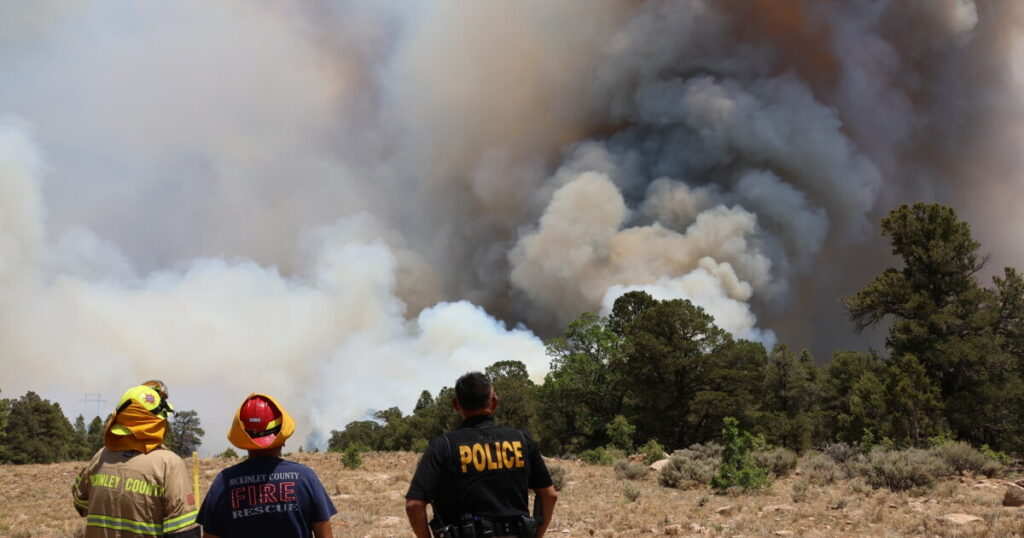
In Washington state’s Colville Tribes communities, a once-vibrant log home known as the “rainbow house” is now just a memory. Matilda Bob’s home, along with 42 others, succumbed to the Kaiser Canyon Fire, sparked by a lightning strike in July. The blaze also ravaged 100 outbuildings, including sheds and barns, as reported by tribal leaders.
“I couldn’t believe that it had happened,” Bob expressed, reflecting on the rapid devastation. The wildfire season, exacerbated by climate change, has become longer and more severe, with hotter and drier conditions increasing the frequency and intensity of fires across the nation.
According to Cody Desautel, executive director of the Colville Tribes, what was once a two-month fire season has now extended to at least three months or longer, a trend that has evolved over the last 25 years.
In addition to the destruction of homes, the fires have severely impacted the tribes’ timber resources, a vital income source. The Colville Reservation, located in the southern part of Ferry County, which ranks low in median household income, suffered significant timber losses. Many residents were uninsured or unable to afford upgrades to fire-resistant materials, adding to their struggles.
By mid-September, Washington had seen nearly 900,000 acres burned, marking the state’s worst fire season since 2015. Of this, approximately 200,000 acres were on the Colville Reservation alone. The Kaiser Canyon Fire alone scorched over 138,000 acres, while the Modrite Fire burned more than 57,000 acres.
Health Impacts and Community Response
The wildfires have also taken a toll on health, particularly perinatal health, as reported by Faith Zacherle-Tonasket, founder of xa?xa? Indigenous Birth Justice. Stress from evacuations may have led three clients to experience early labor. Zacherle-Tonasket also leads the River Warrior Society, which has been active in providing wildfire relief.
Respiratory health is a growing concern post-wildfire, with American Indian and Alaska Native populations experiencing exacerbated chronic conditions due to smoke exposure. Matilda Bob’s father, who has COPD, is among those affected.
Dayna Seymour from the Colville Tribes highlights the mental health toll, citing anxiety, grief, and trauma as ongoing challenges. Community members have stepped up, delivering medications and digging fire lines to support each other.
Environmental and Cultural Losses
Traditional foods and cultural heritage have also been casualties of the fires. “Those are things that we utilize to help us in ceremony, that we utilize to eat for subsistence. So that was a huge loss for our people,” said Seymour.
The Klamath Tribes in Oregon, although spared from home losses, face potential environmental impacts on their waterways. Sedimentation from high-intensity wildfires threatens the spawning grounds for newly reintroduced salmon.
Chairman William Ray Jr. of the Klamath Tribes emphasizes the need for tribal control over polluted waterways. “We have ecological collapse going on. Our water quality in our lake and rivers isn’t very good,” he stated.
For Matilda Bob, the loss extends to cultural heirlooms, including traditional beadwork and a century-old berry basket. Yet, her family remains resilient, continuing their traditions and honoring their heritage. “Every time your foot hits the floor’s a prayer,” she said, embodying the enduring spirit of her community.
This story was originally produced by Stateline, which is part of States Newsroom, a nonprofit news network that includes Arizona Mirror, and is supported by grants and a coalition of donors as a 501(c)(3) public charity.
—
Read More Arizona News
![Exploring Michigan’s Unique University Board Election System[embed]https://www.youtube.com/watch?v=[/embed]](https://www.kitchentablenews.org/wp-content/uploads/2026/09/Exploring-Michigans-Unique-University-Board-Election-Systemembedhttpswwwyoutubecomwatchvembed.com2F9b2Fbe2F9938d5fa43a2baa2cea44e05ad592Fmids-un.png "Exploring Michigan’s Unique University Board Election System[embed]https://www.youtube.com/watch?v=[/embed]")