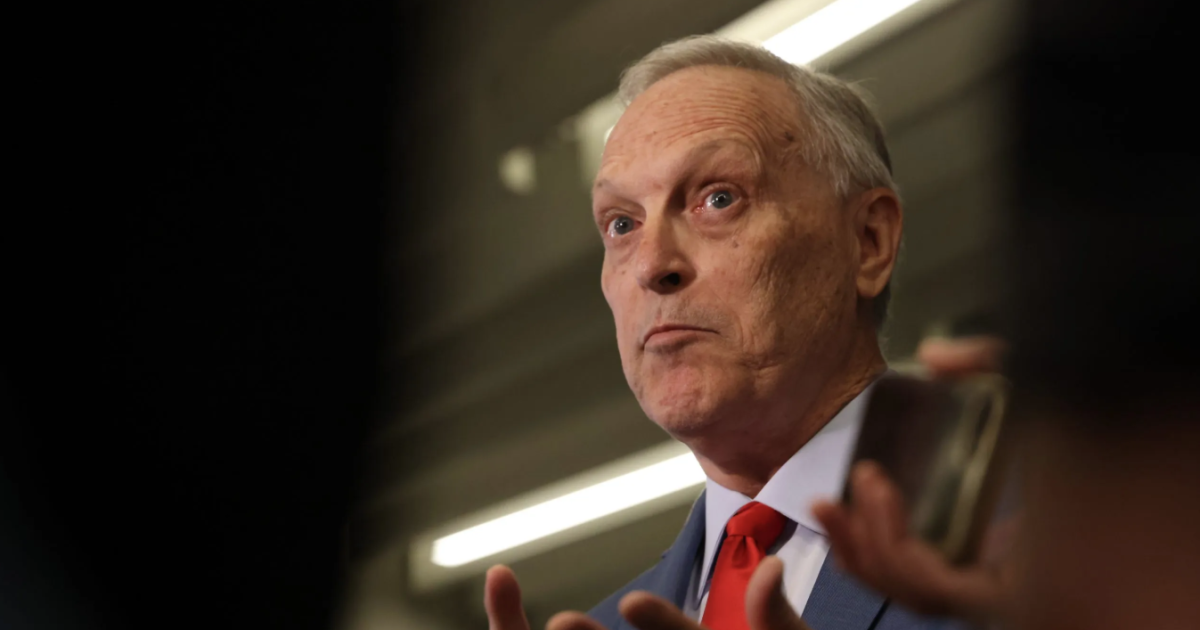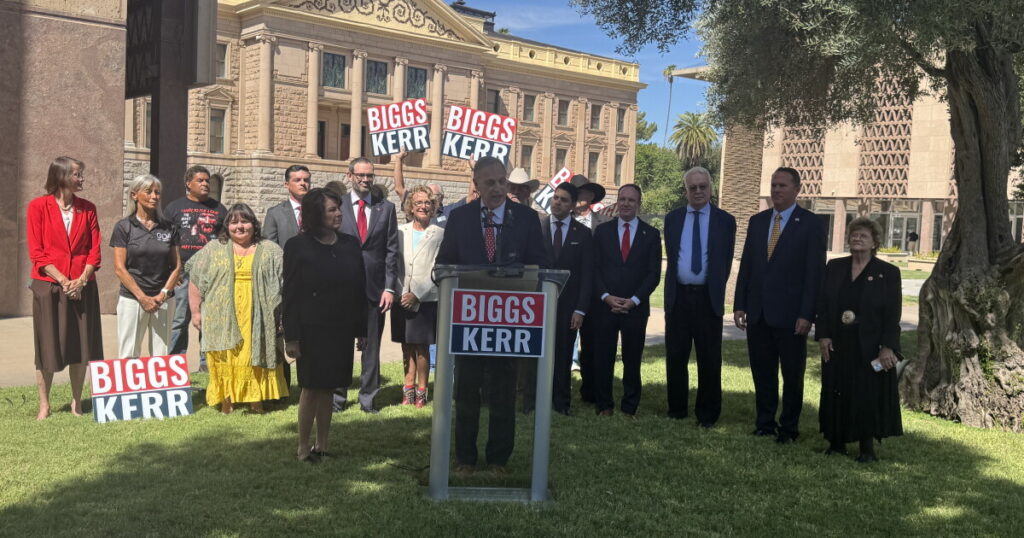
In a recent announcement, Congressman Andy Biggs proposed a bold fiscal plan as part of his gubernatorial campaign. Central to his agenda is the elimination of the state income tax, which, he argues, will ultimately boost Arizona’s revenue rather than diminish it.
Biggs, a longstanding proponent of reducing income tax, pointed out that the income tax currently constitutes approximately 33% of the state budget, equating to $5.7 billion, as reported by the Joint Legislative Budget Committee.
Opponents of this proposal caution that removing the income tax could lead to increased taxes elsewhere or necessitate cuts in state services. However, Biggs dismissed these concerns.
“I have every confidence that as we manage it and we incrementally bring this down you’re going to see more economic activity which is going to result in more tax revenue coming into the state,” Biggs stated.
He further explained that reducing waste, fraud, and abuse within the state government would help balance the books without the income tax revenue.
Biggs referenced the federal government’s Tax Cuts and Jobs Act of 2017, noting that while it lowered income tax rates, the subsequent deficit rise was due to unchecked spending rather than the tax cuts themselves.
He highlighted last year’s federal spending bill, HR 1, which he claims has generated “record tax revenue” despite the tax cuts, although the federal deficit is still expected to grow.
These tax reform plans were part of Biggs’ larger vision for his first 100 days in office, should he be elected governor.
In addition to tax changes, Biggs plans to eliminate tax breaks for data centers and adjust the state’s universal private school voucher program to benefit certain student demographics.
Bigg’s ESA Strategy
During a recent debate, Biggs expressed his intention to “expand” the state’s universal Empowerment Scholarship Account (ESA) program, though he withheld specific details at the time.
Biggs later clarified his aim to reform the ESA program to provide increased funding for students from “economically disadvantaged” backgrounds.
“To say that you have school choice when you really don’t have school choice is a misnomer so we think that there’s room to raise some of the ESA money to help those underserved kids get a chance to make a choice,” he explained.
He particularly identified students in rural and “inner city” locations as those who might benefit from such reforms.
Currently, Arizona students receive ESA funds based on several factors, including grade level and disability status, resulting in a wide range of awards.
According to the Arizona Department of Education’s approximate ESA calculation chart for the 2025-26 school year, a kindergartner without disabilities would receive a baseline of approximately $4,700, whereas a student with multiple disabilities could receive over $47,700.
The ESA program was broadly expanded in 2022 under former Gov. Doug Ducey’s administration and now serves over 106,000 students. However, current Governor Katie Hobbs has voiced opposition to this expansion and has attempted to impose restrictions during her term.
—
Read More Arizona News