Missouri’s Political Landscape Shifts Again with New Abortion Vote
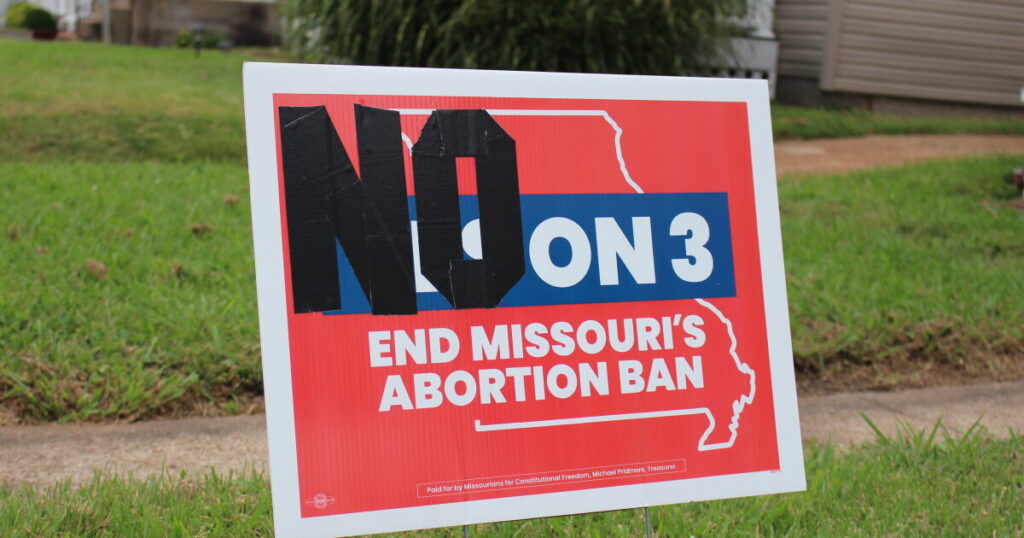
In Maplewood, Missouri, Kelly McCoomb’s yard sign supporting abortion rights finds its place back in the front yard, reflecting the ongoing political battle over reproductive rights in the state. Initially a memento from the 2024 vote to embed abortion protections in the state constitution, it’s now repurposed for a new campaign.
Missouri’s legislature, dominated by Republicans, is pushing for a reversal of the 2024 amendment that ensured abortion protections. This initiative, again titled Amendment 3, seeks voter approval to remove these protections. While McCoomb’s sign originally displayed a “YES,” it now bears a “NO” to reflect her stance in the upcoming 2026 vote.
The impending decision for Missouri voters is part of a broader national trend, as states navigate their own abortion policies following the U.S. Supreme Court’s 2022 decision in Dobbs v. Jackson Women’s Health Organization. This ruling dismantled federal abortion protections, leaving individual states to define their own laws, resulting in diverse regulations across the country.
Efforts to Clarify Abortion Legislation
The disparity in state-level abortion laws has prompted advocacy groups to seek clearer, more consistent protections. In Nevada, a ballot measure aims to solidify the state’s existing law, which allows abortions up to 24 weeks, into the state constitution. This effort requires another round of voter approval following its initial success in 2024, where it garnered 64% support.
According to Denise Lopez, president of Nevadans for Reproductive Freedom, the ballot measure is essential to prevent the erosion of abortion rights amidst fluctuating national policies. “They’re seeing what’s happening at the national level, and they want to make sure that whatever’s happening in our neighboring states, like Idaho and Utah, doesn’t happen here in Nevada,” Lopez stated.
Idaho is also presenting a ballot measure to voters, seeking to allow abortions through fetal viability, a stark contrast to its current stringent bans. Meanwhile, Utah’s legal challenges continue over its 18-week abortion limit. In Virginia, voters will consider a constitutional amendment to secure abortion rights up to 28 weeks.
Missouri Faces Complexity with Repeated Voting
Missouri’s unique position, voting on abortion rights for the second time since 2024, has introduced confusion among the electorate. Margot Riphagen-Dunn, CEO of Planned Parenthood Great Rivers, highlights the chaos this situation causes for patients seeking clarity on abortion availability in the state.
Reagan Barklage, vice president of Students for Life of America, acknowledges the confusion affecting anti-abortion voters as well, noting the challenge in communicating the shift in voting instructions for Amendment 3. “It is crazy that it ended up being even the same number,” Barklage remarked, emphasizing the necessity for clear voter understanding.
As the November election approaches, McCoomb and others in Missouri hope their efforts to inform and mobilize voters will resonate, ensuring that their stance on reproductive rights is clearly communicated and reflected in the outcomes.
KFF Health News is a national newsroom that produces in-depth journalism about health issues and is one of the core operating programs at KFF — the independent source for health policy research, polling, and journalism.
Copyright 2026 KFF Health News
—
Read More Michigan News



![Exploring Michigan’s Unique University Board Election System[embed]https://www.youtube.com/watch?v=[/embed]](https://www.kitchentablenews.org/wp-content/uploads/2026/09/Exploring-Michigans-Unique-University-Board-Election-Systemembedhttpswwwyoutubecomwatchvembed.com2F9b2Fbe2F9938d5fa43a2baa2cea44e05ad592Fmids-un.png "Exploring Michigan’s Unique University Board Election System[embed]https://www.youtube.com/watch?v=[/embed]")