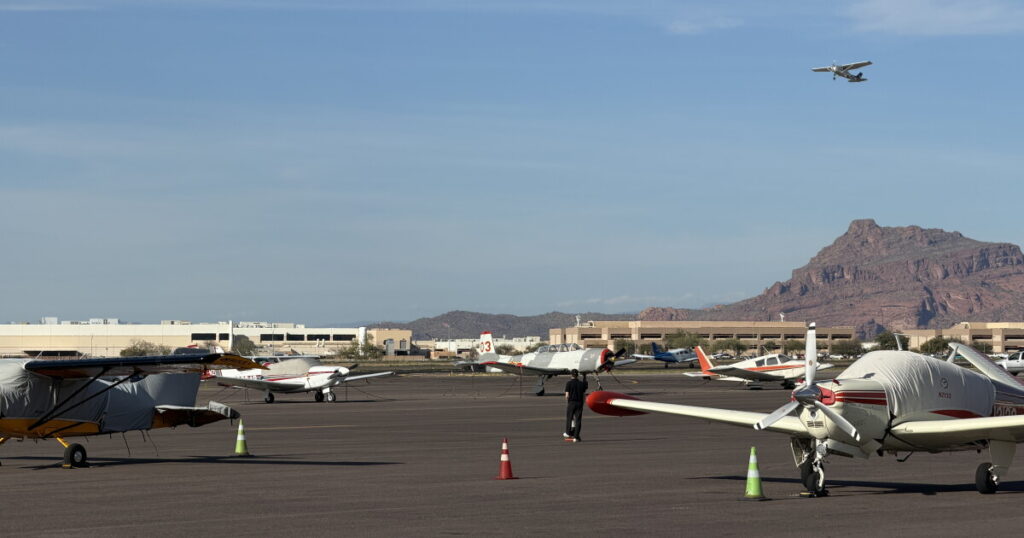
As oil prices continue to climb, the impact is being felt across various sectors, notably aviation. This surge in costs has not only led to pricier airline tickets and flight cancellations but is also threatening to inflate the expenses associated with flight training.
Impact on Flight Schools
Texas-based Thrust Flight, a flight school that provides training at Mesa’s Falcon Field, is experiencing these challenges firsthand. CEO Patrick Arnzen acknowledges the financial strain, noting that flight training is already a costly endeavor.
“It makes operating a business like mine incredibly difficult,” Arnzen stated. “When you attribute 30% of the cost of a flight directly to fuel, it’s a big number.”
Fuel Types and Costs
Flight schools like Thrust Flight rely on both aviation gas and jet fuel. According to International Air Transport Association data, jet fuel prices have more than doubled over the past year. However, avgas prices, which are crucial for piston-powered aircraft, remain untracked by the organization.
Arnzen mentions that, while students currently pay a fixed cost for training, sustained high fuel prices may necessitate a tuition increase next year. “Fuel prices affect us the same way it affects us at the gas pumps for our cars and for our trucks, so you know we’ve seen a huge increase in our fuel cost as we do flight training for all of our students,” he explained.
Arnzen plans to reassess pricing at the year’s end.
Broader Economic Context
On September 22, Arizona witnessed diesel gas prices hitting a record high of $6.45 per gallon. In response to rising fuel costs, the Environment Protection Agency allowed a shift to winter-grade fuel two weeks earlier than usual, starting September 1.
—
Read More Arizona News