Unraveling the Mysteries of the Grand Canyon’s Formation
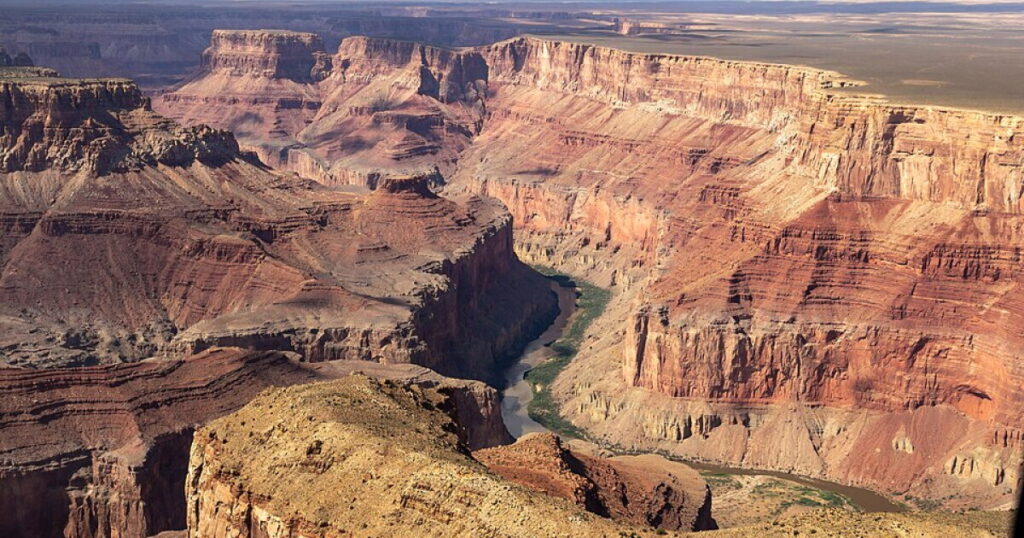
The Grand Canyon, a monumental natural wonder, has long puzzled geologists who seek to understand the timeline of its formation. How did the Colorado River carve out this massive geological feature, and when did it begin its journey?
Recent studies have shed light on this mystery, revealing a crucial piece of the puzzle. The findings point to a prehistoric lake that once accumulated and eventually overflowed, giving rise to the Colorado River’s current path.
This ancient lake was situated in the Bidahochi Basin on the Navajo Nation in northeastern Arizona. The key to deciphering this historical narrative lies in zircon particles. These tiny, rounded grains, found in the sand and volcanic ash layers of the Bidahochi, are durable minerals that can be dated using uranium-lead isotopes. As one geologist aptly describes, they serve as “tiny time capsules.”
Evidence indicates that the river’s existence in western Colorado dates back 11 million years, with the river first reaching the Gulf of California approximately 5 million years ago. The period in between, crucial for understanding the Grand Canyon’s formation, has been partially illuminated by the analysis of these zircon samples.
Researchers have meticulously gathered enough zircon samples to identify both their age and origin. Their analyses suggest that around 6.6 million years ago, the ancestral Colorado River flowed into the lake. It might have taken another million years for the lake to overflow, prompting the river to change course and head west.
The river’s westward journey brought it into contact with the Kaibab uplift. By this time, the river had gained enough momentum and sediment to carve the mile-deep chasm we know as the Grand Canyon.
This discovery marks a significant advancement in understanding the Grand Canyon’s history, though the process of its formation remains a subject ripe for further investigation.
This Earth Note was written by Rose Houk and produced by KNAU and the Sustainable Communities Program at Northern Arizona University.
“`
—
Read More Arizona News