As the chill of fall and winter sets in across the United States, it’s crucial to prepare for the inevitable cold and flu season. With the potential for sniffles, stomach bugs, or even the flu to strike at any moment, having a plan in place can make all the difference.
According to the Centers for Disease Control and Prevention, the cold and flu season spans from October to May, a time when dropping temperatures and drier air increase vulnerability to respiratory viruses like the common cold, flu, RSV, or COVID-19. Pediatrician Mona Amin suggests that these conditions can lead to “back-to-back illnesses.”
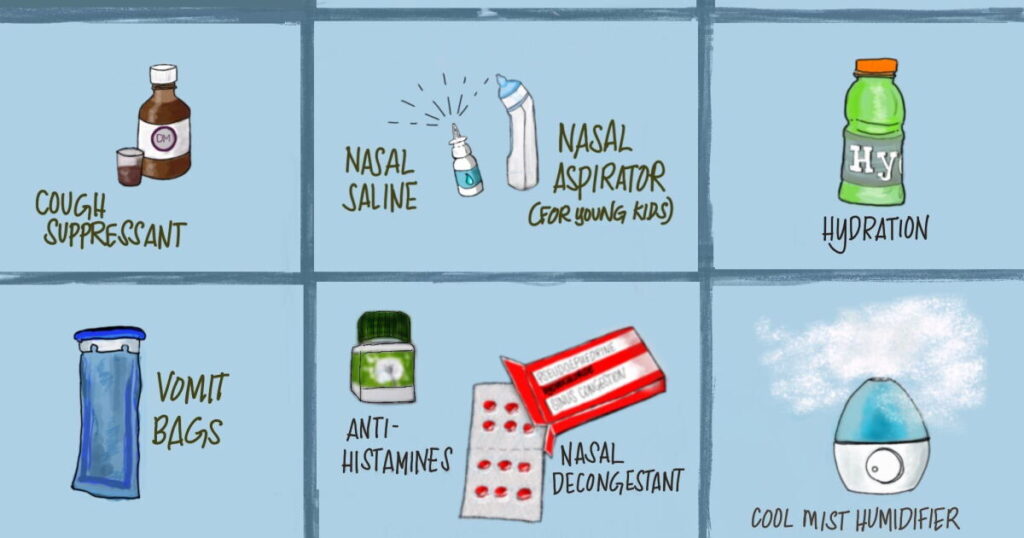
To help manage symptoms effectively and reduce stress, pharmacist Alisha Reed advises assembling a cold and flu prep kit. “Have things readily available so that you’re not scrambling or depending on someone else to run to the drugstore for you when you become sick,” she says. Essential items include fever and pain relievers, hydration supplements, and monitoring tools. It’s worth noting that many fevers and viruses can be managed at home, as antibiotics are ineffective against viral infections like the common cold and flu, according to Amin.
Key Components of a Cold and Flu Prep Kit
Over-the-counter Medications
When faced with symptoms such as cough, congestion, sore throat, or fever, it might be tempting to choose medications that tackle multiple symptoms. However, Reed warns against this due to the risk of overmedication from unnecessary ingredients. Instead, focus on medications targeting individual symptoms.
Here are some recommended medications by Reed and Amin:
- Pain Relievers: Non-steroidal anti-inflammatory drugs (NSAIDs) like ibuprofen or naproxen can help alleviate pain from headaches and sore throats by reducing inflammation. For kids: Avoid using children’s ibuprofen for those under 6 months; naproxen is suitable for children 12 years and older.
- Fever Reducer: Acetaminophen and ibuprofen can safely lower body temperature, with acetaminophen often being the preferred choice for fevers.
- Antihistamine: Useful for symptoms like sneezing and runny noses, these medications help dry up sinuses. For kids: Some OTC allergy medicines are approved for children as young as 6 months, but consult a care provider for guidance.
- Decongestant: Pseudoephedrine pills or nasal sprays can relieve nasal congestion by opening airways. For kids: Pills are not recommended for those under 4, and medicated sprays are not for children under 6.
- Cough Suppressant for Dry Cough: Dextromethorphan can temporarily suppress the cough reflex. For kids: Not recommended for children under 4, and should not be used for those under 2.
- Cough Expectorant for Congested Cough: Guaifenesin may help alleviate chest congestion by thinning mucus. Before purchasing, try staying hydrated first, as “water is a natural expectorant,” advises Reed. For kids: Cough medicine is not recommended for children under 4, and should not be used for those under 2.
Honey
Amin highlights honey as a beneficial remedy, particularly for young children not old enough for cough medicine. It acts as an anti-inflammatory and soothes the throat. Note: Honey is unsafe for children under 12 months due to botulism risk.
Thermometer
A thermometer is essential for checking temperatures when a fever is suspected, says Amin. Rectal thermometers are preferred for children 3 and under, while oral and digital infrared thermometers are suitable for older individuals.
Nasal Saline Treatment
To combat winter dryness and prevent viruses from thriving, use saline sprays or rinses. Amin suggests these can help keep nasal passages moist and relieve symptoms by loosening mucus.
Additional Comfort Items
- Chest Rub: Vapor rubs with camphor, eucalyptus, and menthol oils may soothe nighttime coughs. Use cautiously and adhere to age restrictions.
- Disposable Vomit Bags: Handy to have in case of stomach flu, providing convenience over traditional methods.
- Humidifier: A cool-mist humidifier can add moisture to the air, easing nasal congestion during a cold.
- Hydration Options: Keep drinks like Pedialyte, apple juice, water, or Gatorade available to prevent dehydration from symptoms like diarrhea or vomiting.
When to Seek Medical Advice
While most viruses can be managed at home, it’s important to contact a healthcare professional if symptoms worsen or fail to improve. Key warning signs include:
- Fever in infants under 3 months, above 102°F for children, or 103°F for adults, especially if unresponsive to medication.
- Breathing difficulties or erratic patterns.
- Severe dehydration symptoms like extreme thirst, inability to drink, or dark urine.
- Confusion, disorientation, or extreme irritability.
Reed advises, “Don’t be afraid to call your doctor or talk to a pharmacist about what’s going on. It doesn’t hurt to double check.”
This digital story was edited by Malaka Gharib. The visual editor is CJ Riculan.
We’d love to hear from you. Email us at LifeKit@npr.org. Listen to Life Kit on Apple Podcasts and Spotify, and sign up for our newsletter.
Copyright 2026 NPR
—
Read More Michigan News