Article Summary –
The U.S. national average gasoline price has remained above $4 for a record 158 consecutive days as of October 14, 2026, surpassing the previous record set in 2022 after global disruptions in oil markets caused by Russia’s invasion of Ukraine. This increase in fuel prices can be attributed to the ongoing conflict between the U.S. and Iran, which has significantly impacted oil supplies, notably through the disruption of shipping routes like the Strait of Hormuz and attacks on oil infrastructure. Consequently, diesel prices are projected to rise further due to refinery maintenance, potentially increasing costs for food and other goods, as explained by Rutgers University professor Rudi Leuschner.
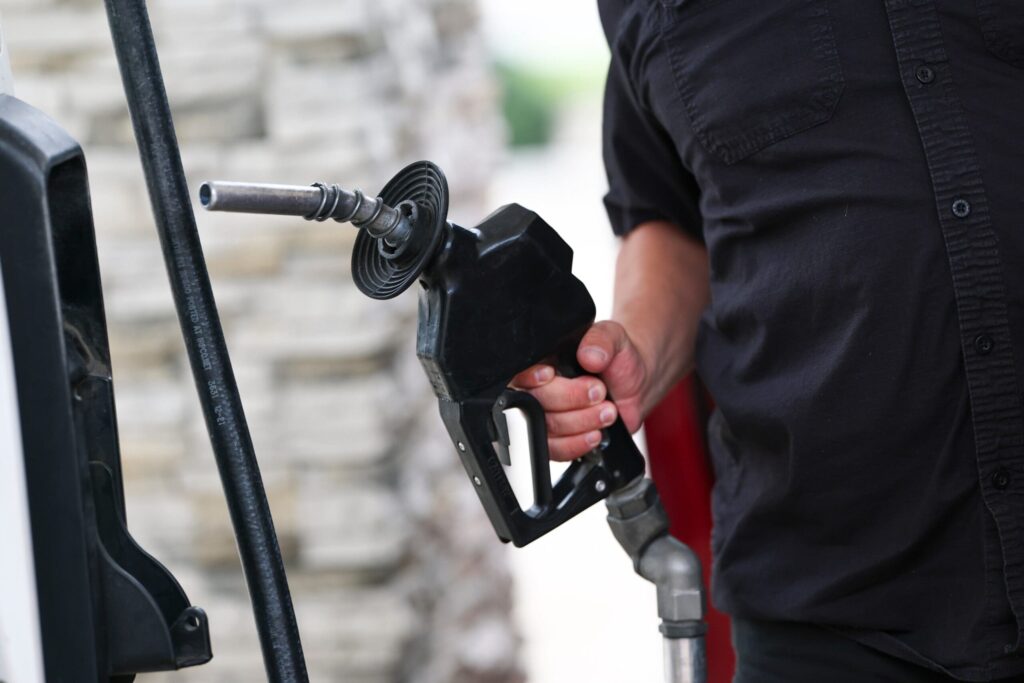
2026 has surpassed 2022’s record for the longest streak of U.S. national average gasoline prices over $4.
The record was tied on Oct. 13 and surpassed the next day, based on a post by Patrick De Haan from GasBuddy.
Gas prices were around $2.90 per gallon in February 2026, but surged past $4 after President Donald Trump’s conflict with Iran began, according to The U.S. Energy Information Administration. Prices briefly dipped below $4 in summer but increased again by mid-July.
On Oct. 14, it marked 158 continuous days above $4, exceeding the 2022 record set post-Russia’s Ukraine invasion that rattled oil markets.
Regular unleaded gasoline was $4.33 per gallon on Oct. 14, $1.26 higher than last year, as per AAA. Prices were higher in some states — $4.98 in Alaska, $5.64 in Hawaii, and $6.26 in California.
Diesel prices were also high, with the national average at $6.30 per gallon on Oct. 14, according to AAA, reaching $8.41 in California.
De Haan tweeted that diesel prices might rise as refinery maintenance begins.
He noted that “13 states have diesel below $6/gal, but this might shrink significantly soon.”
The Iran war has severely impacted fuel prices. 20% of global crude oil flowed through the Strait of Hormuz before Iran blocked it, causing price surges.
Crude oil supply routes are also threatened. Iran reportedly plans to increase prices by attacking Arabian Gulf pipelines, said InvestingLive.
A drone attack from Iraq weakened Saudi Arabia’s East-West Pipeline last month. On Oct. 14, Iraq’s Prime Minister assured Saudi Arabia that Iraqi land wouldn’t be used for further attacks.
Iran-supported Houthi forces in Yemen hit a Saudi Aramco refinery on Oct. 6 and struck Aramco’s Dhahran headquarters on Oct. 13, per Bloomberg.
In early October, Rutgers University professor Rudi Leuschner warned that sustained high fuel prices could increase grocery costs.
“Over a few months, you’ll likely start noticing effects,” Leuschner said.
—
Read More Wisconsin News






![ICE Pursuit Ends in Fatal Grand Rapids Crash, Details Emerge[embed]https://www.youtube.com/watch?v=m6UY04VfQ-U[/embed]](https://www.kitchentablenews.org/wp-content/uploads/2026/10/ICE-Pursuit-Ends-in-Fatal-Grand-Rapids-Crash-Details-Emergeembedhttpswwwyoutubecomwatchvm6UY04VfQ-Uembed.com2F0d2Fef2F2fd3ad944f8596721c8fe9408c3e2Fimg-978.jpeg "ICE Pursuit Ends in Fatal Grand Rapids Crash, Details Emerge[embed]https://www.youtube.com/watch?v=m6UY04VfQ-U[/embed]")