As the cold and flu season looms, it’s essential to ensure your household is prepared to tackle respiratory virus outbreaks. With the onset of cooler temperatures, respiratory ailments like the flu, common cold, RSV, and COVID-19 become more prevalent. Taking proactive steps now can make handling these illnesses more manageable.
According to the Centers for Disease Control and Prevention, the cold and flu season in the United States spans from October to May. Pediatrician Mona Amin highlights that these conditions can lead to “back-to-back illnesses” due to the combination of lower temperatures and drier climates.
Pharmacist Alisha Reed advises assembling a cold and flu preparation kit to avoid last-minute trips to the store when sickness strikes. Such a kit should include fever and pain relief medications, hydration solutions, and tools for monitoring symptoms. “Have things readily available so that you’re not scrambling or depending on someone else to run to the drugstore for you when you become sick,” Reed suggests.
Most viral infections, including the common cold and flu, are manageable at home and do not require antibiotics, states Amin. To aid in home management, Amin and Reed recommend stocking up on the following items:
Essential Items for Your Cold and Flu Prep Kit
Over-the-Counter Medications
When tackling symptoms like cough, congestion, sore throat, fever, or fatigue, it’s important to choose medications that target specific symptoms rather than multi-symptom drugs, which can contain unnecessary ingredients. Reed emphasizes the importance of this approach to avoid overmedication.
- Pain Relievers: NSAIDs like ibuprofen or naproxen are recommended for alleviating headaches, body aches, and sore throats. Note: Children’s ibuprofen is not suitable for those under 6 months; naproxen is for ages 12 and up.
- Fever Reducers: Acetaminophen and ibuprofen are effective, though acetaminophen is preferred for fever reduction. More details can be found here.
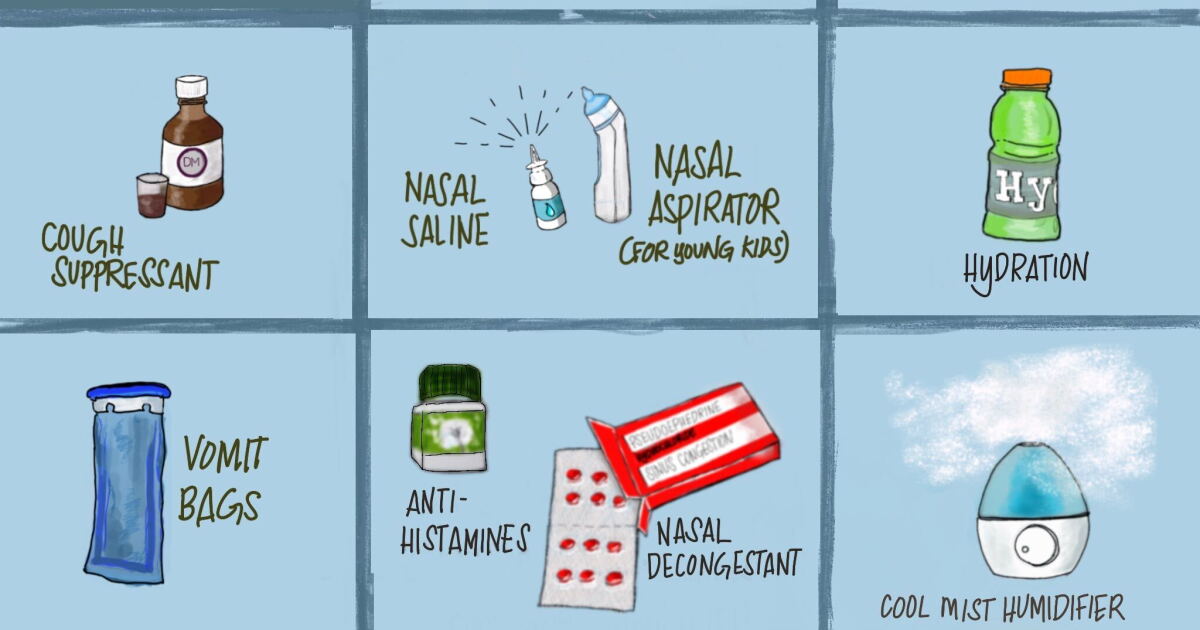
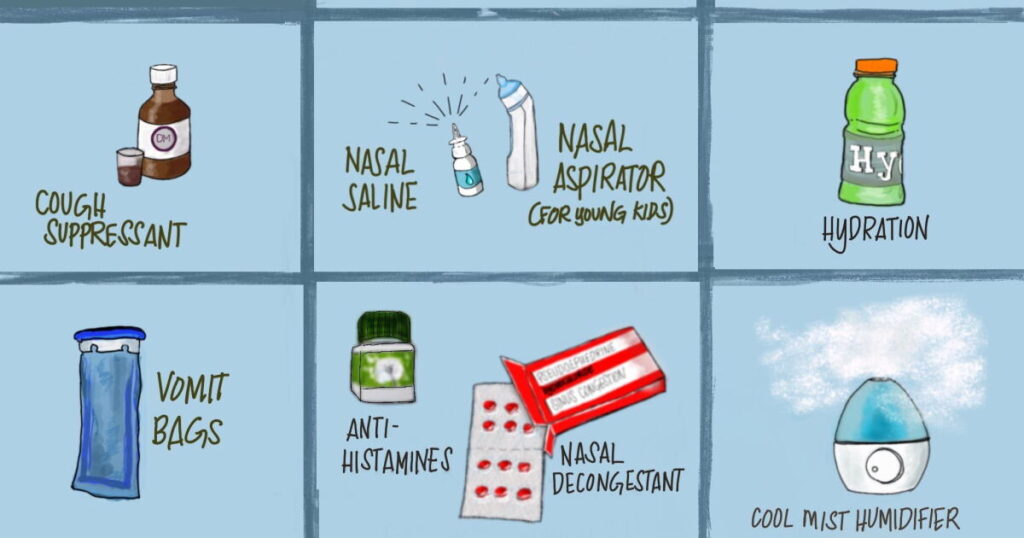
- Antihistamines: Useful for both colds and allergies, these medications can relieve symptoms like sneezing and runny noses. Check with a healthcare provider for suitability for children.
- Decongestants: Options like pseudoephedrine help relieve nasal congestion by restricting blood vessels. Pills are not recommended for children under 4.
- Cough Suppressants: Dextromethorphan can suppress cough reflexes temporarily. However, it is not recommended for children under 4.
- Cough Expectorants: Guaifenesin thins mucus to ease chest congestion. Staying hydrated is an effective natural alternative.
Always check the expiration date and adhere to the recommended dosage to minimize risks, advises Reed.
Additional Supplies
Other useful items include:
- Honey: A safe remedy for children over one year old to soothe coughs.
- Thermometer: An essential tool for monitoring fever. Rectal thermometers are recommended for children under three, while oral and infrared options are suitable for older individuals.
- Nasal Saline Treatments: Saline sprays or rinses can keep nasal passages moist and relieve cold symptoms. Research indicates that saline drops can reduce symptoms in young children by up to two days, as detailed here.
Comfort items like chest rubs, disposable vomit bags, humidifiers, and hydration solutions (e.g., Pedialyte, apple juice) are also beneficial. However, caution is advised with chest rubs, especially around young children.
When to Seek Medical Attention
While most symptoms can be managed at home, certain situations warrant a call to your doctor:
- Fever in infants under 3 months, or high fevers in older children and adults that persist or don’t respond to medication.
- Shortness of breath, dehydration symptoms, or severe vomiting.
- Confusion, disorientation, or extreme irritability.
Reed advises, “Don’t be afraid to call your doctor or talk to a pharmacist about what’s going on. It doesn’t hurt to double check.”
This digital story was edited by Malaka Gharib. The visual editor is CJ Riculan.
We’d love to hear from you. Email us at LifeKit@npr.org. Listen to Life Kit on Apple Podcasts and Spotify, and sign up for our newsletter.
Copyright 2026 NPR
—
Read More Michigan News