Michigan’s Religious Minorities Express Concerns Amid Election Campaigns
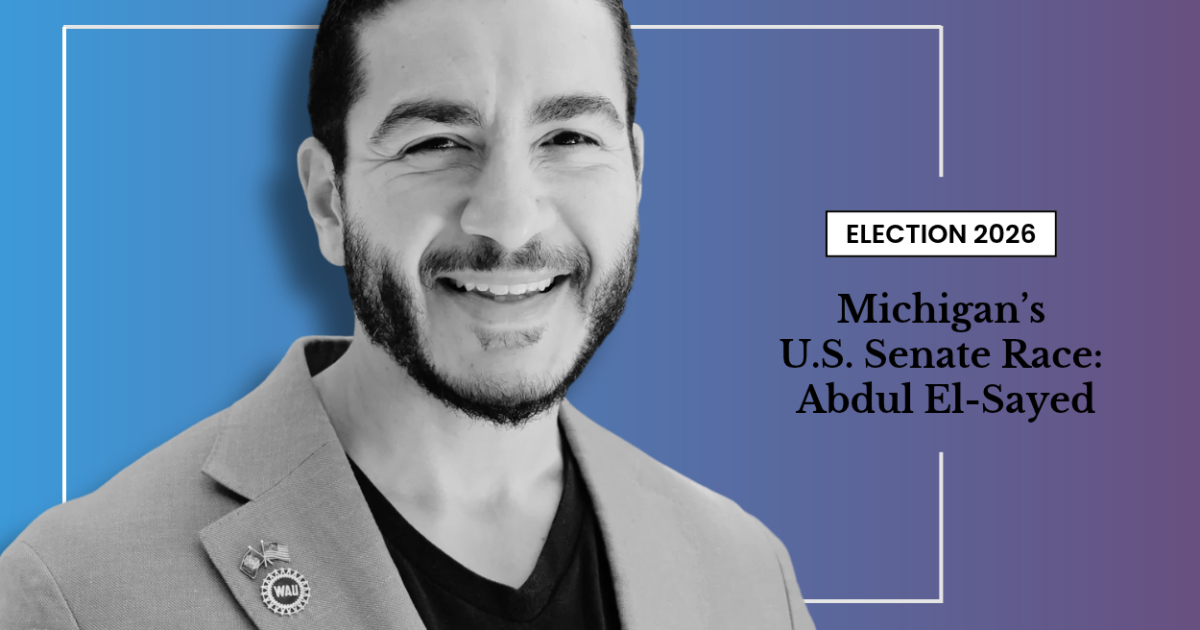
The current election season in Michigan has sparked anxiety among some of the state’s religious minority communities. Muslim Americans, in particular, are facing concerns over Islamophobia triggered by inflammatory political ads. These ads depict Democratic U.S. Senate nominee Abdul El-Sayed against the backdrop of the September 11, 2001, attacks, despite no evidence suggesting his support for terrorism.
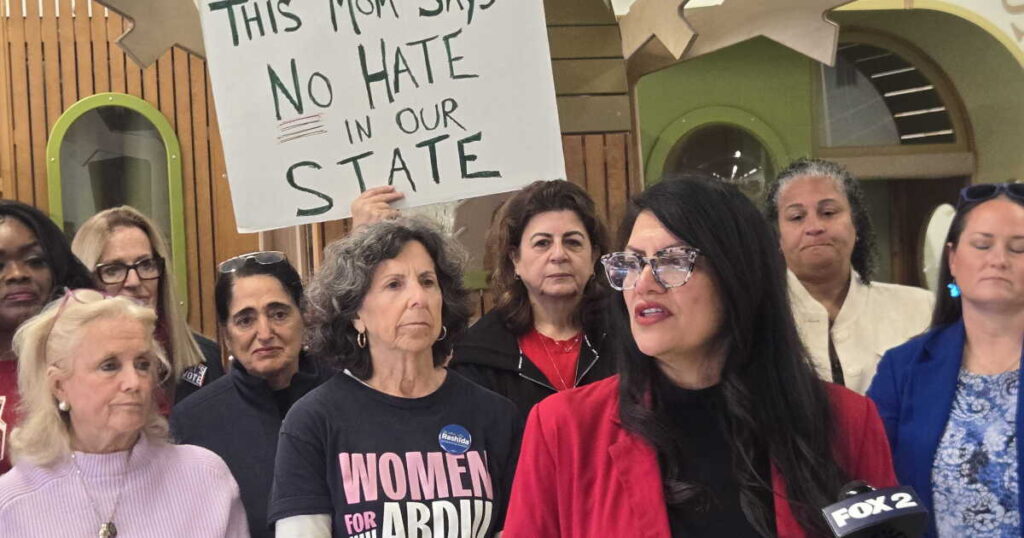
At a recent event held in a children’s play space in Canton, Democratic women gathered to denounce such rhetoric. Congresswoman Rashida Tlaib (D-MI 12) highlighted the impact of these attacks, stating that they have fostered an anti-Muslim sentiment affecting even her children. “This is literally our daily lives, turning off the radio when an ad comes up. Turning the images that we get on our TV when we’re literally just trying to watch football or the series. We’re completely being bombarded by this dehumanization,” Tlaib explained.
The attendees, including Tlaib, attributed the rise in hate speech to the influence of President Donald Trump, drawing parallels to the environment for immigrant and Muslim-American communities during his initial term in 2016 and 2017. Trump’s victory in Michigan in 2022, partly due to his outreach to cities with significant Muslim populations like Dearborn and Hamtramck, was noted by the speakers.
Business owner Sara Khan criticized politicians for exploiting communities for electoral gains. “Our communities are not photo opportunities; our communities are not campaign props. Our communities are not representative of all of us if you meet with a few of us,” Khan asserted, emphasizing the need for genuine respect beyond election periods.
Many of the women at the event identified as mothers who are concerned about the implications of these attacks on their children’s futures. “We’re just moms first and want to protect our babies,” Tlaib mentioned, acknowledging the challenging atmosphere this year and the necessity to counter it.
The gathering also included women of Jewish and Christian backgrounds, all worried about the increase in hate speech targeting religious minorities. In a separate event, a group of rabbis urged for more cautious language in Michigan’s U.S. Senate race. The group, Nonnegotiable Michigan, expressed concerns about criticisms of Israel veering into antisemitism, endangering Jewish safety.
Nonnegotiable Michigan accused a political ad from Rebellion PAC of employing anti-Jewish stereotypes. The ad critiques El-Sayed’s Republican opponent Mike Rogers for his perceived bias towards Israel and Prime Minister Benjamin Netanyahu. Additionally, it features a couple lamenting the U.S.’s financial support for Israel, suggesting it funds violence against Palestinians.
The El-Sayed campaign distanced itself from the ad, affirming no affiliation and maintaining its focus on tackling high costs attributed to “President Trump’s agenda,” as reported in a statement. However, Rabbi Aaron Starr from Congregation Shaarey Zedek in Southfield criticized El-Sayed for not adequately denouncing the ad. “He’s not discrediting the commercial, he’s just distancing himself from it. He’s acknowledging he’s not the one that put it out,” Starr commented during a Nonnegotiable press conference.
Rabbi Starr also addressed concerns about Mike Rogers receiving support from openly racist individuals, such as Jake Lang. He mentioned feeling politically homeless, stating, “Nonnegotiable Michigan was founded with the idea that, because Jews have voted Democrat by a large majority over multiple generations, it is our obligation to call out extremism within our own party.” He expressed hope for Republicans to similarly challenge extremism within their ranks.
Conversely, Michigan Jews for Democracy circulated a letter encouraging Jewish Democrats to support El-Sayed’s campaign. This division among minority groups reflects a broader trend in Michigan’s recent elections.
School principal Yvonne Lewis suggested that those in power exploit societal tensions to divide communities. “That visualization of seeing people in solidarity, they didn’t like it. So now, they have to do what they do best, right? Which is to separate, divide, and conquer, and it’s not really working,” Lewis remarked, expressing optimism due to positive interactions among diverse groups.
—
Read More Michigan News