Breaking Barriers: Abdul El-Sayed’s Historic Senate Win
In a historic achievement, Abdul El-Sayed has become the first Muslim to serve in the U.S. Senate, marking a significant moment for many Muslims in America. This victory resonates deeply, especially following a challenging campaign fraught with Islamophobic and xenophobic rhetoric.
For Aisha Siddiqui, who grew up in Portage, Michigan, El-Sayed’s win is deeply personal. Often feeling different as the only girl of color and a hijabi in her community, Siddiqui reflects on the weight of representing her identity. “You’re expected to condemn and carry the burdens of everything every single Muslim has done,” she explained. El-Sayed’s win, she believes, highlights the possibility of embracing both American and Muslim identities fully.
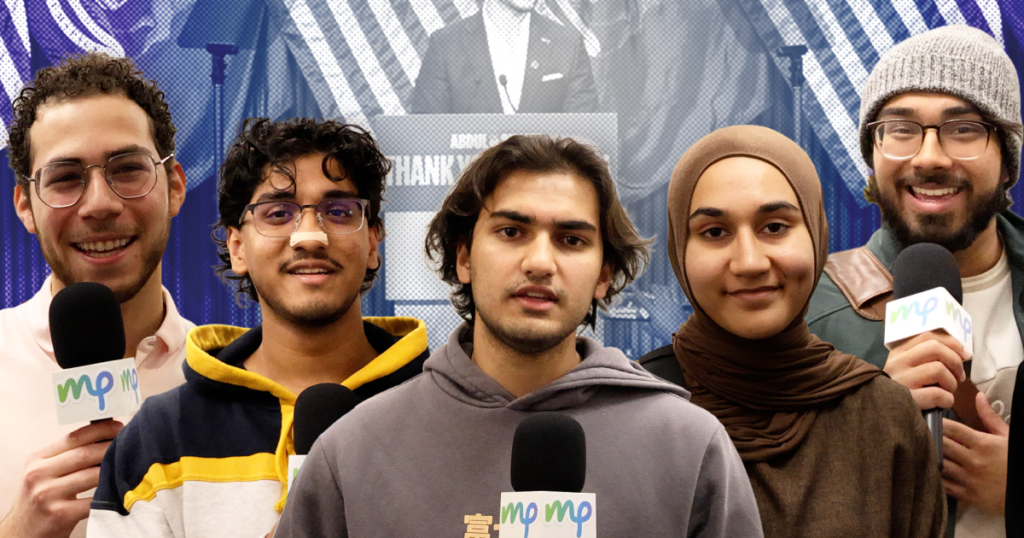
At the University of Michigan, where El-Sayed once served as vice president of the Muslim Student Association, students felt a palpable sense of pride. “His roots are here,” stated Hamza Said, a junior. Said remembered El-Sayed’s visit to Friday prayers, expressing how inspiring it was to see someone from a similar background succeed in politics. “I’ve never really had any person in government that I could be like, ‘He’s the same as me,'” Said noted.
El-Sayed’s candidacy faced scrutiny, particularly around his name, which some suggested undermined his political aspirations. For Abdullah Ali, a senior in astronomy, this focus on El-Sayed’s name felt personal. “My name means a lot to me. It was a core piece in what helped me form my sense of self,” Ali said. Despite these challenges, Ali’s experience canvassing revealed that voters were more interested in El-Sayed’s policies than his identity.
Following 9/11, many Muslims adopted a “keep your head down” approach amid increased scrutiny. However, over time, there has been a shift towards active civic engagement and running for public office. El-Sayed’s election is part of a growing trend of Muslims being elected nationwide, signaling a change in political participation.
During his victory speech in Detroit, El-Sayed pronounced his full name, Abdulrahman Mohamed El-Sayed, rejecting the anglicized version used in his campaign. This moment was particularly significant for Siddiqui. “It just also goes to show that we don’t always have to be digestible to the media,” she said. “He can be Abdulrahman and still be our senator and still be an American.”
This story was contributed to by Rob Hess of Michigan Public.
—
Read More Michigan News