Historic Recognition for Mount Pleasant Industrial Boarding School
The Mount Pleasant Industrial Boarding School, a significant site in Native American history, has been recognized as a site of national significance by the National Register of Historic Places. This elevation from state-level recognition highlights the broader historical importance of the school, which operated from 1893 to 1934. The Saginaw Chippewa Indian Tribe, who owns the site, announced this development in a press release.
Marcella Hadden, interim public relations manager for the Tribe, emphasized the importance of this recognition: “[This] gives us more visibility, and that gives us a broader audience to tell our story about the children who went there, children who didn’t make it back, education that we can learn from that, [and] children that we can honor for having to live through those schools,” she said.
Founded under the National Historic Preservation Act of 1966, the National Register of Historic Places is a federal list that identifies sites significant to national, state, or community history. The Mount Pleasant Boarding School has been on the National Register since 2018, but its recent elevation to national significance places it among only 144 sites in Michigan with this designation, out of 2,282 registered places.
Native American boarding schools, like the one in Mount Pleasant, were established by the federal government in the late 1800s. These institutions aimed to assimilate Native American children, often involving harsh practices that stripped them of their culture and language. A total of 408 such schools were established across 37 states, including five in Michigan.
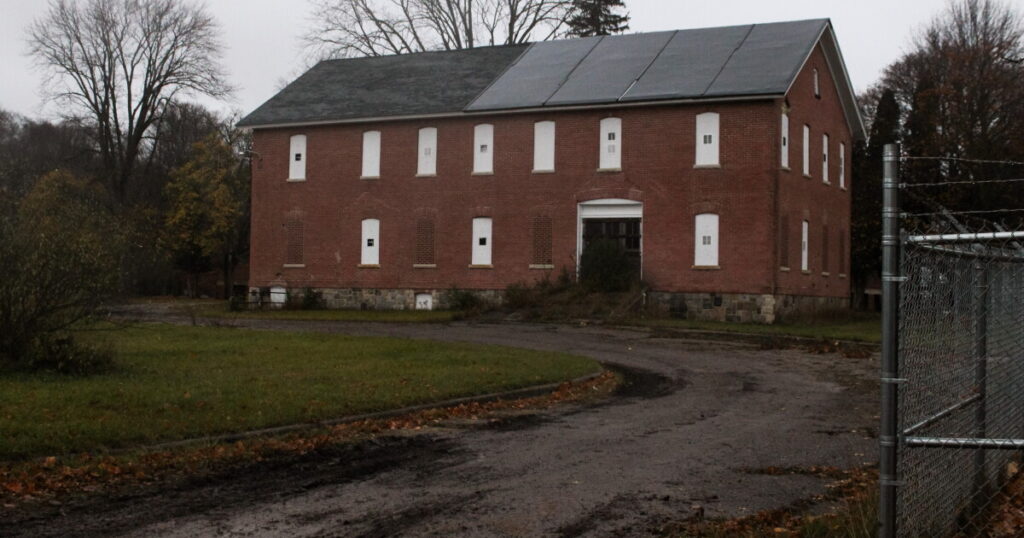
After its closure as a boarding school in 1934, the site was used as a mental health facility until 2008. Six red brick buildings remain on the 320-acre property, which is currently not open to the public. The Saginaw Chippewa Indian Tribe is actively engaged in preservation efforts, including the removal of hazardous materials like asbestos and lead, thanks to a $1.7 million grant from the Environmental Protection Agency.
Gage Colwell, the Tribe’s tribal historic preservation officer, highlighted the educational potential of the site. “It will bring more attention to us, bigger awareness, let us just get the message out [about] our efforts to help keep the buildings and the property safe,” Colwell stated, “while also teaching about the history of it and advocating for the survivors who experienced that.”
The Tribe has partnered with the University of Michigan to utilize LiDAR technology for creating 3D models of the site. This technology will aid in preserving and revitalizing the property, aligning with the Tribe’s long-term vision to transform the area into a museum and healing space for Native Americans.
The historical significance of the Mount Pleasant Industrial Boarding School is further underscored by reports like the 1928 Merriam Commission report and a 2022 federal investigation, both of which documented the severe conditions and abuses faced by Native American children in these institutions. The Washington Post’s 2024 investigation also revealed the tragic loss of over 3,000 children in such schools across the United States.
The Saginaw Chippewa Indian Tribe continues to honor the memory of those affected through annual events and ongoing preservation efforts. Tribal Chief Luke Sprague expressed the importance of these efforts in a press release: “The effects of Indian boarding schools, where children endured forced genocide, are still felt today. Transforming the MIIBS buildings into a place of healing will assist the next seven generations to overcome intergenerational trauma.”
Every June, the Tribe hosts the Honoring, Healing, and Remembering Event, which marks the anniversary of the boarding school’s closure. This event features speakers and traditional performances, providing a platform for healing and education.
For more information, you can read the National Historic Preservation Act or learn about the federal report on Native American boarding schools.
Copyright 2026 WCMU
—
Read More Michigan News