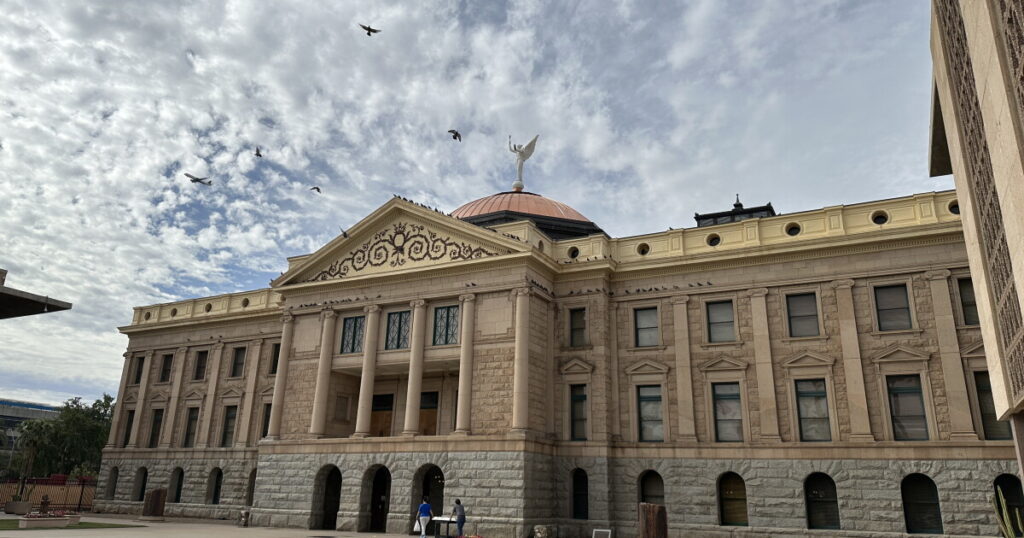
Arizona’s Potential ERA Ratification: A Step Towards Constitutional Equality
Arizona is on the brink of a historic decision as Democrats, now controlling both the state’s House and Senate, push for the ratification of the Equal Rights Amendment (ERA) to the U.S. Constitution. This move, spearheaded by Senator Lauren Kuby, aims to have Arizona officially back the amendment, which asserts that “equality of rights under the law shall not be denied or abridged by the United States or by any state on account of sex.”
Should Arizona decide in favor, it will symbolically become the 39th state to ratify the amendment, surpassing the three-fourths threshold required for a constitutional amendment. However, the original deadline for ratification lapsed in 1982, with only 35 states in agreement at that time. Since then, Nevada, Illinois, and Virginia have joined the cause, and Arizona could follow as the fourth state to do so post-deadline.
The path forward is not without controversy. Five other states have attempted to withdraw their initial support, although the legitimacy of such rescissions and the 1982 deadline itself remain untested in court. Despite these hurdles, Kuby remains undeterred, asserting, “Arizona should not allow an unresolved procedural dispute to determine whether it is willing to affirm equality as a constitutional principle.”
Historically, Arizona has seen bipartisan support for the ERA, with figures like former Republican state senator Sandra Day O’Connor advocating for its advancement in the 1970s. Despite this, attempts to pass the amendment have repeatedly been blocked by Republican majorities in past sessions.
The current political landscape, though, has shifted, with Democrats leading both legislative chambers. Yet, opposition persists among Republicans, including Senate Minority Leader John Kavanagh, who points to the expired deadline as a reason for his skepticism: “The drive has expired,” he stated. “So, if they want to make a public statement, they can, but it’s not going to make any difference.”
Kavanagh and others argue that “sex discrimination is already illegal,” suggesting additional measures like the ERA are redundant. Kuby counters this view, emphasizing the enduring nature of constitutional amendments over legislative laws, which can be altered or repealed by changing political climates. “Political majorities change,” she said. “Courts change.”
Debate persists over the implications of the ERA, including concerns that it could establish abortion rights within the Constitution. Peter Gentala, president of the Center for Arizona Policy, argues, “It would enshrine in the United States Constitution the right to abortion.” Kuby acknowledges this aspect, noting the lack of the ERA led to Proposition 139’s placement on the 2024 ballot following the reversal of Roe v. Wade’s protections.
Further objections include the potential for women to be drafted into the military, an issue Kavanagh highlights despite the current lack of a draft. Kuby reframes the argument, suggesting the public’s focus should be on avoiding unnecessary wars rather than who might be drafted.
Finally, Kavanagh raises concerns about the ERA impacting gender-segregated facilities like bathrooms and dormitories. Kuby dismisses these worries, arguing that the ERA is about broader equality and not specific facilities.
“Maybe they need to center their grandmothers, mothers and sisters in their thinking and help remove discrimination from our laws,” Kuby said. “That is what the ERA is all about.”
—
Read More Arizona News