As Arizona gears up for an intense debate over its school voucher program, competing interests are pouring millions into campaigns to sway public opinion. The battle centers on how best to reform the system, which has seen explosive growth and some controversy over spending abuses.
The Arizona Education Association, in collaboration with Save Our Schools Arizona, has amassed $4.6 million to support its initiative, Protect Education Now. Notably, the Arizona Education Association has provided nearly all these funds. Their objective is to secure the necessary 255,949 valid signatures by July 2 to ensure their proposal appears on the November ballot. To date, $2.7 million has been spent on professional services, primarily to facilitate this signature-gathering effort.
Meanwhile, Fortify AZ, supported solely by the Arizona Federation for Children, has raised $1.3 million to back their own voucher-related proposal. This group advocates for Empowerment Scholarship Accounts, which allow taxpayer money to cover homeschooling costs or private and parochial school tuition. Fortify AZ has also reported $1.3 million in expenditures, with the bulk directed towards collecting signatures.
Fortify AZ aims to implement financial safeguards in response to reports of misuse within the existing voucher system. The concern is that voters might otherwise endorse the more restrictive plan proposed by the education groups. Jason Bedrick of the Heritage Foundation’s Center for Education Policy expressed his disappointment on X, stating, “American Federation for Children is ‘pushing a ballot initiative that would impose unnecessary and harmful regulations on Arizona’s popular Empowerment Scholarship Account program, especially without having consulted with the local school choice coalition first.'”
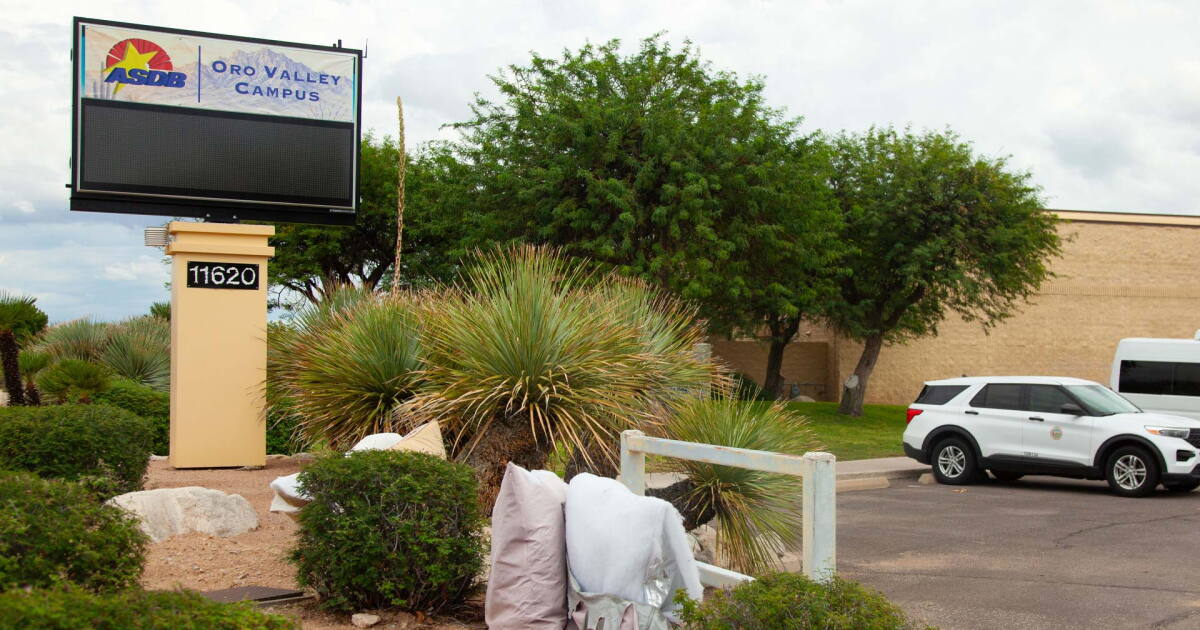
The voucher system, first approved in 2011, initially served parents of children with special needs unmet by public schools. It later expanded to include foster children, those on reservations, children of active duty military, and students at poorly rated public schools. A significant shift occurred in 2022 under then-Gov. Doug Ducey, who signed a law creating universal vouchers, allowing any student to receive a voucher. Enrollment surged from about 12,000 to an estimated 100,000, with vouchers averaging $7,400 each, costing the state about $1 billion.
Investigative reports by Craig Harris at KPNX revealed questionable expenses, such as diamond rings and international travel, funded by voucher dollars. State schools chief Tom Horne acknowledged the problem but attributed it to limited resources for thorough oversight. Horne noted that some expenditures up to $2,000 had been automatically approved, pending potential audits.
Kayla Mae Jackson
/
Cronkite News
The proposals from both sides share a common goal: to restrict inappropriate expenditures by clearly outlining prohibited items, such as amusement park admissions and international travel. Nonetheless, there are distinct differences. The education groups’ plan would disqualify families earning over $150,000 annually, with adjustments for inflation, from receiving vouchers. Additionally, it mandates standardized testing for students at voucher-accepting schools, unlike Fortify AZ’s plan, which applies testing only to those not attending “qualified” public schools.
Tommy Schultz, CEO of Arizona Federation for Children, defended Fortify AZ’s initiative, asserting that it is “far superior” to the education groups’ alternative. “The teachers union initiative would gut school choice in Arizona for more than 100,000 kids,” Schultz stated. “This pro-choice school initiative makes it durable for generations to come.”
The Arizona Constitution ensures that any ballot-approved measure, whether from AEA or Fortify AZ, remains largely immune to legislative changes, aside from minor adjustments requiring a super-majority vote. AEA President Marisol Garcia welcomed calls for “common-sense reforms to Arizona’s billion-dollar voucher mess” but criticized Fortify AZ’s proposal for lacking essential reforms to curb excessive spending. She further contended that support from the pro-voucher American Federation for Children suggests a lack of genuine intent for voucher reform.
—
Read More Arizona News