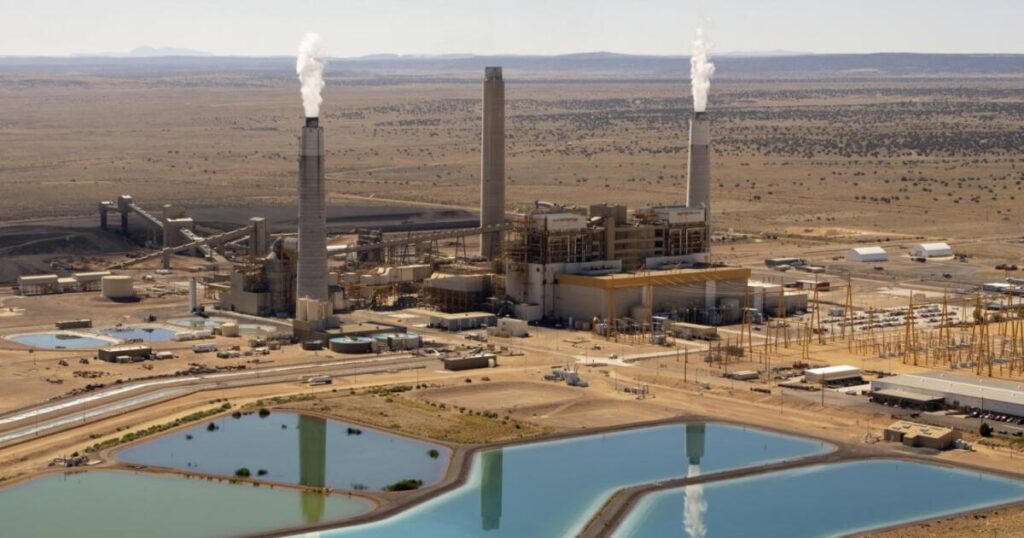
Recent developments have seen the Environmental Protection Agency (EPA) shift its stance regarding the use of clay liners in coal ash ponds. This decision affects the Coronado Generating Station, a significant power facility near the New Mexico border, operated by Salt River Project (SRP).
Previously, the EPA had denied SRP’s request to use a clay liner at its coal ash evaporation pond, citing non-compliance with soil and water safety standards. This decision, made official last year, pointed to inadequate soil conditions and monitoring systems. However, a reconsideration led to a reversal, allowing SRP to continue utilizing the clay liner, provided it ensures no leakage into nearby water sources.
In November 2020, SRP initially sought an exception to the rule mandating plastic liners for such ponds, effective since 2018. The EPA’s original refusal to grant this exception was based on concerns over environmental safety. Nonetheless, SRP’s submission of additional technical data prompted the EPA to approve the clay liner on July 23.
Sierra Club representative Sandy Bahr expressed skepticism, stating, “SRP didn’t demonstrate anything more about their monitoring, didn’t demonstrate anything more that it wasn’t contaminating, and they certainly didn’t have a different liner.” Bahr emphasizes the unchanged nature of SRP’s application despite the EPA’s altered decision.
SRP argues that the natural clay underneath the pond functions comparably to a synthetic liner, negating the need for additional lining. The utility company contends that transitioning to a synthetic liner would have incurred costs exceeding $90 million and required 94 more acres for disposal.
The approval enables SRP to maintain the pond’s current operations throughout the review process, with a final report expected by mid-2027.
History of Coal Ash Regulations
Coal ash contains several harmful substances, including neurotoxins and carcinogens, which pose significant health risks upon entering water supplies. Following contamination events in 2015, the EPA established its first rules for coal ash disposal.
In 2018, the Circuit Court of Appeals identified unlined coal ash ponds as environmental hazards, necessitating their closure or retrofitting. However, a 2020 ruling introduced an avenue for utilities to use existing liners if they could prove no leakage risks, an option utilized by SRP. This ruling permits utilities to demonstrate the effectiveness of clay liners as a substitute.
Despite the regulatory flexibility, environmental advocates, including Bahr, argue for stringent liner requirements to prevent contamination. As Bahr asserts, “We want to see strong protections in place requiring those liners.”
A Duke University study further highlights the risks associated with relying on clay rather than synthetic liners, indicating potential for widespread water contamination.
—
Read More Arizona News