
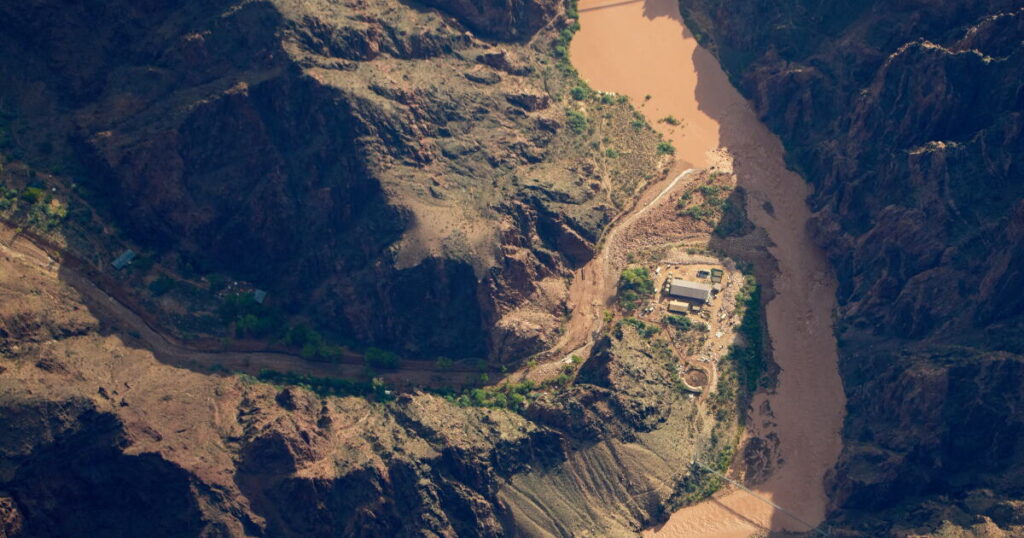
Grand Canyon Water Crisis: Park Officials Urge Conservation Amidst Severe Shortages
The Grand Canyon National Park is grappling with water shortages after devastating floods severely damaged its water infrastructure. As park authorities strive to manage the crisis, residents have been advised to use tap water sparingly, limiting its use primarily to hygiene, while reserving bottled water for drinking and cooking needs.
In a recent community meeting, officials emphasized the critical nature of water conservation for both federal staff and concessionaire employees residing within the park, who work in hospitality and other industries. “What we do collectively over the next days really matters,” stated AJ Lapre, Chief of Interpretation and Education at the park, urging a unified approach to tackle the challenge. “We all come here to work here. We’re all here to serve the visitor. We’re here to serve this place that we all love. But right now we have to serve each other also.”
The park has implemented stage 4 water restrictions, a stringent level of control, following the severe flooding of Bright Angel Creek. This disaster wiped out nearly 40% of the crucial Transcanyon Waterline, which is responsible for supplying water to the South Rim. Deputy Park Superintendent Brian Drapeaux revealed that the water intake systems at Roaring Springs and Bright Angel Creek suffered damage, though the full extent is yet to be determined.
Despite the difficulties, there are no plans to close the park to daytime visitors. “It’s not on the table,” said Drapeaux. “We were here to serve the public, and we will continue to serve the public to our best ability, given any water situation or any other infrastructure challenges that we face.” However, hotels on the South Rim have ceased accommodating overnight guests for the time being.
The park’s water storage tanks are almost full, containing about 21 feet of water. Nevertheless, usage typically reduces this by half a foot daily, highlighting the importance of conserving water. Lapre encouraged actions like shorter showers and reusing water collected while adjusting temperatures. “We can sort of see how much water we use a day. We’d like to see that cut in half than what we normally see now,” Lapre advised.
In addition to the water crisis, the park’s rugged landscape, now marred by flooding, poses challenges for ongoing damage assessments and the search for a missing individual. As the acting superintendent during Ed Keable’s emergency family leave, Drapeaux remains in close communication with Keable, who continues to contribute to decision-making from afar.
While trucking in water is an option under consideration, logistical and regulatory hurdles must be addressed first.
—
Read More Arizona News





![Botched Ad Mix-Up: Super PAC Error in Arizona Congressional Race[embed]https://www.youtube.com/watch?v=bEMgIlCkHz0[/embed]](https://www.kitchentablenews.org/wp-content/uploads/2026/10/Botched-Ad-Mix-Up-Super-PAC-Error-in-Arizona-Congressional-RaceembedhttpswwwyoutubecomwatchvbEMgIlCkHz0embed.com2F0e2F962Fe971102f49e7a4f2a64fd3cc60a22Fjonatha.png "Botched Ad Mix-Up: Super PAC Error in Arizona Congressional Race[embed]https://www.youtube.com/watch?v=bEMgIlCkHz0[/embed]")