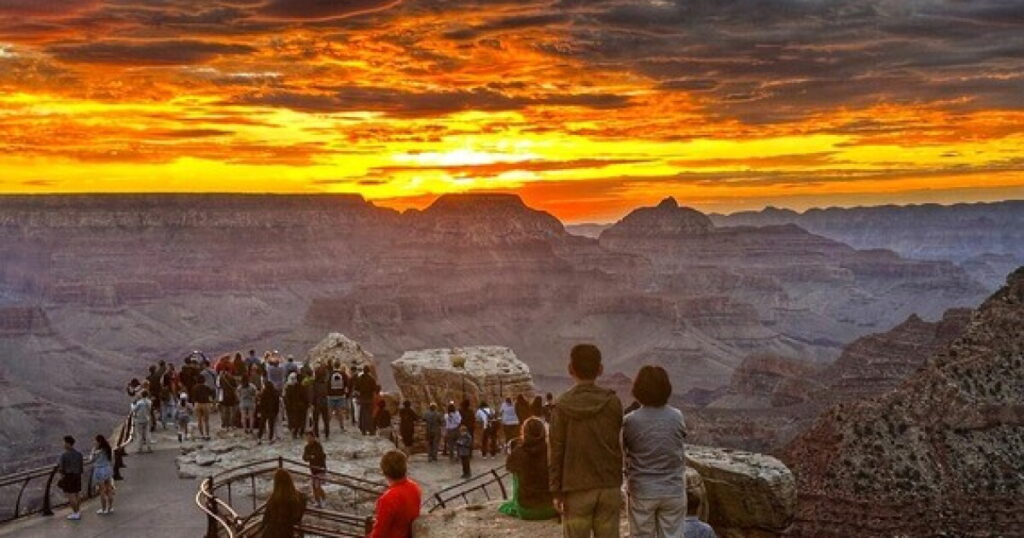
Tourism at some of the United States’ most iconic national parks, including the Grand Canyon, is reportedly on the decline following the introduction of a $100 fee for foreign visitors. Local businesses are feeling the impact, noting a significant drop in international tourists.
Impact on Local Tourism
Chris Kelly, co-owner of Grand Canyon Journeys, has observed a noticeable decrease in foreign guests, particularly those from Germany. “We’re not seeing the international travelers anymore in the amount that we used to see,” he stated. His company, which usually hosts about 10 tours annually for German-speaking visitors, has only booked one group this year and none for 2026, a change he attributes to the new fee.
The fee, imposed on non-U.S. residents, affects 11 of the nation’s 63 national parks, including the Grand Canyon, Acadia, Bryce Canyon, and others. This is in addition to the regular entrance fee, which ranges from $20 to $35 for various types of access.
Legal and Economic Concerns
An Arizona-based tour company has filed a lawsuit against the fee, describing it as “unprecedented and unlawful.” The lawsuit claims that the Department of the Interior, which enforced the fee following a 2025 executive order by President Donald Trump, did not have the authority to do so.
“It’s Congress’s job to authorize such a fee, and they didn’t here,” argued Jacob Haas, an attorney representing the tour company. He added, “We think there’s good reason that Congress wouldn’t have authorized a fee like this because of the impact on local businesses, because of the desire to bring people to the U.S. and encourage tourism.”
Revenue and International Comparisons
The National Park Service indicated that the fee is intended to help maintain parks and improve the visitor experience. However, the revenue generated is significantly below expectations. Initially projected to bring in over $90 million annually, it has only garnered about $22.5 million by mid-2026.
While some argue that charging foreign visitors more is a common international practice, critics suggest that the fee damages the U.S.’s appeal as a tourist destination. For instance, foreign tourists pay considerably more than locals at attractions like the Galápagos National Park and the Taj Mahal.
Industry Reactions
Leon Zhang, who offers private tours in several U.S. states, voiced concerns that the fee might deter tourists, even though he hasn’t seen cancellations. Instead, visitors tend to cut back on spending, affecting the local economy. “Penalizing foreign guests is counterproductive,” he expressed.
Lisa Simon, CEO of the International Inbound Travel Association, highlighted the abruptness of the fee’s implementation, which caused confusion among tour operators. “There was so much confusion at the beginning of the season because parks didn’t know what was going on,” Simon mentioned.
Marco Jahn, CEO of New World Travel, pointed out that the political climate and policies are steering tourists to other countries, impacting U.S. tourism growth negatively.
—
Read More Arizona News