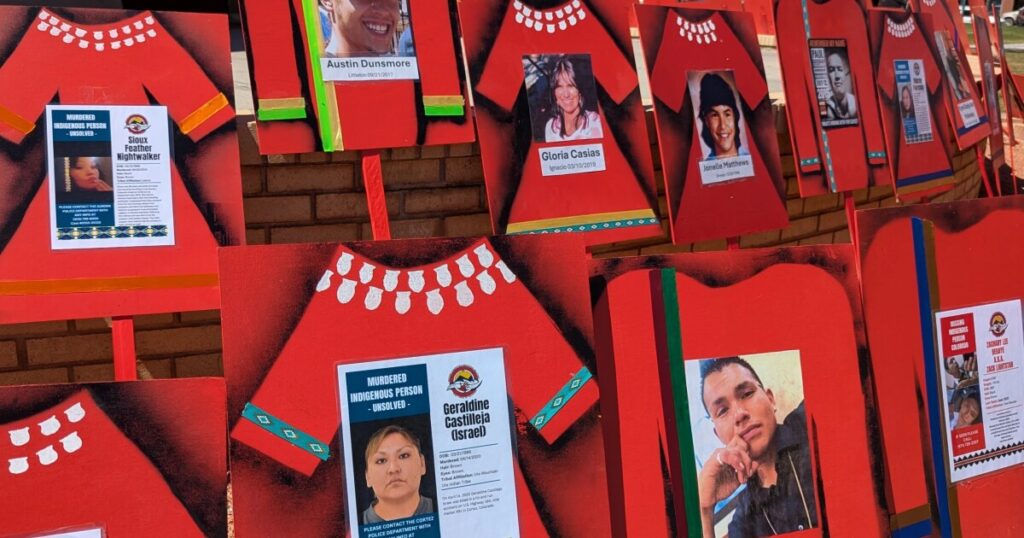
In communities across the nation, Indigenous people are coming together to commemorate those who are missing or have been victims of violence. This movement also calls for improved data collection and law enforcement practices to ensure the safety of these communities.
Numerous events, including marches, rallies, and vigils, are scheduled throughout the week leading up to May 5. This date is recognized as a national day of awareness for the Missing and Murdered Indigenous Peoples movement, reflecting both the collective sorrow and strength of Indigenous communities.
The federal government is legally obligated to provide public safety in these communities, yet resources to address and prevent violence often fall short. Participants in these events are encouraged to wear red, a color symbolizing the tribute to Indigenous victims of violence in both the U.S. and Canada.
A Crisis Often Overlooked
Native Americans in the U.S. experience violence at disproportionately high rates, which advocates argue stems from historical land dispossession and cultural eradication efforts by the federal government.
The U.S. Department of Justice reports that Native Americans and Alaska Natives are over twice as likely to be victims of violent crimes compared to the general population, with Native women facing double the risk of homicide. In 2025, nearly 1,500 cases of missing Native Americans were active in the FBI’s National Crime Information Center.
However, experts suggest these figures are underestimated due to jurisdictional issues, racial misclassification, and inconsistent data practices. Abigail Echo-Hawk, from the Urban Indian Health Institute, notes that while some progress has been made, law enforcement resources have lagged behind.
“Don’t look at the numbers and feel sorry for us,” Echo-Hawk, a Pawnee Nation citizen, stated. “Look at the numbers and say, ‘How do we ensure that this doesn’t continue?'”
Steps Toward Federal Involvement
Legislation such as Savanna’s Act and the Not Invisible Act, signed into law in 2020, aim to enhance data collection and law enforcement in Indian Country. Despite these efforts, their implementation remains inconsistent. The Biden administration convened a federal commission in 2022, which was delayed, to address the crisis, culminating in recommendations made public in 2023.
These proposals, which include expanding tribal law enforcement authority and better communication with victims’ families, were removed during a purge of diversity-related initiatives under the Trump administration.
Meanwhile, the Justice Department under Trump continued Operation Not Forgotten, deploying FBI agents and analysts to tribal areas temporarily. This initiative has led to over 200 arrests and convictions in serious crime cases since 2023.
Recognized tribes within the U.S. operate as sovereign nations. Michael Henderson of the Navajo Nation highlights the mixed impact of increased FBI presence in these regions, noting the benefits of advanced forensic resources but pointing out the inexperience of many agents with Indigenous communities.
“More manpower from the FBI on reservations, that’s not a good solution in my mind,” Henderson remarked, suggesting federal funds could be better allocated to bolster tribal police forces.
Families Lead Advocacy Efforts
In Colorado Springs, a prayer walk featured chants and banners bearing the images and stories of many Indigenous individuals who have disappeared or died. Denise Porambo, whose daughter Destiny Jeriann Whiteman died on the Ute Mountain Ute reservation, participated in the event.
“It hurts every day,” Porambo shared, her voice wavering with emotion.
Without a comprehensive national strategy, families often lead the charge in advocating for their missing loved ones. Grace Bulltail continues to seek justice for her niece, Kaysera Stops Pretty Places, whose death remains unresolved since her disappearance in 2019 from the Crow Reservation.
Despite organizing numerous awareness events, the family has seen no arrests, and the cause of her death is still labeled inconclusive. A demonstration is planned by Stops Pretty Places’ grandmother at a courthouse near the reservation.
“We have had to advocate for ourselves and for Kaysera every step of the way,” Bulltail expressed.
This story is published through the Global Indigenous Reporting Network at The Associated Press.
Ahead of the next session, Arizona Democratic state lawmakers held a town hall on missing and murdered Indigenous peoples for input on the problems facing families, advocates and victims.
—
Read More Arizona News