New Insights into Colorado Plateau’s Aquifer Recharge Potential
Researchers at Northern Arizona University have uncovered intriguing possibilities for aquifer recharge on the Colorado Plateau. Their recent study, published in Groundwater, explores how surface water might be reaching subterranean aquifers via geological shortcuts.
This innovative approach holds promise for water managers in the drought-prone Southwest, offering potential new avenues for storing rain and snowmelt in aquifers that have been previously hard to access.
Fluorescent Dye Tracer Experiment
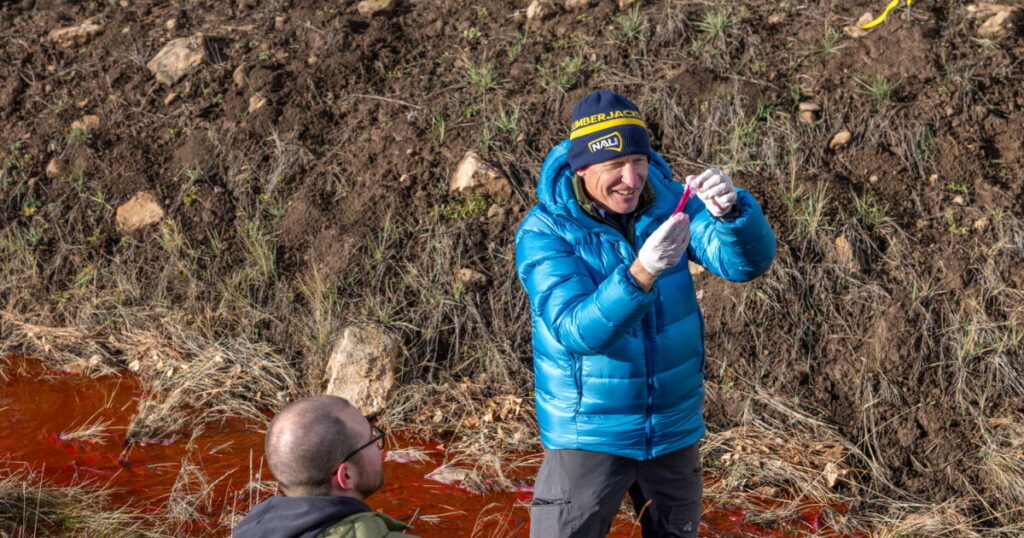
In collaboration with the City of Flagstaff, researchers introduced water containing a fluorescent dye tracer into a dry wash within city limits. This was done to track the movement of water into the Coconino aquifer, a critical water source for Flagstaff, which lies over a thousand feet below the surface.
Within 11 to 13 days, scientists detected the tracer in a well over a mile away, indicating that the water likely traveled through fractured limestone. “It’s basically like we have a kind of plumbing system below our feet,” explained lead author Caelum Mroczek, a PhD graduate and hydrologist. “The question is, where does that go, and how rapidly can things move through there?”
Implications for Water Management
The study suggests that water managers across the Colorado Plateau could consider similar limestone systems for managed aquifer recharge. This approach appears more feasible than previously thought, according to Mroczek, and could be particularly beneficial in regions like Arizona, where 40% of water usage depends on groundwater.
Mroczek emphasized the importance of understanding aquifer recharge processes for future water management, stating, “As we are continuing to grow, we’re going to need that assured water.”
Future Research Directions
While the study provides a proof of concept, Mroczek noted limitations, such as conducting the experiment during a wet period and using less dye than ideal due to safety concerns. Future efforts might focus on quantifying recharge amounts and exploring broader applications, from structured recharge projects to floodwater management.
Despite these challenges, the findings offer a promising direction for harnessing the region’s geological features to secure water resources.
Disclosure: While KNAU is a public service of Northern Arizona University, its newsroom operates independently.
—
Read More Arizona News