Celebrating Indigenous Cuisine: A Journey of Food Sovereignty and Cultural Preservation
In recent years, Indigenous cuisine has garnered significant attention in the culinary world, with chefs like Sean Sherman leading the charge in promoting food sovereignty. This weekend, the S’edav Va’aki Museum in Phoenix will host an event featuring a group of chefs dedicated to this movement, including Navajo chef Justin Pioche.
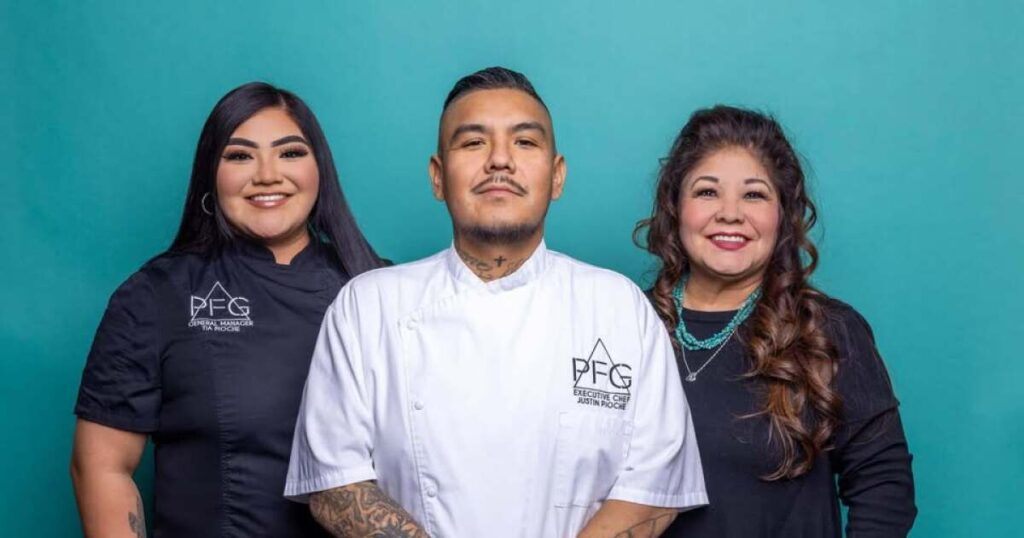
Chef Pioche, along with his sister Tia and mother Janice, operates the Pioche Food Group in Fruitland, New Mexico. Their enterprise includes a food truck, a catering service, and an educational farm aimed at teaching Navajo youths about their culinary heritage.
Interestingly, Pioche’s journey into fine dining began unexpectedly. While working at a Fuddruckers in Glendale, a chance meeting with celebrity chef Robert Irvine set him on a new path. Pioche recalled, “I went up there to him and introduced myself, told him what I was trying to do, and he called Beau MacMillan for me.” This encounter led to opportunities to work with top chefs in the region.
From Disney World to Indigenous Cuisine
Pioche credits his inspiration to Sean Sherman’s advocacy for Indigenous foods. “I realized that there was no real Navajo representation at the time,” he said. Working on their farm, Pioche embraced not just cooking but storytelling, which is integral to Navajo culture. “Navajos are more of a — we didn’t really write anything down whatsoever. It’s taught to you by your elders through stories,” he explained.
One signature dish from Pioche’s culinary repertoire is the “Textures of Squash,” which presents squash in seven different forms on a single plate. This creativity aims to engage students with Indigenous ingredients.
A Broader Movement
Beyond individual dishes, Pioche sees his role as part of a larger movement to redefine Indigenous food. He highlights historical narratives like the Long Walk, emphasizing the survival and adaptation of his people through food. He remarked, “I hope they realize that our people were here first and we’re still here.”
Fry bread, a staple often associated with Navajo cuisine, is one such food that Pioche both embraces and critiques. While it remains part of the cultural fabric, he acknowledges its origins in hardship, pointing out that its ingredients were not traditionally part of the Navajo diet.
Pioche is determined to keep Indigenous culinary traditions alive, blending modern techniques with ancestral knowledge to preserve and celebrate his heritage through food.
—
Read More Arizona News