Progress in Repairing Grand Canyon’s Aging Water System Allows Easing of Restrictions
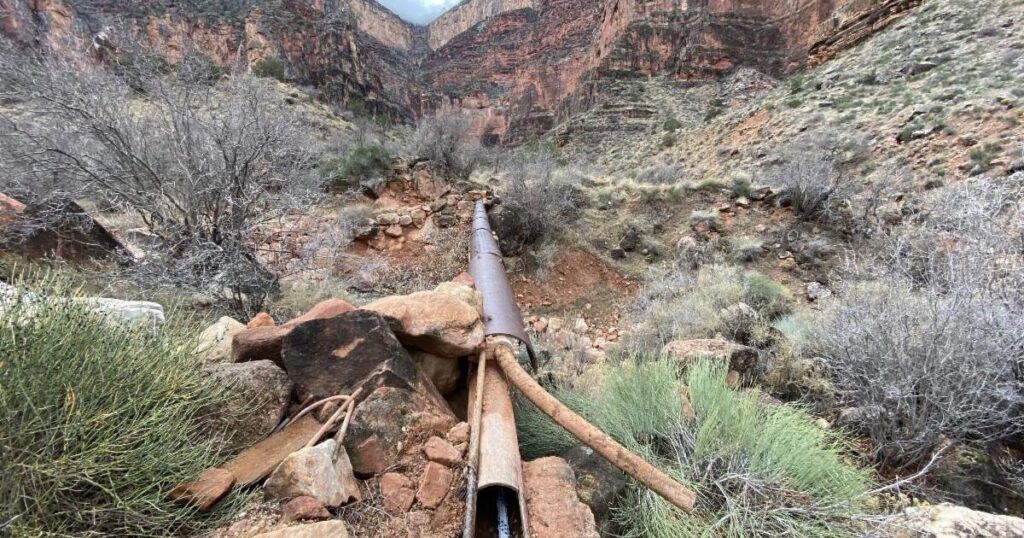
Efforts to mend the Transcanyon Waterline at Grand Canyon National Park are showing results, prompting officials to relax some water restrictions. This development marks a significant step towards restoring normal operations and ensuring that both residents and visitors can enjoy their time at the park.
Starting Friday evening, accommodations run by concessionaires on the South Rim will operate at full capacity as water storage facilities are being replenished. Those with reservations can expect to hear from businesses regarding the status of their upcoming stays.
Despite these improvements, fire restrictions are still in place, and camper services remain unavailable. Additionally, Mather and Desert View campgrounds will continue to offer only dry camping due to non-operational water spigots.
Park officials continue to emphasize the importance of water conservation. They advise limiting showers to five minutes, practicing selective flushing, and promptly reporting any leaks to staff. These measures are crucial while the park relies on its outdated, 60-year-old water infrastructure.
The Transcanyon Waterline, a pivotal system constructed in the 1960s, spans 12½ miles from Roaring Springs to the South Rim, delivering essential drinking water. However, the aging pipeline has been prone to frequent failures, with 85 significant breaks recorded since 2010.
Repairing these breaks typically requires three to five days, and each incident incurs a cost of approximately $25,000. Conservation guidelines generally remain in place longer if multiple breaks occur simultaneously. Plans for a $200 million pipeline replacement are underway, with completion anticipated next year.
In related legislative news, Senate Bill 1280 proposes to prevent the Arizona Game and Fish Department from relocating gray wolf puppies into the state or utilizing its resources for such activities.
—
Read More Arizona News