A Journey Uphill: Preserving the Legacy of Navajo-Churro Sheep Amidst Challenges
Amidst the backdrop of the Carrizo Mountains, an abandoned sheep camp with its blue tin roof stands as a reminder of a bygone era. Once a seasonal abode for herding families, this site between Teec Nos Pos and the mountain peak now sees only juniper and sagebrush residents. Roy Kady, a master fiber artist and shepherd from the Navajo Nation, reflects on the absence of livestock here for nearly three decades.
Historically, Navajo families have maintained the rare Navajo-Churro sheep, a breed listed as critically endangered by the Livestock Conservancy. These sheep provided meat and wool, essential for crafting vibrant rugs and tapestries. However, the challenges of modern life and persistent drought conditions have dwindled the number of full-time Churro caretakers.
In an annual tradition known as “sheep trailing,” over 80 Churro sheep and Navajo Angora goats journey to the Kady summer camp, accompanied by Navajo weavers, apprentices, artists, and chefs. This gathering celebrates a rich cultural heritage.
The Trek and Its Significance
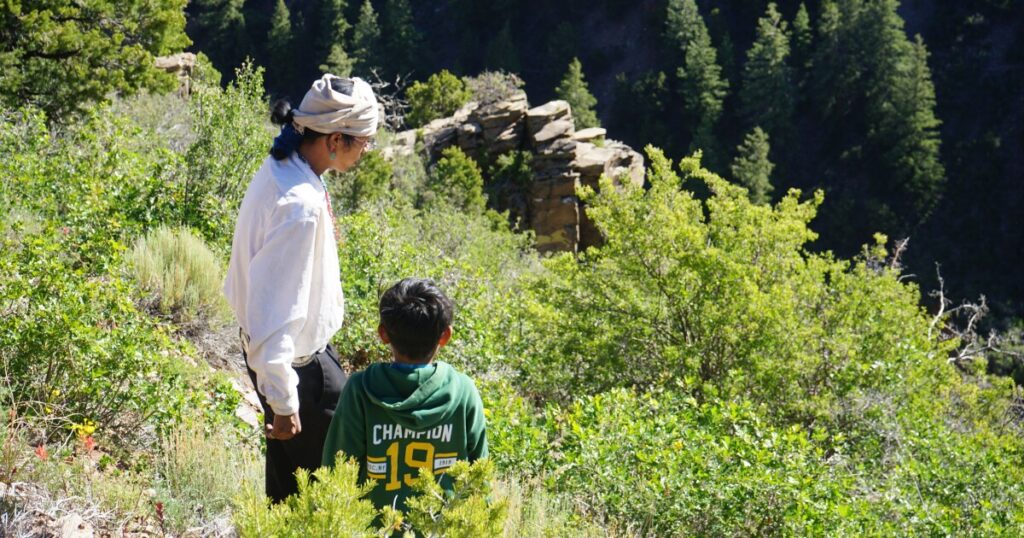
Casey Teseny, an apprentice weaver and potter, walks with the group past the red rock canyons and yellow cliffs of the Carrizos. He recalls a time when such group journeys were as frequent as the passing clouds. “There was a lot of movement involved,” Teseny notes, reflecting on the once-active camps now lying silent.
The journey reveals the springs’ increasing dryness, a sign of environmental stress affecting both the landscape and the traditional practice of Churro herding. “How long does this continue on?” Teseny ponders, expressing a desire for the tradition’s longevity. Historically, Navajo families would ascend the mountains in summer, returning in fall, a practice now endangered.
The U.S. military’s 1863 forced relocation of Navajo people, known as the Long Walk, nearly led to the Churro’s extinction as tribal members left behind could not care for them. The 1930s Dust Bowl further reduced the breed. Presently, approximately 1,500 Churros remain on the Navajo Nation.
Arriving at the Kady Family Camp
After traversing old trails, the group reaches the sheep camp, welcomed by the aroma of cooking. Ryann Hadley, an apprentice weaver, expresses the personal significance of the journey, having heard family tales of these trails.
Despite the camp’s lush appearance, the ecosystem is strained. The Navajo Nation declared a drought emergency in June, marking one of the driest winters on record. Invasive species like cheatgrass and Russian olive add to the challenges.
Tyrell Tapaha, an educator, shepherd, and weaver, shares his concerns about the stressed water sources and abandoned camps. He fondly remembers childhood summers spent here, alongside his grandfather and mentor, Roy Kady.
“I’m pretty sure that my mom brought me up on her back,” Kady recalls. Despite the water scarcity, Kady and Tapaha are determined to keep the tradition alive through the Kady Youth Sheep Camp Apprenticeship, which teaches the next generation about this cultural legacy.
Tapaha, committed to preserving this heritage, states, “I’m going to be leaving behind a dynasty that has been cared for, tenderly taken care of for generations.” Even if the springs dry up completely, the family is prepared to transport water to sustain their practice.
—
Read More Arizona News

![Jody White’s Unconventional Michigan Supreme Court Candidacy Explored[embed]https://www.youtube.com/watch?v=8NfxFIPE4ac[/embed]](https://www.kitchentablenews.org/wp-content/uploads/2026/10/Jody-Whites-Unconventional-Michigan-Supreme-Court-Candidacy-Exploredembedhttpswwwyoutubecomwatchv8NfxFIPE4acembed.com2F842F0e2Fc7223daa43c9876b36a4e00773a42Fme-supc.png "Jody White’s Unconventional Michigan Supreme Court Candidacy Explored[embed]https://www.youtube.com/watch?v=8NfxFIPE4ac[/embed]")