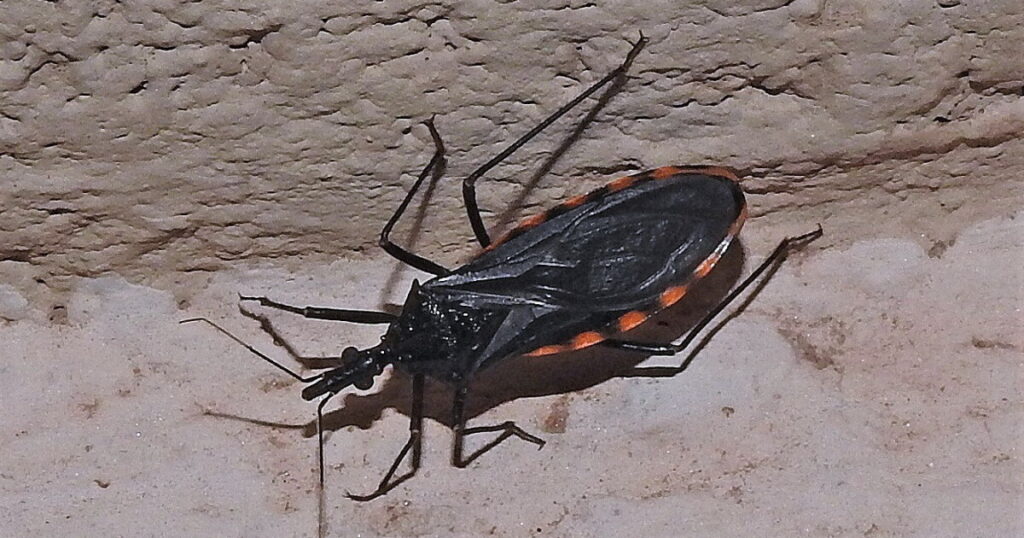
The Intriguing World of Kissing Bugs: Nature’s Unwanted House Guests
While the name “kissing bugs” might evoke charming imagery, these creatures are far from affectionate. Members of the assassin bug family, kissing bugs are notorious for their parasitic lifestyle, feeding on the blood of mammals, including humans.
The moniker “kissing bug” stems from their peculiar habit of biting humans around the mouth and eyes while they sleep. Their saliva contains a special anesthetic, making these nocturnal bites virtually undetectable at the moment.
In Arizona, these bugs often complete their life cycle within woodrat nests, transitioning from eggs to mature, winged adults. Drawn to bright lights, they frequently find their way into human dwellings, squeezing through the tiniest of gaps thanks to their slender, flexible bodies.
While kissing bugs are notorious carriers of Chagas disease in Central and South America, Arizona’s species are thankfully not transmitters of this disease. This fortunate situation arises because although they harbor the same parasite, these bugs defecate away from their feeding sites, reducing the risk of transmission.
Despite this, Arizona’s kissing bugs are not entirely benign. Their bites can lead to itching and swelling, with repeated exposure potentially triggering severe allergic reactions or even anaphylaxis, necessitating medical intervention.
Authored by Steve Schwartz and brought to you by KNAU and the Sustainable Communities Program at Northern Arizona University.
—
Read More Arizona News