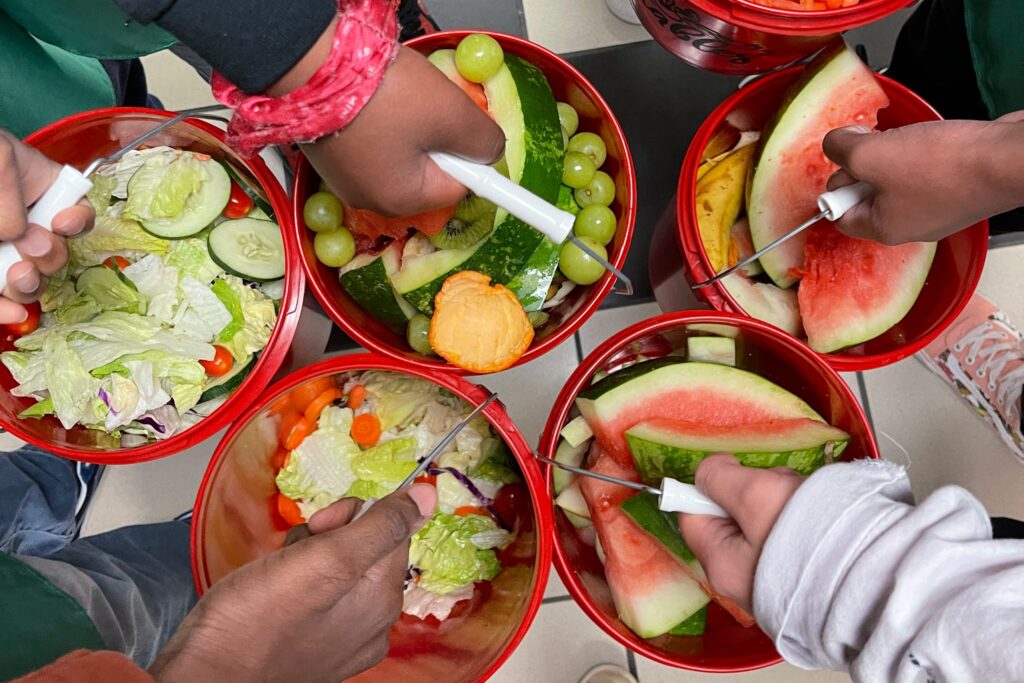
Approximately 40% of food served in schools is wasted, totaling about 530,000 tons annually. This waste results in around 1.9 million metric tons of greenhouse gases each year, as highlighted by a new report from the World Wildlife Fund (WWF). However, there are effective strategies to address this issue.
Since 2018, WWF has collaborated with schools to tackle food waste, educating students, training staff, and promoting practices like “share tables” and composting. An interview with Gerin Hennebaul, a STEM content specialist at Lovin Elementary in Georgia, revealed how the school reduced food waste by 70% with the help of WWF’s Food Waste Warriors program and local partnerships. Each student at Lovin participates in diverting food from landfills and composting, using the program to hone skills such as math, problem-solving, and communication.
Children often refuse certain foods, creating challenges for schools with tight budgets and limited resources. Before addressing the problem, Lovin Elementary conducted a food audit with Green & Healthy Schools, collecting data with tools like buckets and scales. On Taco Day, 589 pounds of waste were gathered, including 120 pounds of recoverable items like unopened milk cartons and fruit.
What actions were taken with the data?
Students were surprised by the findings and brainstormed solutions. They created awareness posters and initiated a share table for untouched food, supported by Green & Healthy Schools. Additionally, leftover salad bar items were repurposed to feed chickens in the school garden. Subsequent audits showed a reduction to 435 pounds of waste, with significant contributions to the share table.
How did you achieve a 70% reduction in food waste?
In 2021, Lovin Elementary received a composting grant from Food Well Alliance, leading to the construction of a composting bin. By educating students on composting, the school expanded the program to all grades except kindergarten by fall 2022. During 2022-2023, 1,235 pounds of fruit and vegetable waste were collected, increasing to 5,489 pounds the following year. Collaboration with a local church and classroom vermicomposting further supported the initiative.
How are cafeterias used as classrooms?
Fourth graders document food waste data, integrating it into math lessons. Weekly, a master gardener guides students in composting, with an eco heroes club utilizing compost in the school garden. Third graders focus on waste reduction, presenting to kindergartners and creating projects like original songs and skits about waste management.
Is there a connection to carbon emissions and climate change?
Discussions on carbon emissions and climate change begin in third grade, aligning with lessons on pollution and recycling, and continue with fifth graders as they prepare for middle school, encouraging them to initiate similar programs.
Does data influence meal choices?
In January 2025, Lovin Elementary implemented Raccoon Eyes AI, analyzing tray waste and providing monthly reports. This data helps make informed meal decisions, such as adjusting garlic sauce on rolls, though vendor restrictions limit broader changes.
What challenges prevent broader adoption in schools?
A key factor in Lovin’s success is the involvement of the administrative team and dedicated staff. Schools lacking these resources face hurdles in consistency and implementation, compounded by uncontrollable factors like weather. Overcoming these challenges requires creative problem-solving and committed support.
—
Read More Kitchen Table News