As Arizona grapples with dwindling water reserves, a paradox emerges: despite the state’s water supply challenges, its urban water bills remain relatively affordable compared to national figures. This has been highlighted in a recent study indicating that while water rates have climbed over the past ten years, many of Phoenix’s utilities manage to maintain costs below the national average.
Other cities in the Phoenix metropolitan area, such as Tempe, Scottsdale, and Chandler, rank in the lower fifth for water costs. Conversely, utilities in Mesa, along with private providers EPCOR and Arizona Water Company, hover around the national median.
Among the Arizona utilities surveyed, Gilbert and Tucson stand out for their higher water bills. Gilbert’s annual bill of $658.50 emerges as the most expensive locally and ranks 121st nationwide.
Kathryn Sorensen, who leads research at Arizona State University’s Kyl Center for Water Policy, attributes the variance in water bills across Phoenix to city size. Large utilities, like Phoenix serving 1.7 million residents, can distribute infrastructure expenses over a broader customer base.
A federal plan targeting the Colorado River necessitates significant water reductions for Arizona, notably impacting the Phoenix and Tucson regions. While city officials assure residents of continued water availability, these solutions come with high costs.
The state’s water shortage stems from factors such as prolonged drought, climate variations, escalating urban demand, and mandatory reductions on the Colorado River. However, the cost of water itself is minor compared to infrastructure expenses, including pipelines and treatment facilities.
“Phoenix is young compared to other cities back East,” Sorensen explained. “That means that its infrastructure tends to be younger, and so we really haven’t gotten to a point where we’ve had to put a huge amount of money into replacing that infrastructure. That day is coming, but so we’re basically starting from a lower price level than other cities.”
Sorensen, formerly in charge of the Phoenix water department, noted that the city’s pricing strategy helps keep water bills affordable. While basic water use for household tasks incurs low charges, watering lawns in summer attracts higher rates.
Despite the relatively low costs, every city in the study has seen significant increases in water bills since 2015. On average, water bills surged by 60%, with Phoenix experiencing an 80% rise, Tucson 96%, and Gilbert leading with a 174% hike.
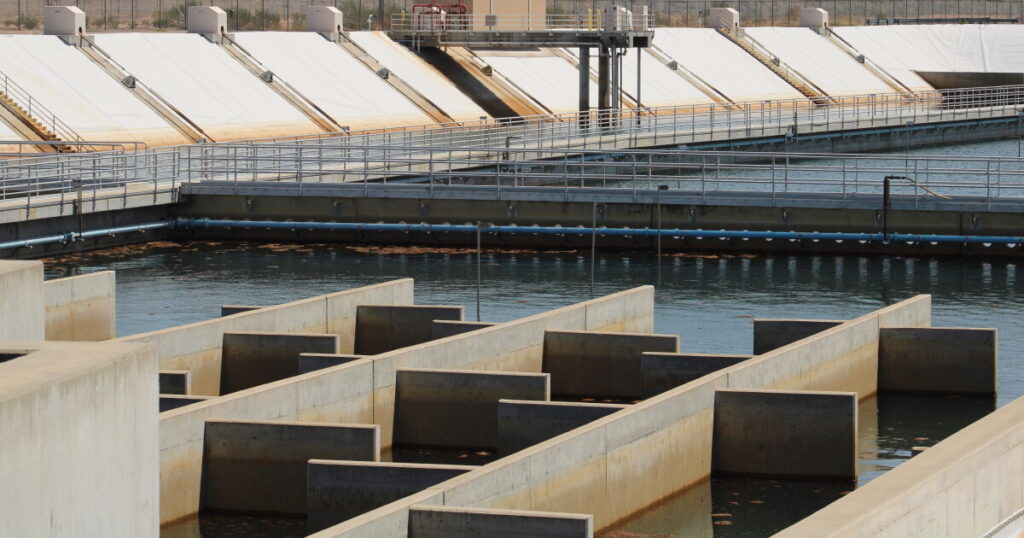
Municipal water managers anticipate further rate hikes. The reduced Colorado River supply compels cities to invest in costly infrastructure projects, such as pipelines for water transport and advanced purification plants to recycle wastewater into potable water.
“Eventually we’re going to have to do harder, more difficult, and — read into that — more expensive things to make sure that water resources are brought in,” Doug Dunham, associate director of water resources for EPCOR USA, told KJZZ in August. “The next buckets, so to speak, the next sources of water, those projects are going to be very expensive.”
—
Read More Arizona News