Ann Arbor’s mayoral race has captured significant attention as incumbent Chris Taylor, a progressive Democrat, seeks another term against challenger Yousef Rabhi, a Democratic Socialist. The upcoming election is shaping up to be closely contested, with both candidates presenting differing visions for the city’s future.
Taylor’s Legacy and Controversial Policies
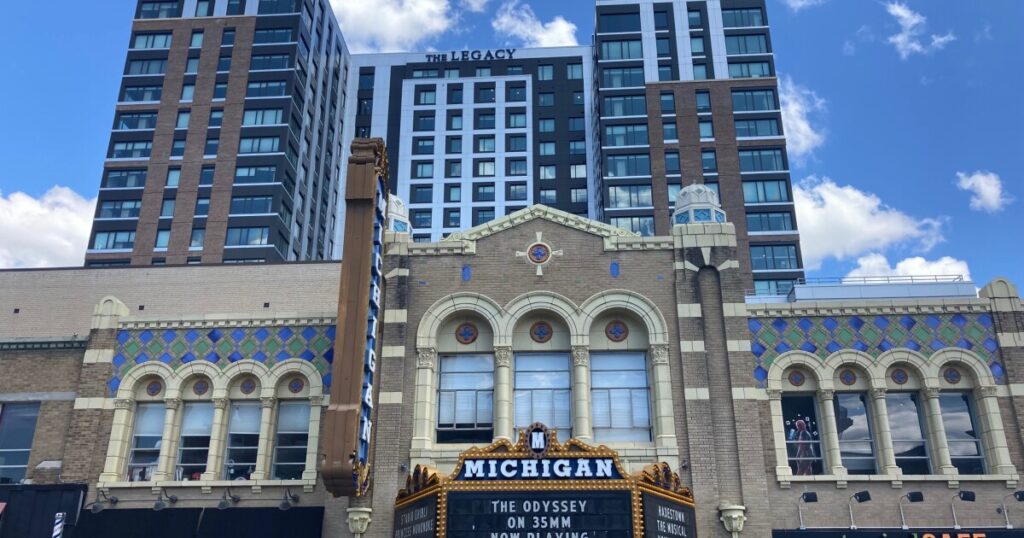
Chris Taylor has been at the helm of Ann Arbor for 12 years, and during his tenure, the city has undergone transformative changes, particularly in housing and urban development. The city council, of which Taylor is a key member, has pushed for policies aimed at increasing housing density to tackle the high cost of living. This includes rezoning efforts and the approval of controversial high-rise structures downtown.
These changes have not been without dissent. Longtime resident Jim Kenyon voiced concerns about the rapid urbanization and its implications. “We’ve seen the skyline go from U Towers and … whatever the other high rise is called —” (it’s Tower Plaza; I had to look it up) “to, now, you can’t see across town,” he stated to Michigan Public. Kenyon and others question the efficacy of these developments, suggesting they mainly benefit wealthy developers through tax incentives.
Rabhi’s Alternative Vision
Yousef Rabhi, Taylor’s opponent, offers a distinct approach to the city’s housing crisis. He criticizes the current administration’s reliance on high-density developments, labeling it as a “trickle-down approach” with delayed benefits. Rabhi asserts that housing has only become more unaffordable under Taylor’s leadership. “What I have observed over the last 12 years is that Ann Arbor has become increasingly unaffordable for working people, for seniors, for young people and students, even for middle class people who can’t afford to live in Ann Arbor anymore,” Rabhi said. “It has become an exclusive, what I’m calling almost a country club town, where you have to afford a membership in order to live here. That’s not something that is acceptable.”
Rabhi proposes the city take direct action by purchasing or constructing homes with price controls to keep them affordable long-term. He suggests using revenue bonds, which would be paid off through tenant rents, a plan Taylor dismisses as unfeasible.
Debate Over Housing Strategies
Taylor defends his record, arguing that new high-rise apartments have helped increase vacancy rates, leading to reduced rents. He also pointed out that the city is set to triple its affordable housing units soon. “All successful cities change, all successful cities evolve, and Ann Arbor is no exception,” Taylor remarked, acknowledging the nostalgia for a less developed Ann Arbor but emphasizing the inevitability of change.
As the election approaches, the city council’s future composition remains uncertain, with no incumbents running in two of its wards. This could lead to a shift in council dynamics, affecting how the city navigates its growth and development challenges moving forward.
—
Read More Michigan News
![Jody White’s Unconventional Michigan Supreme Court Candidacy Explored[embed]https://www.youtube.com/watch?v=8NfxFIPE4ac[/embed]](https://www.kitchentablenews.org/wp-content/uploads/2026/10/Jody-Whites-Unconventional-Michigan-Supreme-Court-Candidacy-Exploredembedhttpswwwyoutubecomwatchv8NfxFIPE4acembed.com2F842F0e2Fc7223daa43c9876b36a4e00773a42Fme-supc.png "Jody White’s Unconventional Michigan Supreme Court Candidacy Explored[embed]https://www.youtube.com/watch?v=8NfxFIPE4ac[/embed]")