Detroit High Schoolers Face Challenges Despite Free Bus Rides
While Detroit has made strides towards accessible transportation for students by offering free bus rides, logistical hurdles remain for students like Jessica Horton, a 10th grader at Southeastern High School. The reality for Horton and many of her peers is often long waits and inconvenient schedules, overshadowing the benefits of the free rides.
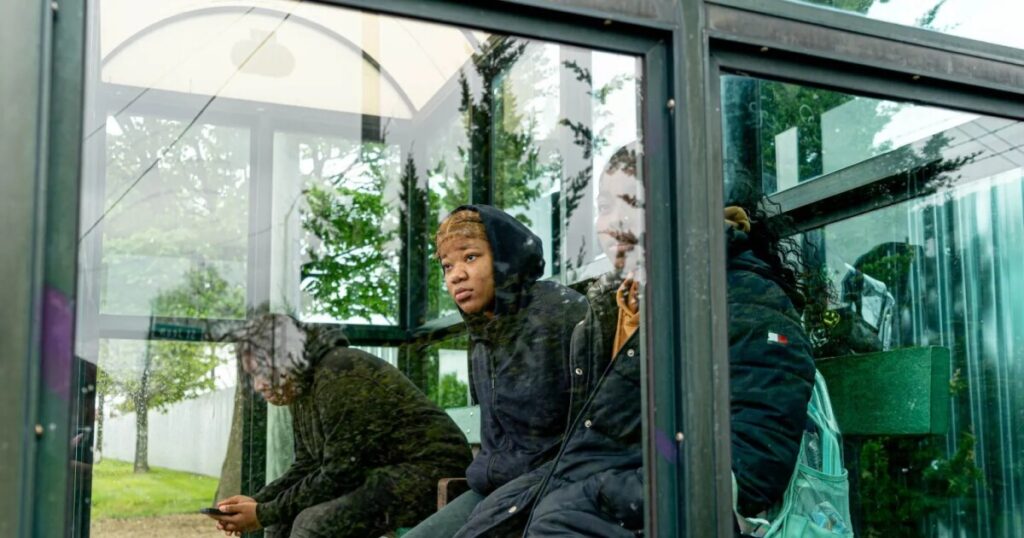
After school, Horton and other students congregate outside a local liquor store, waiting for the next bus that might get them home within an hour. “We get out of school at 3:20 p.m. but we don’t get a bus until 3:55,” Horton stated. “We’d have to get out of class before the bell” to catch the earlier 3:27 p.m. bus.
The city’s public transportation schedules frequently do not align with school dismissal times, contributing to a near 70% on-time performance rate for afternoon buses, according to the Detroit Department of Transportation (DDOT).

Cydni Elledge
/
Outlier Media
Mayor Mary Sheffield’s administration, committed to improving services for young residents, initiated a pilot program in April offering free bus rides to students. Robert Cramer, the city’s executive director of transit, mentioned that talks with students from Cody High School spurred enhancements to the bus-tracking system.
Despite these efforts, students face significant delays and mismatched bus routes. At Southeastern High, Horton and her classmates often miss the first bus after dismissal, having to wait another 30 minutes for the next one.
Cramer acknowledged these issues, noting that slight schedule modifications could alleviate some problems. He aims to implement these changes by the next academic year, asserting, “It takes a little bit of time … but if these are adjustments that we can make to reflect (the mayor’s) extra emphasis on educational outcomes and supporting students and their families, this should be a slam dunk.”
Proposed changes include schedule adjustments and deploying additional or larger buses on routes heavily used by students. Research indicates that reliable transportation significantly impacts student attendance, with chronic absenteeism hindering academic progress.
A recent initiative that provided yellow bus service at two Detroit high schools demonstrated improved attendance, highlighting the potential benefits of optimized transit solutions.
Transit Timing Challenges
In major U.S. cities, including Detroit, many high school students depend on public transit. However, the financial crisis of the 2010s led to reduced bus services, leaving students with fewer transit-friendly routes.
A review by Outlier Media revealed that over 40% of high schools in the Detroit Public Schools Community District (DPSCD) are served by buses with infrequent or ill-timed service. This isn’t merely a timing issue; the capacity of buses often falls short.

Cydni Elledge
/
Outlier Media
Southeastern students often encounter crowded conditions at bus stops, as Aaron West, a 9th grader, noted, “If they see a whole bunch of kids, they won’t stop for the ones that can’t fit.” The situation is exacerbated when multiple bus transfers are required, leading to missed connections and extended wait times.
Lindsey Matson from 482Forward, an education advocacy group, explained the financial burden on students: “If they have to transfer, almost half the time they miss it, and then they have to call an Uber if they want to be on time. And they don’t have Uber money.”
Investigative Approach
This report stems from an Outlier Media analysis comparing bus schedules with school bell times in Detroit. Using a Python script generated by ChatGPT, the study assessed 23 DPSCD high schools, excluding those with irregular schedules or specialized offerings.
Data was collected from the DDOT API and school schedules from the DPSCD website. Misalignment was defined as a wait of at least 30 minutes before or after school, a conservative estimate by public transit standards.
The study revealed substantial scheduling mismatches, with some schools facing bus arrivals significantly before the first bell or well after the last bell. Delays in DDOT services further complicate timely school commutes.
Editor’s note: As a grantee of the American Journalism Project, Outlier Media receives in-kind access to ChatGPT Enterprise, developed by OpenAI.
This article originally appeared on Outlier Media and is shared under a Creative Commons Attribution-NonCommercial-NoDerivatives 4.0 International License.
—
Read More Michigan News