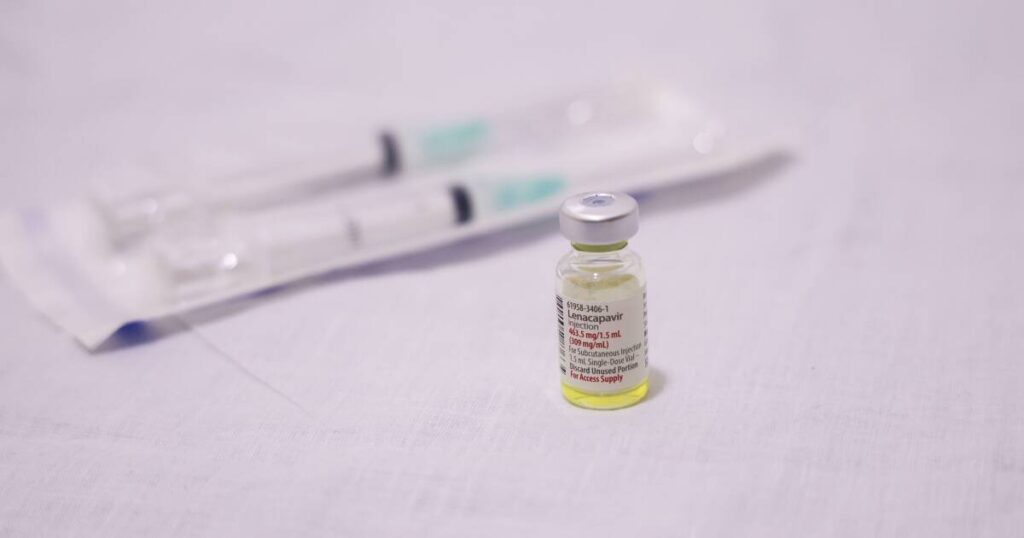
In central Uganda, nestled among sprawling banana groves and vibrant markets, a quiet revolution in HIV prevention is underway. This region, particularly along the shores of Lake Victoria, has become the epicenter for a groundbreaking HIV clinical trial that may reshape the future of HIV care.
For three years, Irene, a 22-year-old Ugandan woman, has been part of a pivotal HIV study, despite being HIV-negative. Encouraged by her uncle’s struggles with HIV, she joined a trial for lenacapavir, a promising medication aimed at preventing HIV infection, which affects 13% of her district’s population.
Lenacapavir, currently approved for pre-exposure prophylaxis (PrEP), is revolutionizing HIV prevention by addressing common issues like adherence and efficacy. Unlike daily PrEP pills, lenacapavir is administered through biannual injections, offering a more convenient option for participants.
The PURPOSE 1 and 2 trials, initiated two years ago, demonstrated lenacapavir’s remarkable effectiveness, prompting an early end to the randomized phase due to ethical considerations. New data presented at the International AIDS Conference revealed sustained protection one year after participants received lenacapavir. In PURPOSE 1, none of the nearly 4,200 women involved contracted HIV.
Adherence rates were exceptional, with over 96% of women receiving their doses on time. The trial exclusively included women, who represent the majority of new HIV infections in sub-Saharan Africa.
Breakthrough in HIV Prevention
Dr. Flavia Matovu Kiweewa, leading the research in Uganda, highlighted the historical significance of these results. Lenacapavir’s biannual dosing addresses challenges like stigma and prescription access, which hinder daily PrEP adherence. The drug targets multiple stages of the HIV lifecycle, enhancing its preventive capabilities.
Both men and women benefit from lenacapavir. PURPOSE 2, focusing on men and gender-diverse individuals, showed slightly lower adherence, with one participant contracting HIV.
Despite the excitement surrounding lenacapavir, its rollout has encountered challenges. Approved by the U.S. FDA for PrEP last year, the drug’s distribution has faced mixed reviews. Uganda began distributing lenacapavir in April, a month behind schedule, and some districts with high HIV burdens, like Kalangala, were initially excluded.
A Glimpse into the Rollout
Amiri Kabuye, a nurse in Kasensero, reported that only 60 people received six months of protection at the town’s sole health clinic. Kasensero, with a highly mobile population and one of Uganda’s highest HIV rates, exhausted its lenacapavir supply quickly. Government officials admitted to confusion over the rollout, with many expressing concerns about sustainable supply and funding.
Critics like Asia Russell from the Health Global Access Project labeled the rollout strategy as insufficient, potentially leaving many at risk. The Ministry of Health did not provide comments regarding these concerns.
Goldiano Kiganda, son of Uganda’s first reported HIV patient, sees parallels between the unfulfilled promises made about lenacapavir and his own experiences with the government. Despite advocacy efforts, he remains skeptical about the impact of speaking out.
Addressing Challenges and Future Prospects
The high cost of lenacapavir—approximately $28,000 for two doses—is another point of contention. Gilead Sciences, the company behind the drug, has faced criticism for its distribution control. Doctors Without Borders alleged that Gilead withheld direct access to the drug, urging organizations to work with centralized procurement systems.
Gilead is committed to reducing costs through agreements with manufacturers to produce generic versions, expected by 2027. They also promised to sell the drug at no profit until generics are available, aiming to expand access rapidly.
In Uganda, the future of lenacapavir remains uncertain amid U.S. funding cuts affecting the country’s HIV treatment programs. Staffing reductions and logistical challenges hinder effective distribution. Despite these hurdles, approximately 980 Ugandans have started using lenacapavir since April, with the U.S. pledging to increase global access to the drug.
While lenacapavir marks a significant advancement, oral PrEP continues to play a crucial role in HIV prevention. However, challenges persist, with a decline in the number of first-time oral PrEP users across several countries.
In areas like Kalangala, oral PrEP remains a lifeline, but logistical hurdles persist in delivering doses to remote communities. Injectable lenacapavir could reduce these challenges, offering hope for more effective HIV prevention strategies.
—
Read More Michigan News
![ICE Pursuit Ends in Fatal Grand Rapids Crash, Details Emerge[embed]https://www.youtube.com/watch?v=m6UY04VfQ-U[/embed]](https://www.kitchentablenews.org/wp-content/uploads/2026/10/ICE-Pursuit-Ends-in-Fatal-Grand-Rapids-Crash-Details-Emergeembedhttpswwwyoutubecomwatchvm6UY04VfQ-Uembed.com2F0d2Fef2F2fd3ad944f8596721c8fe9408c3e2Fimg-978.jpeg "ICE Pursuit Ends in Fatal Grand Rapids Crash, Details Emerge[embed]https://www.youtube.com/watch?v=m6UY04VfQ-U[/embed]")