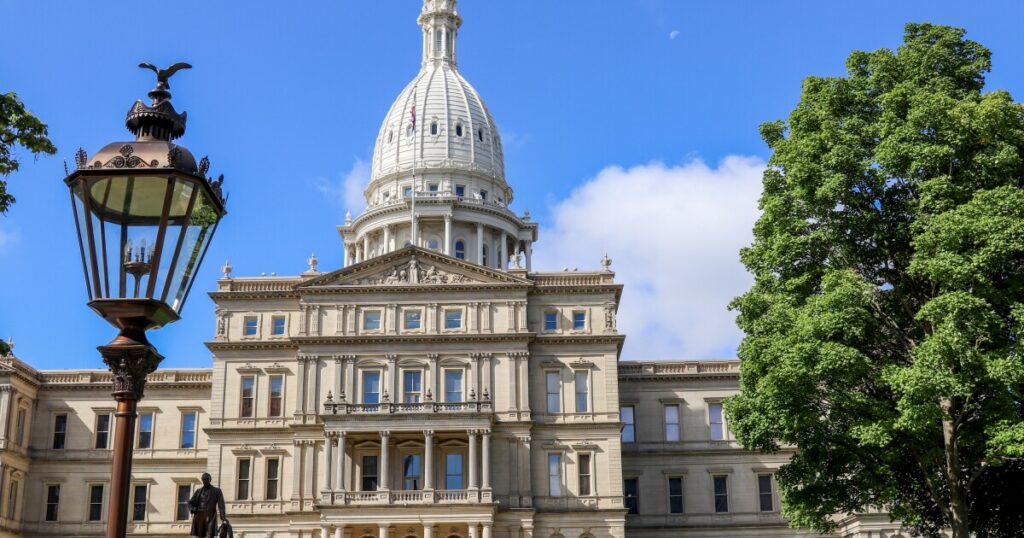
Michigan’s legislative actions are set to redefine the landscape of property taxes, as significant bills passed the state House of Representatives aim to alleviate tax burdens for homeowners.
House Speaker Matt Hall (R-Richland Twp.) has championed these measures, which are integral to a Republican agenda focused on budget reduction and eliminating excess state spending.
The proposed legislation seeks to abolish the state education tax, remove taxes on property sales, and impose stricter caps on property tax increases between sales.
Additionally, the bills propose expanded exemptions for personal property taxes, allowing public utilities to benefit from these exemptions, provided they agree to lower rates, with a stipulation of a two-year rate freeze.
Hall emphasized the significance of these bills in ongoing budget negotiations, stating, “It’s part of the negotiation. I mean our plan is to get property tax cuts, and to do a budget that doesn’t raise taxes and doesn’t take money from the rainy-day fund.”
The nonpartisan House Fiscal Agency has projected that these changes could result in a multibillion-dollar impact on state and local government finances, with school funding facing the most substantial reductions.
State Representative Stephen Wooden (D-Grand Rapids) voiced concerns over the potential consequences, warning, “Any savings that every day Michiganders will feel with this tax cut are not go far when they’re going to have to pay more for their car repairs because our roads are falling apart, when they have to pay for higher home insurances because we’ve defunded public safety services, and when you’re going to have to higher tutors for your kids because our classes are underfunded.”
Although the House approved the tax reduction bills, it did not address a bill that would compensate for the resultant budget shortfall through taxes on what Republicans have termed luxury services.
The specifics of these luxury services remain undefined, but Hall indicated that they might include sectors such as lobbying, telemarketing, and limousine services.
Hall expressed the need for Treasury insights to ensure revenue neutrality, emphasizing, “You’re not going to get a deal on this property tax reform unless you have a balanced deal in divided government, with a Democrat governor and a Democrat Senate. It will be balanced.”
Wooden, however, expressed skepticism, noting, “The only way we’re going to expand our sales tax on services in a way that fills a $5 billion hole is if we start taxing services that aren’t luxuries.”
The Democratic caucus largely opposed the bills, with the exception of state Representative Karen Whitsett (D-Detroit), who was present at the state capitol for the vote.
Whitsett, speaking in support of the tax cuts, stated, “We’re trying to move people into Detroit, we want more people there, we want to have more people who are homeowners.”
The legislative package is now set for consideration by the Democratic-majority state Senate.
—
Read More Michigan News

![Jody White’s Unconventional Michigan Supreme Court Candidacy Explored[embed]https://www.youtube.com/watch?v=8NfxFIPE4ac[/embed]](https://www.kitchentablenews.org/wp-content/uploads/2026/10/Jody-Whites-Unconventional-Michigan-Supreme-Court-Candidacy-Exploredembedhttpswwwyoutubecomwatchv8NfxFIPE4acembed.com2F842F0e2Fc7223daa43c9876b36a4e00773a42Fme-supc.png "Jody White’s Unconventional Michigan Supreme Court Candidacy Explored[embed]https://www.youtube.com/watch?v=8NfxFIPE4ac[/embed]")