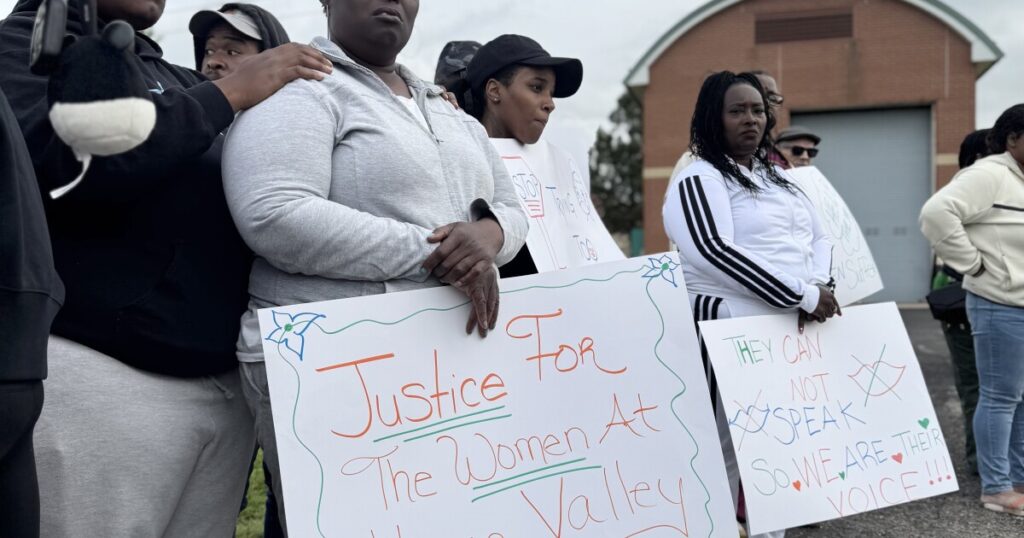
A growing sense of urgency surrounds the Women’s Huron Valley Correctional Facility as community members and advocates rally against conditions they claim are perilous and potentially deadly. A protest on Wednesday highlighted the community’s demand for immediate action to address these concerns.
The demonstration was sparked by recent tragedies, including the deaths of Khaira Howard and Rebecca Fackler, as well as concerns for the deteriorating health of another inmate, Krystal Clark.
Clark’s supporters allege she has suffered from prolonged exposure to black mold and severe neglect of her medical needs while incarcerated. They argue that although intervention is too late for Howard and Fackler, it could still save Clark and other inmates.
“Sadly, they are beyond us now,” said Alex Rodriguez of Workers Against Oppression, about the deceased inmates. “But now we can save the life of a woman who remains with us. We can demand of politicians to step in and save the life of this poor soul.”
In a phone call to her supporters, Clark described her health struggles, revealing worsening respiratory issues and general physical decline. She recounted a conversation with the Michigan Department of Corrections director, where her requests for help regarding black mold impacting her health were reportedly ignored.
Khaira Howard’s family also spoke at the event, expressing their grief. “You wouldn’t think you would be burying your daughter. It’s supposed to be the other way around,” said Don Howard, Khaira’s father. “And it’s just really a loss for words how people can treat a human being … I just hope that the governor, the senator, or whoever can just make a change because we really need a change.”

As Michigan’s sole women’s prison, the facility has come under intense scrutiny. Protesters issued several emergency demands aimed at safeguarding the inmates:
- Immediate medical clemency for Krystal Clark to enable her to receive outside treatment.
- Independent inspections to investigate claims of environmental hazards, such as black mold.
- Full transparency concerning recent deaths and medical issues within the prison.
- Comprehensive legislative and federal oversight to ensure accountability.
Advocates are also urging the public to lobby elected officials for change.
The Michigan Department of Corrections has responded, stating its commitment to the safety of both staff and inmates. The department notes that it provides ongoing and emergency medical care to all incarcerated individuals and recently engaged a third-party contractor for environmental testing, which reportedly found no evidence of hazardous or toxic mold.
—
Read More Michigan News