Regional Collaboration Targets Growing Deer Populations in Southern Michigan
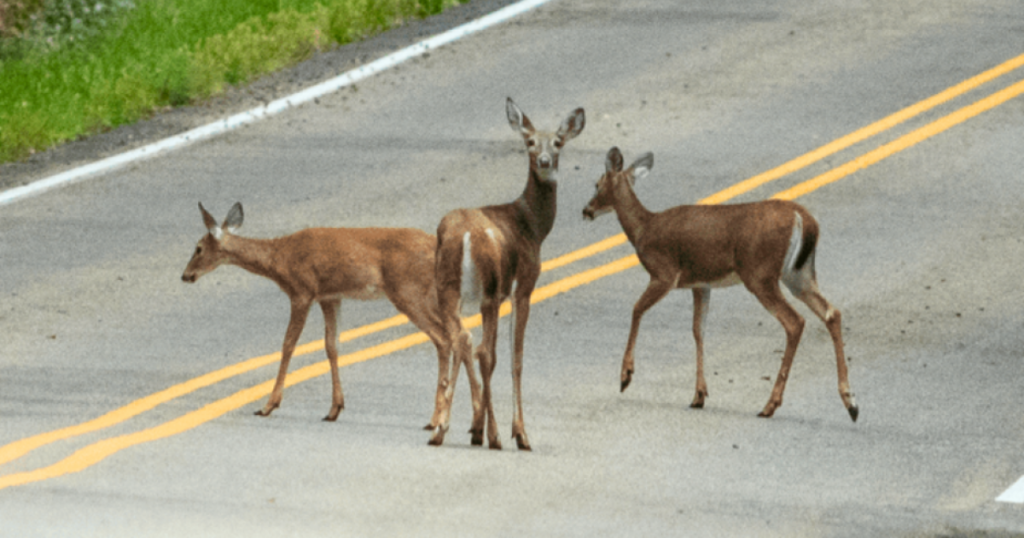
As deer populations continue to rise in southern Michigan, local communities are joining forces to address the challenges posed by these growing herds. The initiative, spearheaded by regional coalitions, aims to enhance public safety, curb overbrowsing, and protect biodiversity in natural surroundings.
The Kent County Deer Management Coalition, comprising partners such as Grand State Valley University, the state Department of Natural Resources, the state Department of Transportation, the Kent County Road Commission, and various local governments, is at the forefront of this effort.
Jerry Byrne, managing director of the Kent County Road Commission, highlighted that Kent County previously topped the state’s list for car crashes involving deer, a position now claimed by Oakland County. In response, the coalition is implementing strategies to mitigate human-deer conflicts, including mowing roadsides for better visibility and collaborating with the state Department of Natural Resources to issue additional permits for deer hunting on farmland.
Moreover, an innovative app connects farmers willing to allow hunting on their land, and plans are underway to engage professional sharpshooters for herd reduction, though Byrne emphasizes that the term “cull” is avoided. “When people think of a cull, they think we are going to eliminate the herd,” Byrne explained. “We are going to help manage the herd so it’s sustainable for the environment — and the deer are not going to then be harvested with a car.”
The coalition has also enlisted a wildlife biologist to oversee these initiatives, focusing on identifying areas with frequent deer-human interactions. Similarly, a coalition involving Farmington Hills, Farmington, and Southfield has employed a wildlife biologist for their deer management plans adopted in 2025.
Karen Mondora, Farmington Hills city manager, noted the biologist’s vital role in coordinating with the Michigan Department of Natural Resources, handling wildlife concerns, and educating the community about local wildlife such as coyotes, geese, and turkeys.
The Southeast Michigan coalition recently completed its initial winter deer reduction program, employing USDA Wildlife Services Department sharpshooters. This conservative approach resulted in the humane dispatch of 70 deer, with 2,300 pounds of venison donated to food banks through the Michigan Sportsmen Against Hunger program. Mondora acknowledged mixed community reactions, but emphasized that public safety remains a top priority.
Meanwhile, Washtenaw County’s exploration of a similar regional initiative faces political resistance, notably from the Humane Society of Huron Valley, which previously opposed Ann Arbor’s professional sharpshooting program in 2015. Despite this, a recent city council resolution in October signaled interest in a regional deer management strategy.
The potential involvement of neighboring Scio Township remains uncertain, as trustees deferred funding a deer management study amid opposition from the Humane Society, some residents, and trustees.
Critics like the Humane Society of Huron Valley argue that such programs are unnecessary and advocate for human behavioral changes to minimize deer conflicts. Suggestions include limiting suburban sprawl, reducing driving speeds, avoiding planting deer-attractive flora, and considering deer sterilization.
—
Read More Michigan News