New solar arrays on the University of Michigan’s North Campus are generating power, marking a significant step in the Maize Rays initiative. This expansion boosts U-M’s solar capacity to 2.5 megawatts across seven locations on the Ann Arbor and Dearborn campuses. The university’s ongoing efforts aim to enhance on-campus solar generation and improve energy resilience, utilizing “behind-the-meter” systems that integrate directly with the campus grid.
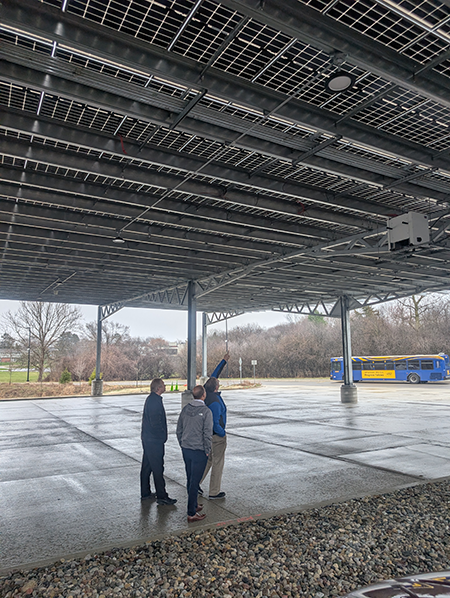
The operational sites are critical in achieving U-M’s ambitious goal of developing 25 megawatts of on-campus solar power. These installations include rooftop panels and solar carports at the Dean Road Transportation Facility, with a combined capacity of 0.73 megawatts, operational since winter 2026. The solar arrays collectively produce enough renewable energy to power about 300 Michigan homes annually.
Brian Hall, assistant vice president for utilities, emphasized the project’s role in fostering a sustainable energy system. “These projects demonstrate continued momentum in building a more resilient and sustainable energy system for the university,” he stated. The Maize Rays initiative supports U-M’s commitment to reducing Scope 2 greenhouse gas emissions from purchased electricity.
More solar capacity, totaling 1.1 megawatts, is under construction, with additional projects anticipated with the rise of summer construction activities. Shana Weber, associate vice president for campus sustainability and innovation, noted the expansion’s broader impact: “The continued expansion of Maize Rays reflects the university’s commitment to stewardship and energy transitions that are good for communities.”
The Maize Rays initiative is a collaborative effort among the Office of Campus Sustainability and Innovation, Facilities & Operations, Radial Power, and student groups like Students for Clean Energy. Future phases will extend benefits beyond the campus by partnering with nearby communities for community-serving solar installations.
MORE INFORMATION
—
Read More Michigan News