A dynamic group of learners, educators, and professionals from Ann Arbor, Dearborn, Flint, and Michigan Medicine recently gathered at the Michigan League for Health Professions Education Connect ’26. This event continues the University of Michigan’s longstanding efforts to enhance health professions education across its campuses and disciplines, emphasizing interprofessional collaboration and shared learning.
Originating as Medical Education Day, the conference evolved into Health Professions Education Day in 2015, spearheaded by the Department of Learning Health Sciences and the Center for Interprofessional Practice and Education (CIPE). This change highlights the importance of integrated learning across U-M’s health science schools.
Following a year-long hiatus, HPE Connect ’26 reemerged, shaped by campus-wide feedback through surveys and focus groups. Co-hosted by CIPE and RISE (Research. Innovation. Scholarship. Education.), and sponsored by DLHS, the event attracted nearly 200 faculty, staff, and learners from the university’s three campuses and Michigan Medicine.
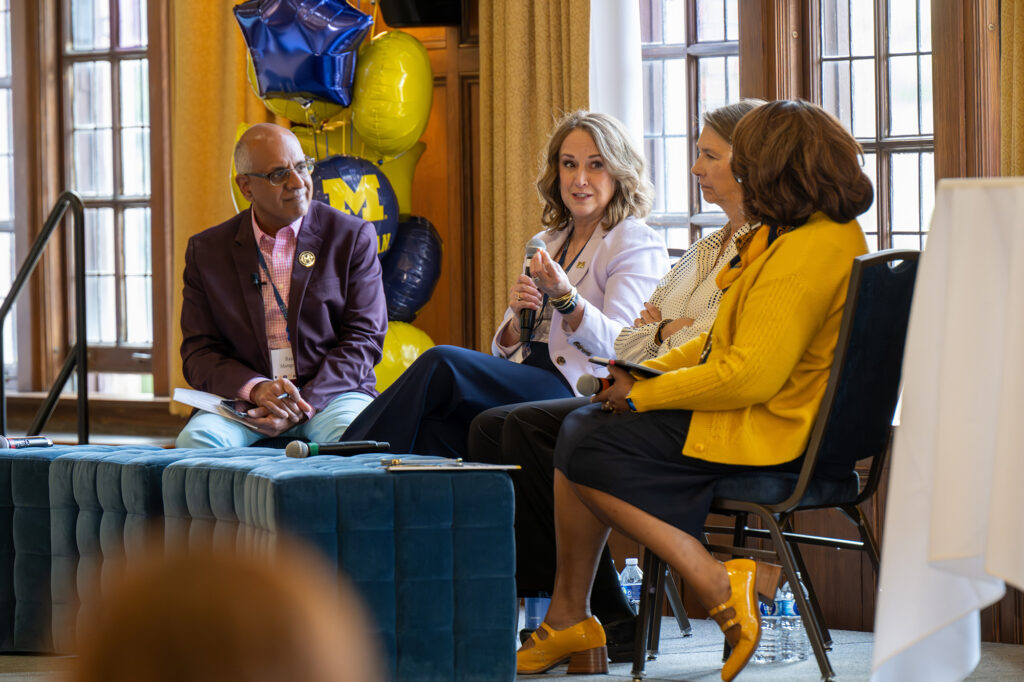
The conference emphasized that significant advancements in health are contingent upon collaborative learning and working. Through presentations and discussions, this theme was evident, particularly during the interactive leadership plenary panel.

Moderated by Rajesh Mangrulkar, the panel featured U-M’s deans and vice deans, who shared experiences and invited audience engagement to address shared challenges. The dialogue reinforced the idea that change in health professions education must be collaborative, not hierarchical.
Lou Edje, vice dean for medical education, highlighted the national trend towards teamwork and innovation in education, reflecting modern healthcare realities. Vicki Ellingrod emphasized expanding teamwork beyond clinical settings to include community engagement. Elizabeth Birr Moje stressed the connection between health and education, advocating for a holistic approach to student preparation.
The conference also spotlighted educational innovation with poster presentations, lightning talks, and awards. The IPE Awards recognized achievements by Michelle Pardee and Michele Bird, while the RISE Prize honored a student-led foot care initiative, demonstrating experiential education’s impact.
Rajesh Mangrulkar noted the momentum at the University of Michigan driven by interdisciplinary collaborations. “When we bring diverse partners together, the work becomes more purposeful and effective,” he stated, emphasizing the need to include often-overlooked voices like learners and patients.
HPE Connect ’26 underscored that advancing health sciences and professions relies on collaborative learning and working across campuses, disciplines, and communities, ensuring education drives better health outcomes.
—
Read More Michigan News