For Detroit resident Deanne Austin, commuting without a car is no easy feat. When she accepted a manufacturing job in Livonia, the lack of direct public transit required her to take three buses each way, supplementing rides with family assistance and rideshare services when necessary.
“I spent the majority of my day getting to work,” Austin said, reflecting on her eight-year tenure at the job.
Even after leaving the position, Austin remained committed to the idea of living in a community that offered robust transportation options. “I was always encouraged to move out of Michigan,” Austin noted, advocating for better transit as “a lifeline to so many different people.”
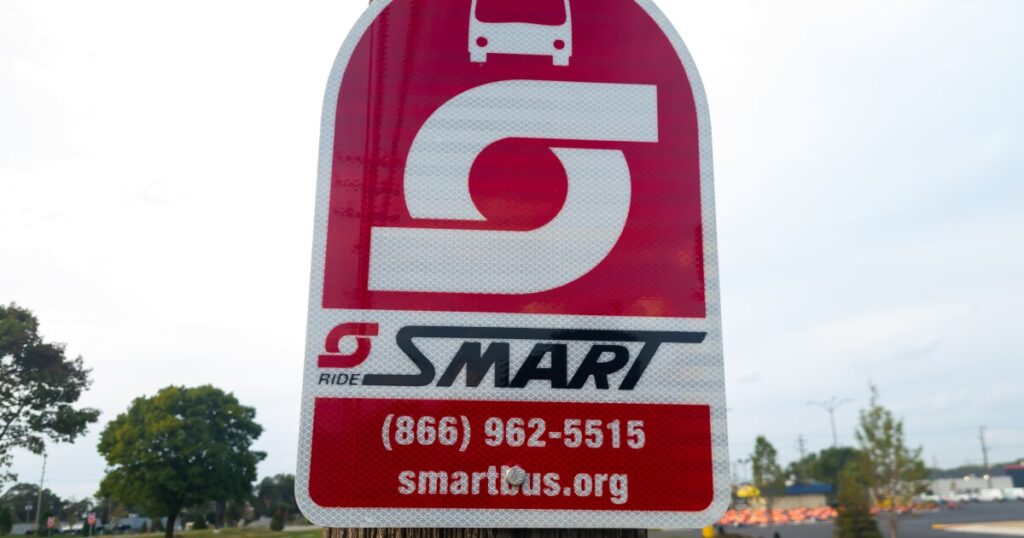
Austin’s cumbersome commute was largely due to Livonia’s decision to opt-out of the Suburban Mobility Authority for Regional Transportation (SMART) bus system, a choice made by 17 communities in Wayne County.
This situation might change soon. In August, Wayne County residents will vote on the Wayne County Public Transportation Millage, potentially marking a shift in public transit policy for the area.
In 2024, Michigan’s Legislature eliminated the opt-out rule, meaning if the millage passes, all communities will contribute taxes towards transit services. SMART intends to use the funds to expand services into previously opted-out regions and enhance programs for seniors, veterans, and people with disabilities.
The millage proposes a levy of 0.9831 mills over ten years, starting in 2026, which translates to approximately $8 monthly for a home valued at $200,000. This initiative aims to generate around $57.6 million in its first year, replacing an expiring millage.
History and Changes in Public Transit
Historically, a network of electric streetcars connected Detroit with various nearby towns until the 1930s. Since then, the region has worked to piece together a functional transit system. The Southeastern Michigan Transportation Authority (SEMTA) was established in 1967, later evolving into SMART in 1989. While Oakland and Macomb counties have consistently participated, numerous Wayne County communities, including Livonia, have opted out.
Megan Owens, executive director of Transportation Riders United, emphasized the broader impact of public transit. “You may not personally use transit, but you depend on someone who does,” Owens explained, highlighting the diverse roles within the community reliant on public transportation.
Controversy and Opposition
Despite the potential benefits, opposition exists. A group called Not SMART Wayne argues against the millage. Led by Matthew Wilk, the group points to low ridership as a sign of inefficiency, suggesting that the system lacks incentives for cost-effective operation.
“Our best advertisement against this tax is buses driving around town — because they drive around empty,” Wilk stated, expressing concerns about economic pressures on taxpayers.
Despite legal challenges, including a dismissed lawsuit over meeting notifications and ballot language, the millage vote proceeds. The group also filed a campaign finance complaint regarding an alleged improper partnership at a public event, which Wayne County maintains was lawful.
For Austin, the vote represents not just policy change, but a shift in societal perceptions. “Who rides the bus?” she asked, challenging stereotypes about public transit users and underscoring the diverse needs for improved transportation options.
—
Read More Michigan News



![Jody White’s Unconventional Michigan Supreme Court Candidacy Explored[embed]https://www.youtube.com/watch?v=8NfxFIPE4ac[/embed]](https://www.kitchentablenews.org/wp-content/uploads/2026/10/Jody-Whites-Unconventional-Michigan-Supreme-Court-Candidacy-Exploredembedhttpswwwyoutubecomwatchv8NfxFIPE4acembed.com2F842F0e2Fc7223daa43c9876b36a4e00773a42Fme-supc.png "Jody White’s Unconventional Michigan Supreme Court Candidacy Explored[embed]https://www.youtube.com/watch?v=8NfxFIPE4ac[/embed]")