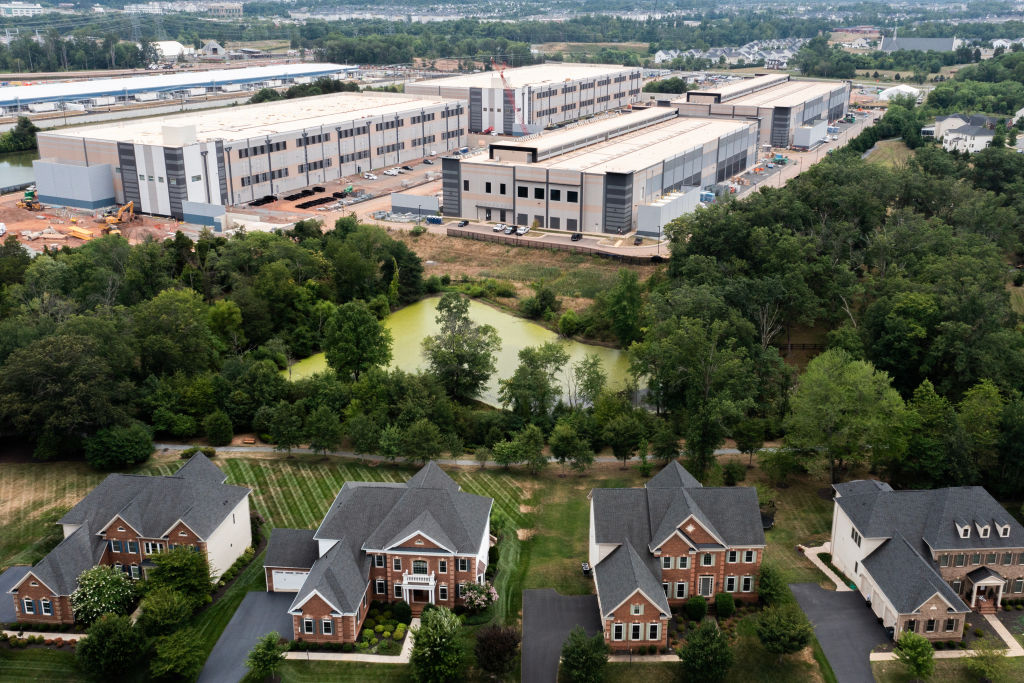
Data center opposition has rapidly escalated from local meetings to a key issue in state and federal elections. Politicians once praising data centers now face backlash, with voters in over 36 areas considering bans. Public sentiment against data centers is growing across party lines.
“The people are speaking, and they’re speaking in one voice in opposition to this infrastructure,” said Tatishe Nteta, provost professor of political science at UMass Amherst. A recent UMass Amherst poll showed only 11% support for new AI data centers, with 65% opposing them.
Concerns include strain on power grids, energy costs, pollution, and land use conversion. Critics argue that AI tech at these facilities could disrupt economies and harm public health. Ohio attorney Nick Owens declared, “Unfortunately, what we’ve become is a tech dump.”
Anger at both parties
Activists criticize bipartisan tax incentives for data centers and secret negotiations with tech giants. “The politicians are chasing the grassroots, they aren’t leading on the issue,” noted Anthony Elmo from Good Jobs First. In response, tech companies emphasize AI’s economic benefits and job creation.
Leading the Future, a tech-backed Super PAC, supports candidates favoring AI, claiming the industry is conflated with its worst projects. “(Voters) want the jobs in their communities, they want the revenue, but they want the risks and downsides mitigated and addressed,” said co-leader Josh Vlasto.
Investigations revealed that Leading the Future used AI bots and influencers to sway public opinion. The Data Center Coalition and companies like Amazon and Google did not respond to interview requests.
‘People coming together’
Data centers currently consume 49 gigawatts, with plans for nearly 350 gigawatts more. Ohio, a hub for data center development, has 154 operational centers and more underway. Nick Owens, a Conserve Ohio attorney, stated, “Our attraction in Ohio was a very minimal regulatory framework, plentiful farmland and plentiful water.”
Community activists are drafting initiatives to ban centers or require voter approval. Ohio will vote on 21 measures, with 39 measures across eight states. Earlier this year, voters showed strong opposition to data centers in four local ballots.
In Kansas, Ottawa residents opposed a proposed center after secretive negotiations. Michael Lewis from Ottawa United noted bipartisan support against data centers, highlighting the unique political unity.
Issue in statewide races
The debate impacts statewide races, with Ohio’s Sen. Jon Husted criticized for supporting tax breaks. His opponent, Sherrod Brown, highlights Husted’s pro-data center stance. Pennsylvania and Texas leaders also distance themselves from previous support.
Nteta remarked, “Republican candidates know this is a losing issue.” Vlasto argued that bans on data centers are overreactions, emphasizing community choice. Elmo from Good Jobs First highlighted the difficulty politicians face balancing grassroots demands with tech industry interests.
—
Read More Montana News