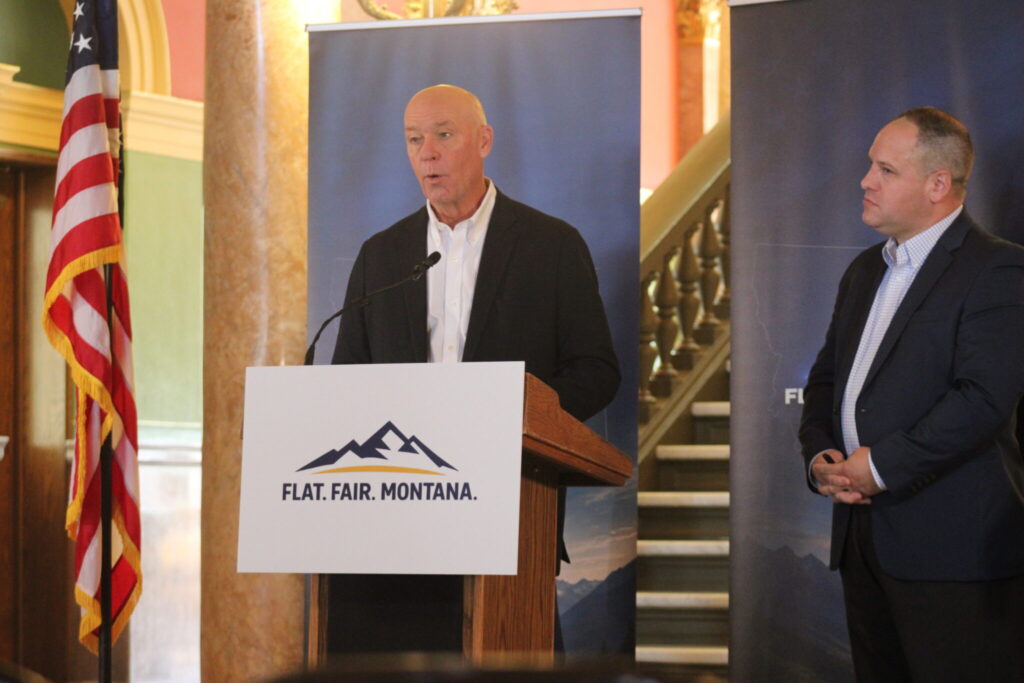
Montana’s Governor Greg Gianforte unveiled a proposal for a 4.7% income tax rate, sparking criticism from Democrats. The state currently employs a two-tiered, graduated tax system with a top rate of 5.4%. Under the current structure, many Montanans already benefit from a 4.7% rate, particularly joint filers with incomes up to $95,000. This change follows a reduction in tax brackets from seven to two since 2021.
A report by the Montana Legislative Fiscal Division earlier this year indicated that a flat 4.7% income tax could lead to a reduction in state tax collections by as much as $130 million annually by 2029. The proposal was announced at an event with the Mountain States Policy Center, part of the conservative State Policy Network coalition. Gianforte argues that the move is supported by the state’s robust economy and aims to attract people and jobs to Montana.
The governor emphasized that other neighboring states, such as South Dakota and Wyoming, do not impose income taxes, placing Montana at a disadvantage. Idaho, however, has a flat tax rate. Gianforte stated, “It would provide certainty to Montanans as well as business owners looking to invest in our state and create jobs.” He added that a flat tax is difficult to increase because it affects everyone.
Conservative group Americans for Prosperity, linked to the Koch brothers, has supported Montana’s push towards a flat tax. Gianforte addressed budget concerns by pointing to disciplined budgeting practices, stating, “Look at what we’ve done with our strong conservative budgeting.” He highlighted improvements in Montana’s fiscal health, moving from No. 22 to No. 8 nationally, as per Truth in Accounting. The governor asserted prosperity stems from “lower taxes and common sense budgeting.”
Opposition from Democrats and the Montana Budget and Policy Center was swift. Rep. Mark Thane, a Missoula Democrat, criticized the proposal as a $120 million tax break favoring the wealthy, challenging its impact on the state budget. He also noted the state’s failure to meet Medicaid provider rate increases, endangering rural healthcare. Thane emphasized Democrats’ opposition to a statewide sales tax, a topic among state Republicans.
Research from the Montana Budget and Policy Center suggests the wealthiest 20% of households would see 95% of the tax reductions. Director Rose Bender highlighted that the top 1%, earning over $900,000 annually, would receive nearly $9,000 in average tax cuts. Gianforte and Chris Cargill, CEO of the Mountain States Policy Center, promised job creation, citing Janicki Industries’ relocation to Montana as an example of economic growth potential.
Cargill noted Montana’s attractive business environment, low electricity prices, and land value as key factors. He pointed out that unfavorable tax changes in Washington state influenced Janicki’s decision to move. However, Montana’s economy remains closely tied to real estate, contributing $12.2 billion to the state GDP in 2025. Bender questioned the long-term goals of the tax cuts, expressing concerns about housing affordability and the desires of current Montanans.
—
Read More Montana News