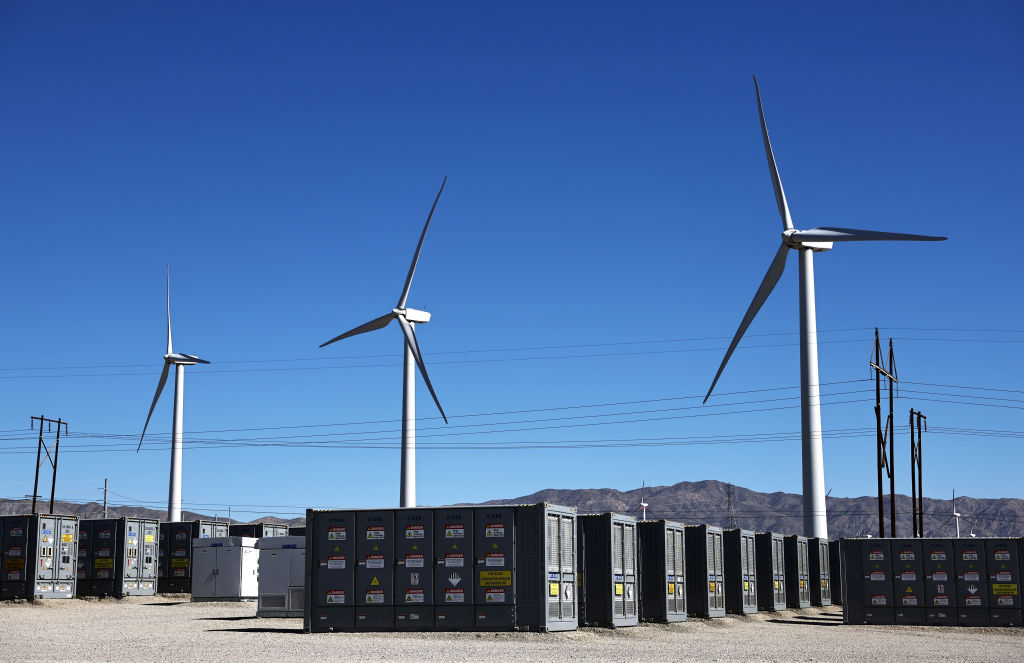
SNOQUALMIE, Wash. — As states and utilities race to meet rising power demands, the construction of “battery farms” is accelerating. These facilities store energy for peak usage, but face growing community opposition. Battery storage systems, often housed in buildings or shipping containers, are increasingly large-scale projects designed to support local utilities.
The U.S. has seen a tenfold increase in stored electricity since 2022, with projections to double by 2028, according to forecasts. Lawmakers and renewable energy advocates argue that battery storage is crucial for grid stability and clean energy transition. Despite safety improvements, community concerns about battery fires have led nearly 200 communities to propose or enact moratoriums on nearby battery farms.
‘Meteoric growth’
Battery energy storage systems (BESS), primarily lithium-ion, dominate U.S. grid storage. This technology, boosted by electric vehicle advancements, is becoming more efficient and affordable. U.S. battery storage capacity now exceeds 50 gigawatts, up from 5 gigawatts in early 2022, with an additional 54 gigawatts expected soon, potentially powering 75 million homes for one to four hours.
Noah Roberts, executive director of the U.S. Energy Storage Coalition, highlights the role of battery storage in the energy transition and grid decarbonization. Battery farms store surplus solar energy for evening use, reducing reliance on costly gas plants and improving grid reliability and affordability, especially in Texas and California. Battery farms can be installed swiftly, offering a quick solution to power supply challenges.
State policies have fueled industry growth, with thirteen states setting targets for utility energy storage. Maryland requires state regulators to bid on projects totaling 1,600 megawatts by 2025, driven by the need for renewable integration and federal resistance to clean energy.
Community concerns
While battery farms offer grid benefits, some communities oppose them due to fire risk and toxic smoke. The Moss Landing Power Plant fire in California, which released 55,000 pounds of toxic metals, heightened concerns. Lithium-ion batteries can trigger thermal runaway reactions, alarming communities when proposed near schools and residential areas.
Activist Phoenix Artemisia, opposing a project in Watsonville, California, highlights the tension between local communities and out-of-state developers. Developers are bypassing local officials by seeking state approvals. Industry leaders emphasize that modern designs and safety standards have reduced fire risks significantly.
Despite improvements, some communities, like Snoqualmie, Washington, remain wary, enacting moratoriums on battery projects. Concerns about site locations near homes and evacuation routes persist. Jupiter Power, the project’s developer, plans to seek state approval, bypassing local jurisdiction. Local objections focus on proximity to sensitive areas and insufficient community engagement.
Jupiter Power argues that battery farms must be near substations, typically close to communities they serve, making distant siting unrealistic. Kelsey Nyland of Clean and Prosperous notes Washington’s slow clean energy growth despite ambitious climate goals. Battery storage can help western Washington harness renewable energy from the east.
Encarnacion of Carina Energy advises early community engagement to address concerns. With 175 moratoriums tracked nationwide, developers face challenges in aligning community interests with industry goals.
—
Read More Montana News