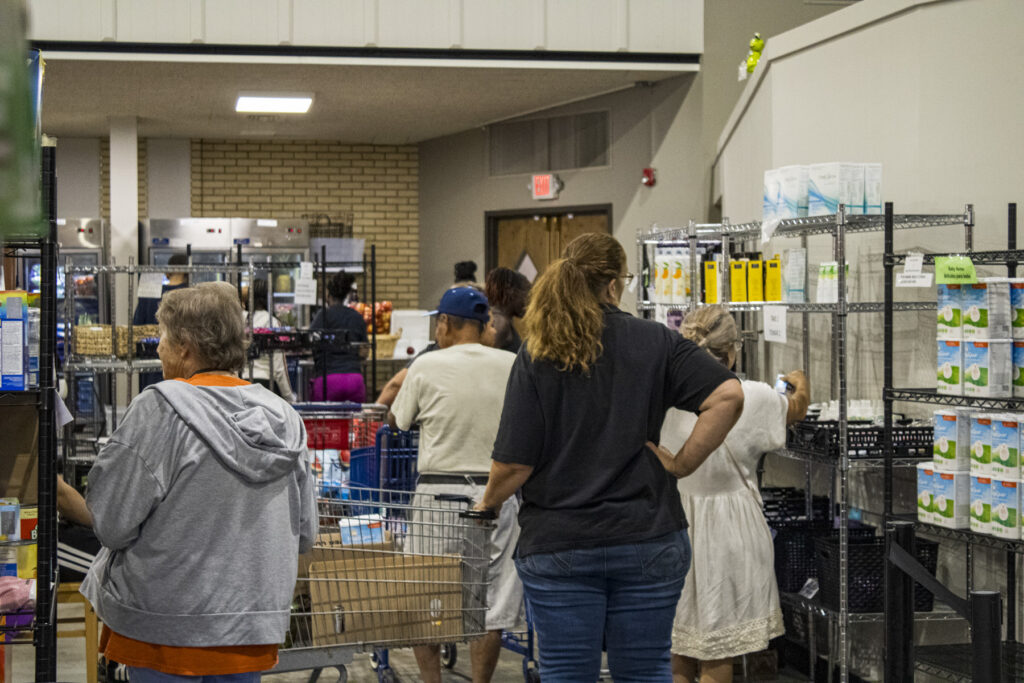
Ritenour Co-Care Food Pantry near St. Louis has shifted from offering ground beef and chicken legs to cheaper ground chicken and hot dogs due to rising food costs and increased demand. Executive Director Angela Gabel highlighted the need for adaptation amid soaring grocery prices. Last year, the pantry spent $120,000 on food and budgeted $180,000 for the current year, but this might not suffice as demand continues to rise. On a recent day, seven new families signed up, with 15 more expected by day’s end, indicating a growing number of people visiting multiple food pantries each month.
Rising grocery prices coincide with the loss of SNAP benefits for many vulnerable Americans. Over 4 million people have lost access to the Supplemental Nutrition Assistance Program between February 2025 and February 2026, as per the latest federal data. This trend is projected to worsen due to the One Big Beautiful Bill Act signed by President Donald Trump, which requires states to further trim benefit rolls. “I’m absolutely terrified,” Gabel stated, expressing concerns about replacing government support.
States have started informing SNAP recipients about new work requirements, risking loss of food assistance. Exemptions for older adults, veterans, and rural residents are ending, increasing pressure on state budgets and stretching the already maxed-out charitable food system. SNAP director Gina Plata-Nino from the Food Research & Action Center observed that children, older adults, and disabled individuals heavily rely on the program, with the average benefit per person estimated at $188 monthly.
Hunger data is sparse since the Trump administration ended the annual Household Food Security report. However, other indicators show increasing food insecurity. The Federal Reserve Bank of New York reported a notable rise in food insecurity, with more households drawing from savings or seeking food donations. Democrats and anti-hunger advocates are pushing Congress to reverse SNAP cuts. The ongoing negotiations over the federal farm bill, which encompasses SNAP, have reignited discussions on food assistance cuts. The House passed a farm bill version that maintains these cuts, with Republicans citing fraud prevention as justification.
West Virginian Raine Gibbons, affected by SNAP benefit reductions, now relies more on affordable staples like pasta. Her family receives just over $300 monthly in SNAP benefits. Gibbons, who supervises a state-run Family Support Center, noted the stress of managing rising costs and reduced SNAP eligibility among clients. California seeks to bridge the federal gap, with Democratic Assemblymember Alex Lee proposing to enhance a state program that doubles SNAP purchasing power for fresh produce.
In California, nearly one-third of families with young children faced food insecurity between July 2024 and January 2026, according to Stanford University. “States are trying to triage the most pressing family needs,” said Abigail Stewart-Kahn of Stanford’s Center on Early Childhood. She added that the stress from unmet needs impacts children’s development and society’s future challenges. The Omaha-based Restoring Dignity organization has launched a food assistance initiative for refugees who lost SNAP benefits, providing gift cards to the most vulnerable families.
—
Read More Montana News






![Botched Ad Mix-Up: Super PAC Error in Arizona Congressional Race[embed]https://www.youtube.com/watch?v=bEMgIlCkHz0[/embed]](https://www.kitchentablenews.org/wp-content/uploads/2026/10/Botched-Ad-Mix-Up-Super-PAC-Error-in-Arizona-Congressional-RaceembedhttpswwwyoutubecomwatchvbEMgIlCkHz0embed.com2F0e2F962Fe971102f49e7a4f2a64fd3cc60a22Fjonatha.png "Botched Ad Mix-Up: Super PAC Error in Arizona Congressional Race[embed]https://www.youtube.com/watch?v=bEMgIlCkHz0[/embed]")