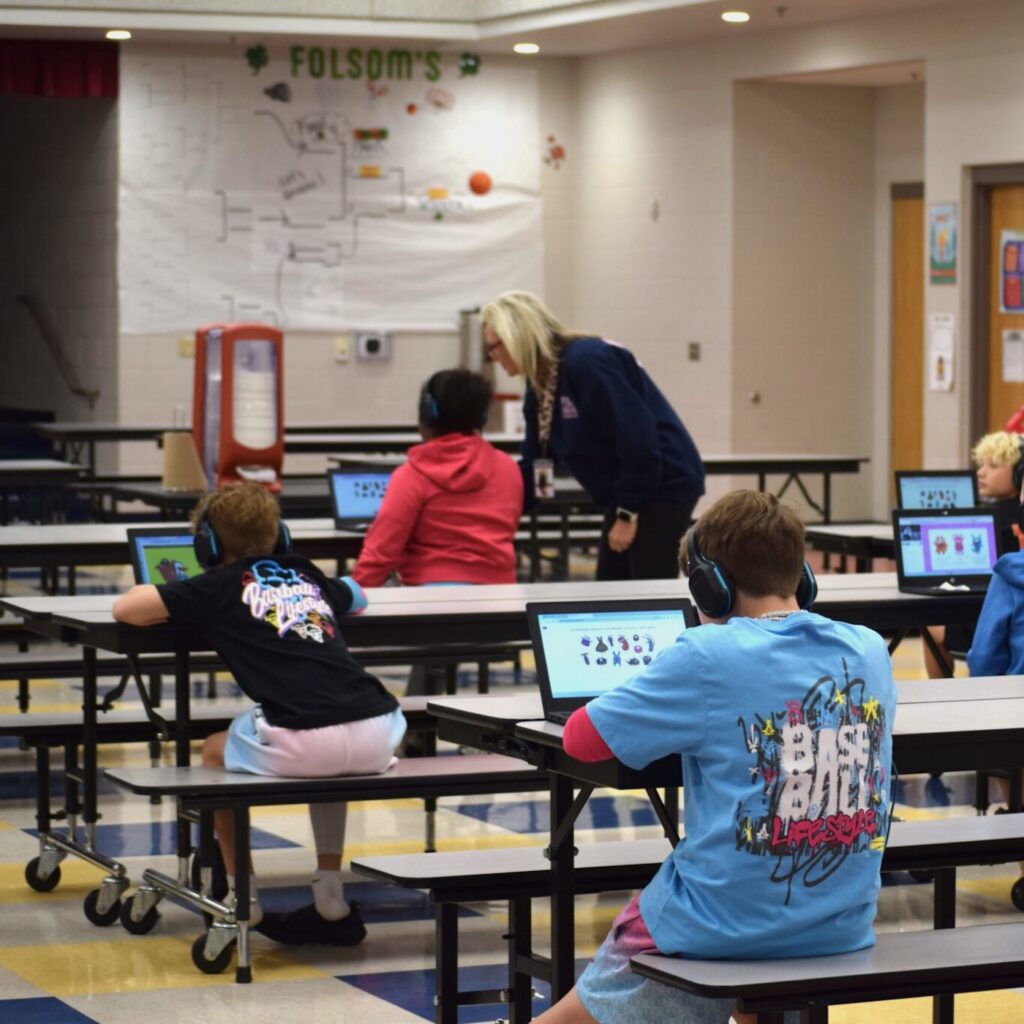
As the new school year unfolds, some classrooms are turning to artificial intelligence tools to identify struggling students, monitor attendance, and enhance reading scores. However, school districts face challenges in selecting safe and cost-effective AI tools amid overwhelming choices. While some states offer guidance for AI purchases, many districts are left to navigate these decisions independently.
AI technology is advancing swiftly, outpacing the ability of school districts and states to keep up, according to Mark Schneider of the American Enterprise Institute. “There’s always an asymmetry between what the providers know and what the districts know,” he said, highlighting the need for mechanisms to aid districts in making informed decisions.
The U.S. education technology market, including AI, is projected to grow significantly, with AI in education expected to generate over $15 billion by 2033, according to Grand View Research. In Tennessee, Sumner County Schools tested AI to improve middle school reading scores. Superintendent Scott Langford emphasized the importance of selecting AI tools that support teachers without replacing them.
In Pennsylvania, the Allentown School District employs a two-phase review process for AI programs, prioritizing student safety and data security. Superintendent Carol Birks noted the burden on districts in making AI decisions, suggesting state and federal guidance could be beneficial. The district uses AI platforms like Coursemojo and Google’s Gemini.
What vetting looks like
AI vendors typically sign data agreements and undergo security reviews before approval. While some states have laws on education technology purchases, districts often lack best practices for AI contract processes. Legal challenges have arisen, such as lawsuits in Arizona and Kansas over student-monitoring platform Gaggle’s use, alleging constitutional rights violations.
State agencies, like the Pennsylvania Department of Education, offer AI guidance, focusing on data control and transparency. New York City Public Schools and Chicago Public Schools have updated their AI standards, emphasizing privacy and transparency. Yet, the U.S. Department of Education provides minimal guidance on AI procurement.
Leslie Eaves from the Southern Regional Education Board advises districts to test AI tools with adults first and warns against blindly trusting AI-generated materials. Janice Mak from Arizona State University stresses evaluating AI tools for accessibility, learning science grounding, and addressing real educational needs.
‘A tall order for districts’
Common Sense Media’s Sue Thotz highlights the challenge for districts in ensuring vendor compliance with privacy laws, suggesting collective agreements like California’s data privacy agreement could help. An Instructure report revealed districts have access to numerous digital tools but use only a few, indicating a need to streamline resources.
As budgets tighten and federal funding wanes, districts are scrutinizing AI purchases. Dacia Toll of Coursemojo advises aligning AI products with cognitive science and teaching methods, acknowledging the longstanding challenges in vetting educational technology.
—
Read More Montana News