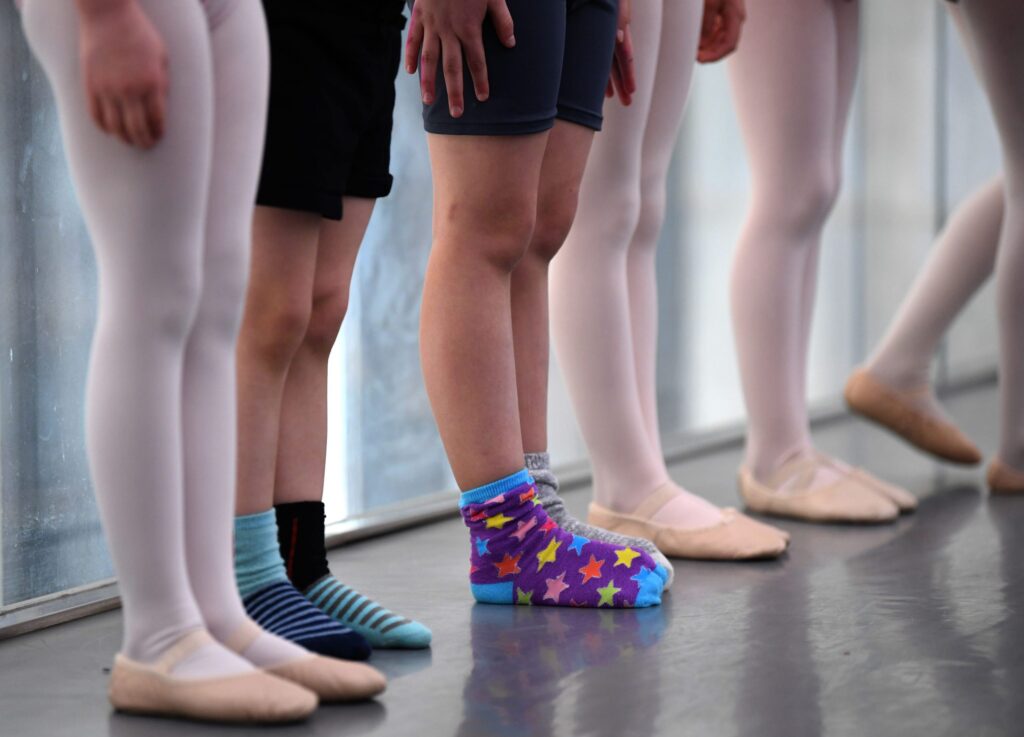
Instead of dancing, I was chatting incessantly. My teacher seated me under the piano to focus. From there, I saw only feet—sneakers and socks sliding, heels lifting, all in rhythm with the music.
“Focus on their feet,” he instructed. “Rejoin your friends when you’re ready.”
I watched and listened, and gradually, something changed. The rhythm captivated me, and I became engrossed like never before.
That teacher was Jacques d’Amboise, the late New York City Ballet principal dancer, MacArthur Fellow, and founder of the National Dance Institute (NDI). NDI brings dance education to New York City public schools, including mine.
As a fourth grader, I only knew this teaching artist was different and kept showing up, something I later learned was rare.
Teaching artists offer more than art instruction. They value skills like creativity and physicality, often overlooked in traditional classrooms.
Related: Stay informed on K-12 education with our free weekly newsletter.
A teaching artist collaborates with classroom teachers to integrate arts learning, but most students miss this experience. Fixing this would benefit schools and students.
Investing in arts education means supporting teaching artists. Philanthropic funders should prioritize organizations providing stable infrastructures for these artists.
Teaching artists focus on students’ abilities, not their gaps. Their long-term presence builds strong relationships, enhancing the impact on students and school communities.
They transform classrooms into studios, animate hallways with art, and involve families in celebrating student achievements.
Collaborating with teaching artists, classroom teachers discover new student abilities and teaching methods.
Arts nonprofits often can’t offer teaching artists sustainable careers. They’re typically hired part-time, seasonally, and face low wages without benefits.
Research shows teaching artists are vital to arts programs but face challenges like low pay and inconsistent work.
High turnover means losing mentors and collaborators, affecting schools deeply.
As a professor of education, I’ve studied arts learning for nearly two decades. My transformation under that piano wasn’t magic; it was a skilled teaching artist’s work.
I learned humility and cultural empathy by dancing with diverse students and in various neighborhoods.
Dance allowed me to express creatively without needing words.
Related: PROOF POINTS: The lesson the arts teach
Celebrating its 50th anniversary, National Dance Institute reminds us that the success of arts education relies on the well-being and careers of teaching artists.
By offering year-round employment with steady schedules and support, NDI recruits experienced educators committed to long-term teaching careers.
Teaching artists and NDI become trusted partners in school communities, offering pathways to full-time roles with benefits.
School districts should prioritize contracts that ensure continuity, and nonprofit leaders should see investing in people as essential to their mission.
As I turn 50 alongside NDI, I remember Jacques d’Amboise not just as a great dancer but for capturing a fourth grader’s imagination by sitting her under a piano to observe dance.
—
Read More Kitchen Table News