This story was copublished and supported by the journalism nonprofit the Economic Hardship Reporting Project.
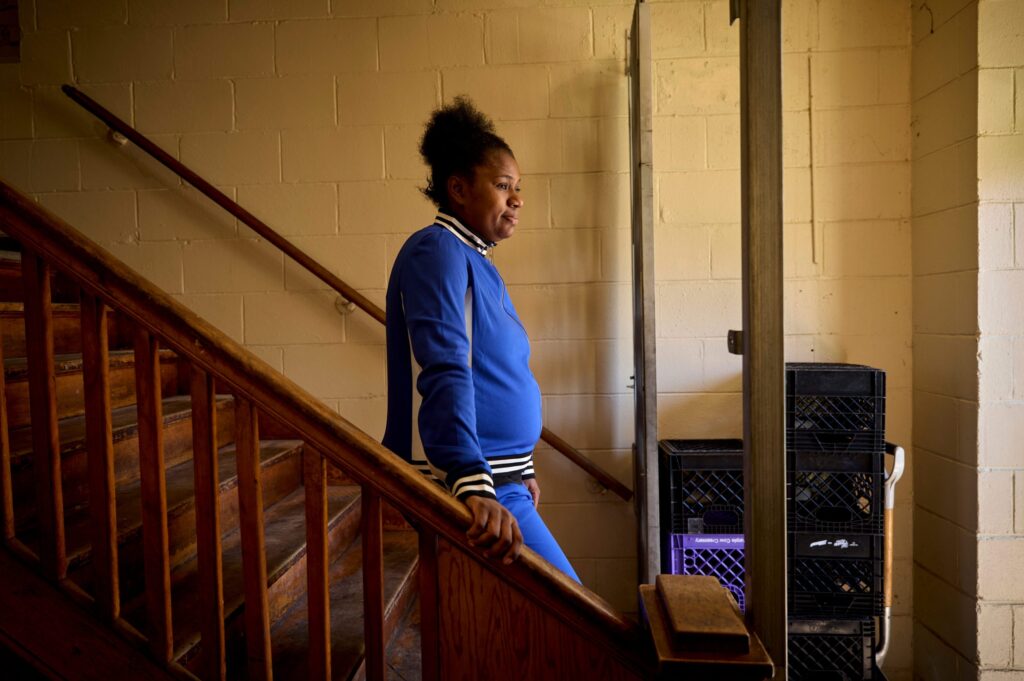
MILWAUKEE — Domininck Tompkins was shocked when a doctor revealed her 1-year-old’s lead levels were dangerously high. She suspected their poorly maintained rental home with chipping paint was the source. When she informed her landlord, who showed little concern, Tompkins realized she was on her own to address this serious issue.
Over the past decade, Tompkins has moved multiple times and experienced homelessness twice. Most of her rentals have had lead paint hazards, and her children have faced developmental delays likely linked to lead exposure. Despite testing high for lead as a child herself, Tompkins finds it difficult to secure a lead-free home in Milwaukee, where rental inspections for lead are not mandatory.
The ongoing lead problem in Milwaukee highlights the critical link between tenants’ rights and children’s health. High lead levels can cause developmental disorders like ADHD and learning disabilities. According to a study, even low lead levels correlate with poorer academic performance in third graders, regardless of other factors like income. The study emphasizes the importance of lead abatement to improve children’s academic outcomes.
City officials usually intervene only after a child tests high for lead, creating a reactive rather than proactive system. When a child under 6 tests above 3.5 micrograms per deciliter, the city follows up. However, comprehensive intervention typically occurs only for levels of 10 or higher, involving city health services and potential lead abatement projects.
Last year, Milwaukee oversaw 250 lead abatement projects, the most in years, funded by federal grants and city resources since landlords often refuse to pay. Tyler Weber, deputy commissioner of environmental health, noted that the high costs of abatement often fall on the city due to limited legal recourse to enforce landlord compliance.
Approximately 60% of Milwaukee’s households rent, with low-income residents most affected by lead hazards. Evictions are pervasive, with over 12,000 filings annually in Milwaukee County, contributing to persistent poverty. Lead issues in rental homes exacerbate the problem, causing lasting harm to children.
In some parts of Milwaukee, over 20% of children tested positive for lead poisoning, significantly higher than the national average. Young children are particularly at risk due to rapid brain development and hand-to-mouth behaviors. Severe cases sometimes require hospitalization to prevent long-term damage.
Efforts to address lead hazards face obstacles, including state laws limiting rental inspections and landlord accountability. Milwaukee’s previous proactive lead policies have waned, leaving tenants with little leverage to demand safe housing. Advocacy groups continue to push for change, but challenges remain in enforcing meaningful landlord accountability.
Programs like Cooking with COLE offer resources and education to families dealing with lead exposure, teaching safe practices and advocating for better tenant rights. However, the need for systemic change is urgent to protect vulnerable populations in Milwaukee’s rental market.
—
Read More Kitchen Table News



![Jody White’s Unconventional Michigan Supreme Court Candidacy Explored[embed]https://www.youtube.com/watch?v=8NfxFIPE4ac[/embed]](https://www.kitchentablenews.org/wp-content/uploads/2026/10/Jody-Whites-Unconventional-Michigan-Supreme-Court-Candidacy-Exploredembedhttpswwwyoutubecomwatchv8NfxFIPE4acembed.com2F842F0e2Fc7223daa43c9876b36a4e00773a42Fme-supc.png "Jody White’s Unconventional Michigan Supreme Court Candidacy Explored[embed]https://www.youtube.com/watch?v=8NfxFIPE4ac[/embed]")