Controversial Land Transfer for Copper Mining Advances in Arizona
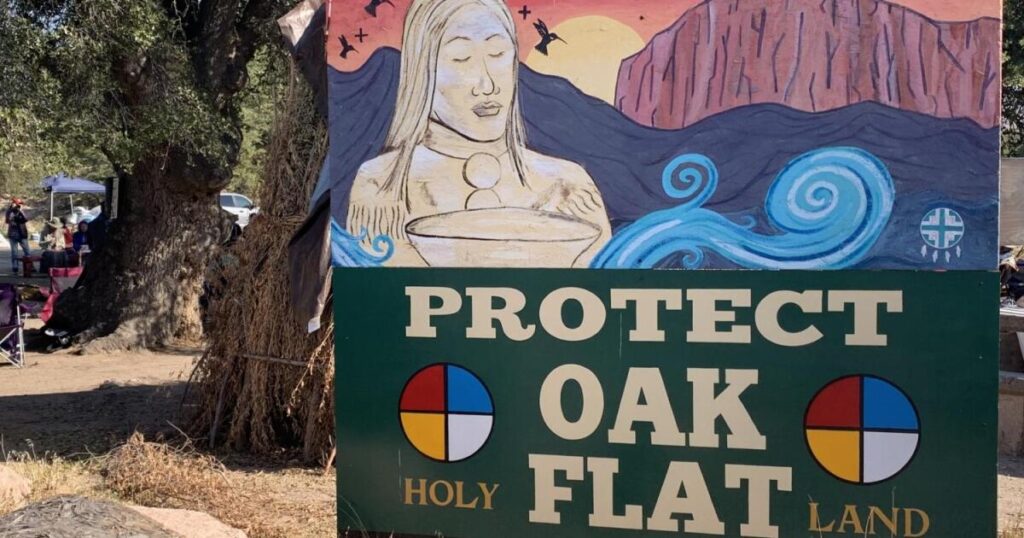
In a significant development that has sparked widespread debate, the U.S. Forest Service has handed over ownership of Oak Flat to Resolution Copper. This move, occurring just days after a federal appeals court rejected an injunction request from tribes and environmentalists, represents a setback for opponents of the proposed copper mine, including the San Carlos Apache Tribe who regard the site as sacred.
According to Agriculture Secretary Brooke Rollins, “Completing this land exchange unlocks a major domestic source of copper, essential for defense, grid modernization, and next-generation energy.” The Oak Flat area, estimated to hold $150 billion worth of copper, is slated for mining despite its cultural and religious importance to Native American tribes.
Russ McSpadden, a conservation advocate involved in the legal battle, stressed that while the transfer is a “devastating” blow, it isn’t the end of the fight. Resolution Copper projects that Oak Flat may produce up to 40 billion pounds of copper over 40 years, following a historical change in land protection initiated by the late Sen. John McCain in 2014.
Resolution Copper has stated that the project has undergone extensive environmental review and involved consultations with tribes and other stakeholders. Vicky Peacey, President of Resolution Copper, mentioned that design changes have been made to preserve access to culturally significant areas.
Copper: A Critical Mineral
The U.S. Geological Survey reported that in 2025, the nation produced 1 million tons of copper, valued at $11 billion, yet the demand is around 2.5 million tons. Arizona, the leading copper-producing state, contributed approximately 70% of the country’s output. Despite this, the U.S. imports 45% of its copper needs.
Copper’s critical role in electrical systems, industrial machinery, and military applications adds to the urgency of securing domestic sources. However, concerns arise due to Resolution Copper’s partial ownership by foreign entities, including the state-owned Aluminum Corporation of China.
Rep. Jared Huffman criticized the land transfer as a “human rights violation” and an “environmental disaster,” while others argue that the mine will support economic growth and defense needs. The debate continues as the legal and political battles unfold.
Congressional Reactions
Legislative efforts to reverse the land swap, such as Rep. Adelita Grijalva’s proposed bill, highlight the ongoing political struggle. While some lawmakers support the mine for its economic benefits, others emphasize the need for environmental safeguards and respect for tribal sovereignty.
As legal challenges proceed, the future of the Oak Flat mining project remains uncertain. The complex intersection of economic interests, cultural heritage, and environmental considerations ensures that this issue will remain a focal point of national attention.
—
Read More Arizona News