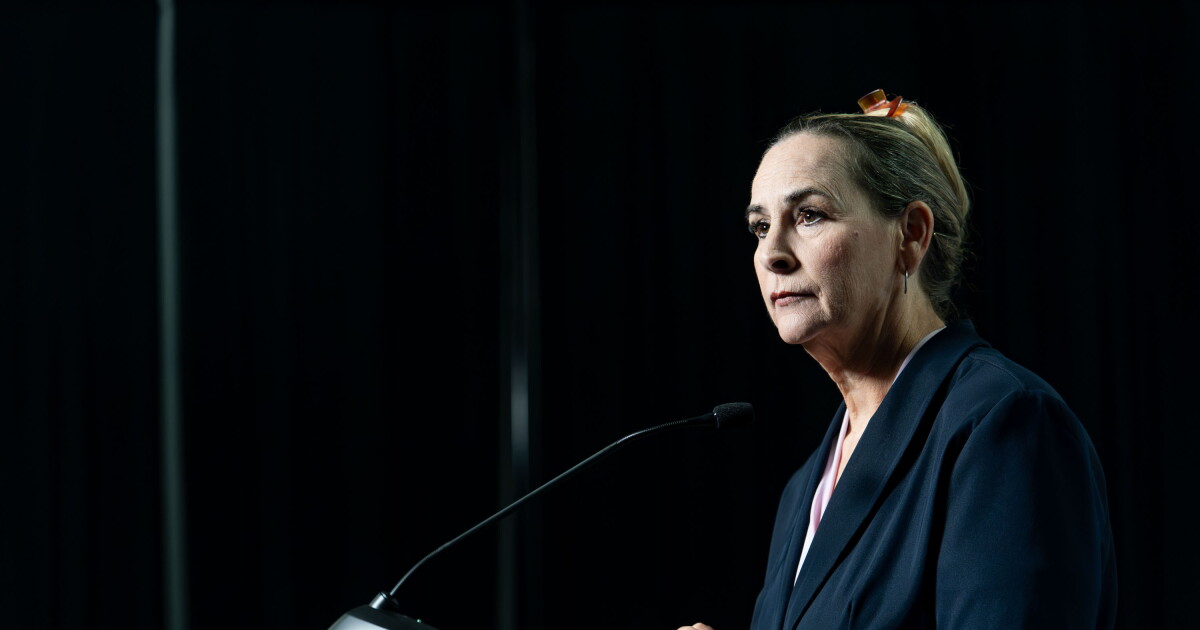
Joy Harjo, renowned for her poetry, has long been a transformative figure in the literary world. Her contributions extend beyond writing, encompassing music and storytelling, and she is well-known for her emphasis on Indigenous identity and social justice. As a member of the Muscogee Nation, Harjo has a unique perspective that she has brought to her work as the 23rd U.S. Poet Laureate, marking the first time a Native American held this position.
During a recent conversation with KNAU’s Ryan Heinsius, Harjo shared insights from her home in Tulsa, Oklahoma, where she paused her saxophone practice to discuss her journey. This is a condensed version of their discussion.
Joy Harjo is set to present a reading of her work on Wednesday, March 18, at Northern Arizona University’s Prochnow Auditorium at 7 p.m. Tickets are complimentary but need to be secured via the NAU website.
Expanding the Reach of Native American Poetry
Ryan Heinsius: How has your role as U.S. Poet Laureate enhanced the visibility of Native American poetry?
Joy Harjo: As the first Native U.S. Poet Laureate, my term began just before the onset of COVID, a time when many turned to poetry for solace amidst global challenges. My goal was to highlight the diversity of Native poets across the nation. “Look, there’s a lot of us, and we’re all over this country,” I wanted to convey.
The Transformative Power of Poetry
RH: You have often described poetry as a ceremonial tool for change. How has it influenced your life?
JH: Poetry articulates what words often cannot. It is a precise ‘word science’ that I used to engage with Native rights issues. Inspired by great Native speakers, I found my own voice through poetry, addressing similar themes in a personal way.
Art and Social Change
RH: As the inaugural artist-in-residence at the Bob Dylan Center in Tulsa, how does it feel to contribute to Dylan’s artistic legacy?
JH: Dylan’s music was a staple during my formative years, especially his protest songs of the late ‘60s. At the center, I have gained a deeper appreciation for his work and its creative processes, which I hope to share with others to inspire community creativity.
Art’s Role in Activism
RH: Given your history with Indigenous activism, does art continue to drive social change?
JH: Definitely. Artists, whether they are musicians, writers, or visual storytellers, often lead cultural movements. They are the ‘point people’ of culture, providing a vision of the future through their creations.
RH: Thank you, Joy Harjo, for this enlightening conversation.
JH: Thank you for the thoughtful questions. I appreciate it.
NPR’s Leila Fadel speaks with former U.S. poet laureate, Joy Harjo, about her book “Washing My Mother’s Body” where she explores the complexity of a daughter’s grief as she reflects on her mother’s life.
—
Read More Arizona News