The Federal Reserve’s Dilemma: Navigating Economic Challenges Amid Global Tensions
In a complex economic landscape, the Federal Reserve faces mounting challenges as it seeks to stabilize the U.S. economy. With an anticipated decision to keep the benchmark interest rate unchanged, policymakers are grappling with a labor market showing signs of weakening and external pressures such as the conflict in Iran exacerbating inflation concerns.
During their last session in January, the Fed’s committee highlighted a stabilizing labor market. However, recent data from the Labor Department paints a different picture, with a reduction of 92,000 jobs in February and an uptick in the unemployment rate to 4.4%. Revisions to previous months’ job gains further indicate that job growth has been nearly stagnant over half a year.
Additionally, the ongoing conflict with Iran is impacting global energy markets, resulting in significant increases in gasoline and diesel prices over recent weeks. While the Fed generally overlooks volatile energy prices, a prolonged rise in diesel costs could increase transportation expenses for goods, influencing broader inflationary trends.
Michael Pearce, chief U.S. economist for Oxford Economics, remarked, “It’s going to put big, upward pressure on inflation in the near term.” He added that this scenario is likely to hinder consumer spending, complicating the Fed’s policy outlook amid recent shocks.
Even prior to these international developments, inflation had already surpassed the Fed’s target, reaching 3.1% in January according to their preferred metric. Fed projections from December anticipated a reduction in inflation to 2.5% by year’s end while maintaining unemployment at about 4.4%. These forecasts now require significant reassessment.
Leadership Uncertainty at the Fed
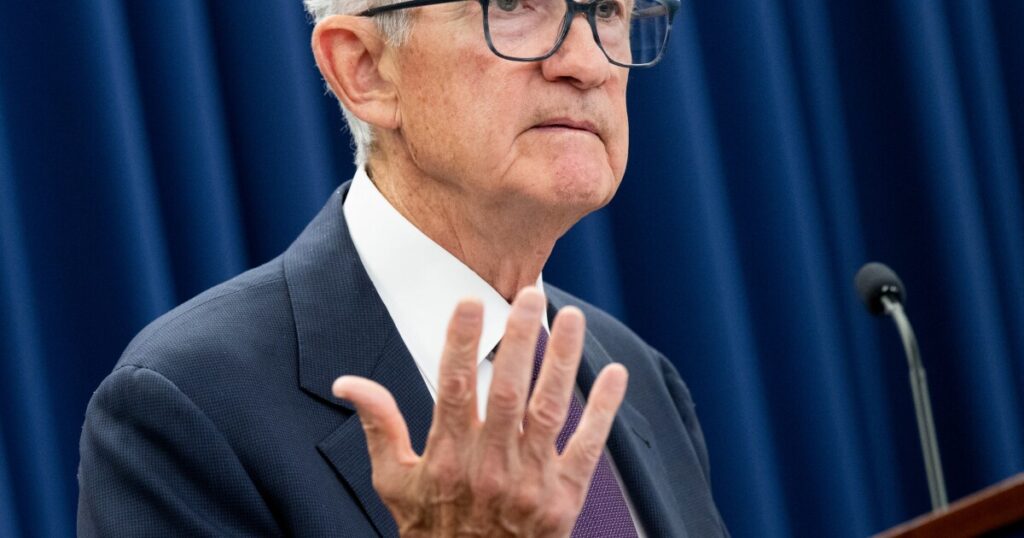
Amid these economic challenges, the Fed also faces leadership uncertainties as Jerome Powell’s term as chairman approaches its conclusion in May. The timeline for confirming his successor remains unclear.
President Trump has nominated Kevin Warsh as Powell’s successor. However, this nomination is stalled by Sen. Thom Tillis, R-N.C., who has vowed to block the process until the Justice Department ceases its criminal investigation into the Fed.
Recently, a federal judge nullified two subpoenas issued by the Justice Department, identifying them as part of an unwarranted harassment campaign aimed at coercing Powell and the Fed into lowering interest rates. Tillis, in a social media post, criticized the investigation as “weak and frivolous,” yet the Justice Department has not withdrawn the case.
If Warsh’s confirmation is delayed, Powell might continue to serve as chairman into the summer, and he has the choice to remain on the Fed’s board until 2028. Pearce commented on the unusual circumstances, noting, “That would be highly unusual, but then what’s also unusual is an ongoing criminal probe into a sitting Federal Reserve chair.” He emphasized that Powell sees defending the Fed’s independence from political pressures as part of his legacy.
Copyright 2026 NPR
—
Read More Michigan News