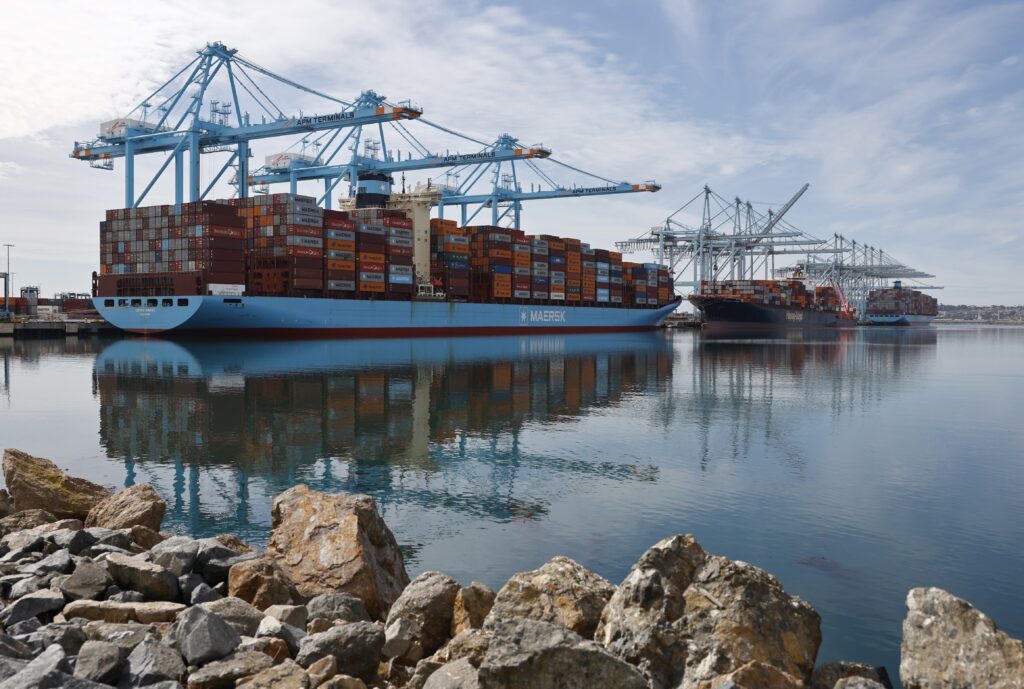

Shipping cranes stand above container ships loaded with shipping containers at the Port of Los Angeles on Feb. 20, 2026 in Los Angeles, California. The U.S. Supreme Court has ruled that President Donald Trump’s sweeping emergency tariffs on most U.S. trading partners were illegal. (Photo by Mario Tama/Getty Images)
WASHINGTON — Arizona coffee roaster Gabe Hagen faces uncertainty in reclaiming the thousands spent on tariffs for importing coffee beans from key regions like South America and Africa. Despite the U.S. Supreme Court’s ruling against President Donald Trump’s emergency tariffs, small business owners like Hagen remain unsure about compensation after enduring a year of rising costs.
“I’m in the process right now trying to consolidate all of my invoices … because I need the money back — if they’re going to give it back,” Hagen stated in a recent interview. Tariff-related expenses raised coffee pallet prices from $5,000-$7,000 to $8,000-$11,000.
The government’s approach to refunding the $166 billion collected in tariffs is slowly emerging through court documents. Nearly 2,000 companies have filed lawsuits seeking refunds from these tariffs, with many cases starting even before the Supreme Court’s decision was made.
Justices leave it to the lower courts
The Supreme Court’s 6-3 decision invalidated Trump’s tariffs under the 1977 International Emergency Economic Powers Act (IEEPA), leaving lower courts to handle refunds. Trump used the statute to declare emergencies for various issues, imposing high import taxes. Tariffs on Brazilian and Indian goods reached 50%, while Chinese goods faced rates up to 145% during the trade war.
Despite the ruling, the Trump administration pursued other avenues for tariffs, instituting temporary import taxes under different statutes. The Office of the U.S. Trade Representative has launched extensive investigations into major trading partners, potentially leading to new tariffs.
‘Survived, but barely’
Minnesota-based Busy Baby struggled under the tariffs, almost facing collapse. Owner Beth Benike is suing Customs and Treasury officials for lost revenue. Her attorney, Matthew Platkin, noted the business “survived, but barely,” as opportunities for expansion were halted by the tariffs.
“She had to keep merchandise overseas because she couldn’t afford to pay to bring them here,” Platkin explained. The company lost significant revenue due to the tariffs, with the federal government urged to refund these costs with interest.
Federal Court Orders Tariff Recalculation
Federal Judge Richard Eaton ordered customs officials to halt collecting illegal tariffs under IEEPA and recalculate past duties. The ruling affects all refund claims, with the agency estimating a 45-day timeline to functionalize the refund process. As of early March, $166 billion in tariffs had been collected from 330,000 importers.

Interest on tariff refunds has significant implications as businesses await payments necessary for survival. Alfredo Carrillo Obregon of the Cato Institute highlighted that interest accumulates at about $700 million monthly. While some businesses like Barton O’Brien’s dog apparel company chose not to raise prices, expectations for refunds remain low amidst anticipated prolonged legal battles.
‘Do the right thing’
Main Street Alliance continues to pressure the administration to refund small businesses affected by tariffs. Advocacy director Shawn Phetteplace urged the government to cease devising new tariffs likely to face legal challenges. Democratic-led states, including Oregon and Arizona, have already filed lawsuits against new tariffs introduced post-Supreme Court loss. Small businesses and states played a crucial role in the court’s decision to strike down Trump’s IEEPA tariffs.
—
Read More Montana News