Michigan’s Ballot Campaign Landscape Faces Significant Changes
In Michigan, several high-profile campaigns aiming to influence the state’s November ballot are facing setbacks, with some withdrawing their initiatives entirely. Among these, the latest to cease efforts is a movement to challenge recent amendments to the minimum wage law.
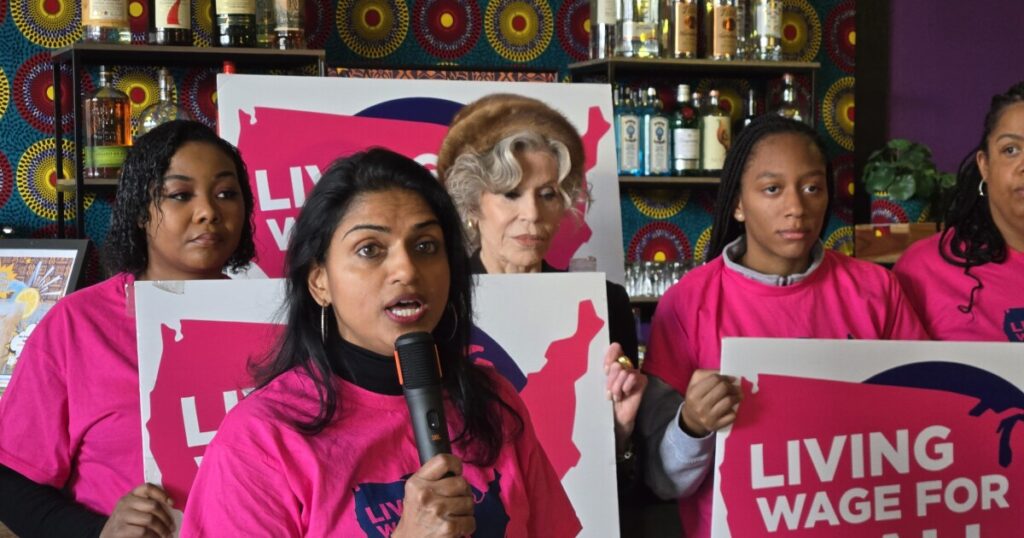
One Fair Wage was striving to standardize the minimum wage across Michigan, eliminating disparities for tipped workers. Despite a significant legal victory in 2024, efforts to advance the proposal were thwarted by legislative intervention following opposition from the hospitality sector. The group required 223,099 signatures to place the referendum on this November’s ballot but has not disclosed the number collected. Instead, the focus is shifting to future elections, with resources being directed towards an initiative to restrict political contributions from public utilities and certain state contractors.
In its statement, One Fair Wage commented, “One Fair Wage has recently formed several new partnerships to help put key reforms on the ballot in 2026 and 2028 — beginning with passing key Money out of Politics reforms in 2026.”
Parallelly, the campaign Invest in MI Kids, which was seeking to fund schools by increasing taxes on high-income individuals, has also paused its signature collection. The group fell behind the 446,198 signatures required and is now eyeing the 2028 election cycle. Jess Newman from the campaign’s steering committee noted the groundwork laid for future efforts, emphasizing the value of having a network skilled in signature collection.
Another initiative to introduce ranked-choice voting in Michigan has similarly postponed its campaign, aiming for a return in 2028. The overlapping promotion of petitions for these causes, including a third campaign focused on reducing political money influence, shows interconnected efforts among supporters.
Sean McBrearty, associated with the anti-political money campaign, explained, “We’ve been on this upward trajectory where, in February, we collected three times the number of signatures that we collected in January. This month, I think we’re going to triple it again.” His campaign needs 356,958 signatures by May 27 to qualify for the November ballot and is bolstering its efforts as more public events occur.
In addition, a campaign named AxMITax, which seeks to eliminate property taxes, remains unresponsive regarding its progress. Meanwhile, a separate initiative to mandate proof of citizenship for voter registration has successfully submitted approximately 750,000 signatures to the Bureau of Elections.
—
Read More Michigan News