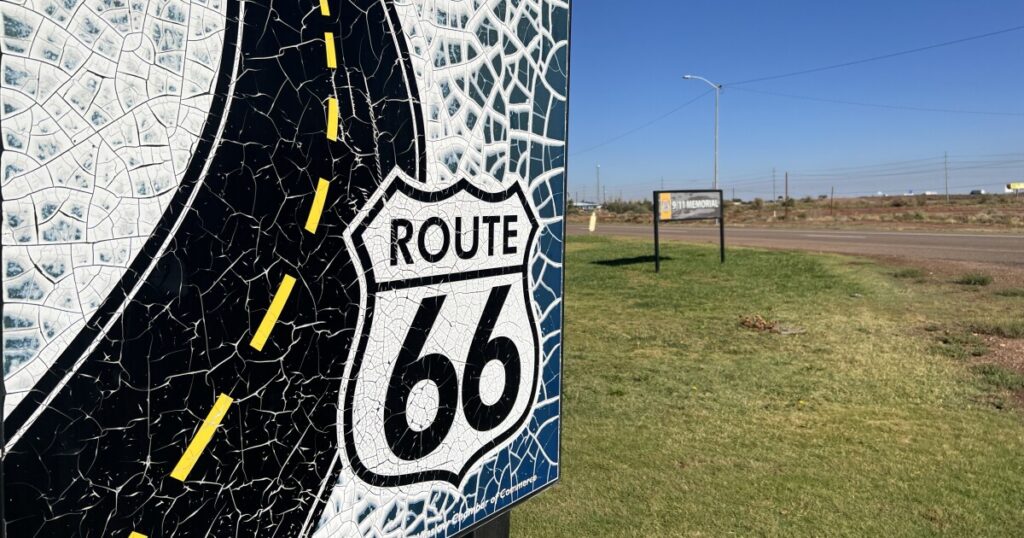
The allure of Route 66 remains unmatched as it celebrates its 100th anniversary this year. Stretching from Chicago to Los Angeles, this iconic highway is more than a route; it embodies American culture and history, offering travelers a nostalgic journey through neon lights, quirky motels, and unique culinary experiences.
Known as the Mother Road by John Steinbeck, Route 66 served as a beacon of hope for many, from Dust Bowl migrants heading to California to Black travelers seeking refuge during segregation. It also left an indelible mark on Native American communities along its path.
The Dream of Route 66
In its formative years, Route 66 was designed to connect the industrial Midwest to the Pacific coast over a span of approximately 2,400 miles (3,860 kilometers), weaving through states like Missouri, Oklahoma, and New Mexico. Cyrus Avery, dubbed the Father of Route 66, envisioned the highway as a conduit for economic growth and a symbol of American progress.
The road’s cultural impact was profound, inspiring literature such as Steinbeck’s “The Grapes of Wrath” and songs like Bobby Troup’s “(Get Your Kicks on) Route 66.” Entrepreneur Sebastiaan de Boorder, who revitalized The Aztec Motel in Arizona, remarked, “It’s an essential part of American culture and history.”
Ties to Arizona
Arizona’s connection to Route 66 is rich, woven into both its geography and its music. The Eagles’ “Take it Easy” was penned after Jackson Browne found himself stranded in Winslow, Arizona. The state hosts historical sites like the Wild West town of Oatman, which was once a stop along the original highway alignment.
Waves of Migration
Route 66 has long symbolized the American dream. It became a lifeline for those fleeing the Dust Bowl and the Great Depression, and during WWII, it served as a crucial military route. The postwar era saw a surge in road travel, as Americans took to the highway in pursuit of adventure and prosperity.
Historian Jim Hinckley notes, “People generally have a sense of adventure, a sense curiosity. And you can find that on Route 66. This is the road of dreams.”
The Roadside Economy
As travelers flocked to Route 66, roadside businesses flourished. Entrepreneurs crafted attractions to captivate motorists, from neon-lit diners to peculiar roadside stops. The Cozy Dog Drive In in Springfield, Illinois, stands as a testament to this era, serving breaded hot dogs since 1949. Third-generation owner Josh Waldmire emphasizes the community’s role: “The road feeds us, and as long as we put our feelings and love back into the road, it will reverberate with the travelers.”
Challenges and Changes
While Route 66 drove economic growth, it also posed challenges, particularly for Native American tribes whose lands were impacted by the highway’s construction. In Albuquerque, Laguna Pueblo adapted by turning traditional crafts into tourist attractions, creating a robust local economy.
Black travelers faced their own hurdles, relying on guides like the Green Book to navigate safely. The Threatt Filling Station in Oklahoma provided a safe haven during a time when segregation was rampant.
A New Direction
The decommissioning of Route 66 in 1985, prompted by President Dwight Eisenhower’s interstate system, marked the end of an era. Yet, efforts to preserve the highway continue, with local communities and enthusiasts working to maintain its legacy.
Angel Delgadillo’s campaign to preserve Route 66 in Arizona set a precedent for restoration efforts nationwide. Today, travelers can still explore vast stretches of the original road, discovering the stories and history embedded within its path.
—
Read More Arizona News

![Jody White’s Unconventional Michigan Supreme Court Candidacy Explored[embed]https://www.youtube.com/watch?v=8NfxFIPE4ac[/embed]](https://www.kitchentablenews.org/wp-content/uploads/2026/10/Jody-Whites-Unconventional-Michigan-Supreme-Court-Candidacy-Exploredembedhttpswwwyoutubecomwatchv8NfxFIPE4acembed.com2F842F0e2Fc7223daa43c9876b36a4e00773a42Fme-supc.png "Jody White’s Unconventional Michigan Supreme Court Candidacy Explored[embed]https://www.youtube.com/watch?v=8NfxFIPE4ac[/embed]")